
Most of us are taught—directly or indirectly—that emotions are problems to solve.
Anxiety needs to be managed.
Sadness needs to be processed.
Anger needs to be controlled.
Joy needs to be sustained.
Even when we approach emotions compassionately, the assumption often remains the same: something is happening inside us that shouldn’t be happening quite so intensely.
But what if emotion isn’t a malfunction?
What if it’s a perfectly appropriate response to something we rarely name?
The One Thing We Can’t Undo
There is one condition every human experience shares, regardless of personality, history, or belief:
Nothing can be repeated.
You will never experience this exact moment again.
You will never return to the moment you just left.
And no amount of understanding, memory, or effort can bring it back.
This isn’t dramatic. It’s ordinary. And it’s happening constantly.
Emotion arises not because something is wrong, but because experience is irreversible.
Pain Isn’t Just About Loss
We tend to associate pain with obvious events: breakups, deaths, failures, trauma.
But the emotional charge of those events doesn’t come only from what happened. It comes from what can no longer happen.
Grief isn’t just sadness.
It’s the recognition that a particular way of experiencing the world has closed forever.
Regret isn’t just disappointment.
It’s the recognition that a different choice can no longer be made from here.
Even nostalgia carries a quiet ache—not because the past was better, but because it’s inaccessible.
Pain is not weakness.
It’s irreversibility felt personally.
Why Joy Feels Light
Joy, on the other hand, often arrives with a sense of openness.
Excitement. Curiosity. Anticipation. Creative energy.
These aren’t emotions about what is. They’re emotions about what could be.
Joy is potential felt locally.
It’s the nervous system responding to the sense that something new may be expressed, something unspent is available. That’s why joy doesn’t require guarantees—and why trying to hold onto it so often suffocates it.
The moment joy is treated as something to preserve, it begins to slip away.
Control as Emotional Avoidance
Most emotional suffering doesn’t come from emotion itself.
It comes from resisting what emotion is responding to.
When irreversibility isn’t tolerated, control steps in.
We try to:
- secure outcomes
- lock in identities
- stabilize relationships
- preserve meaning
- manage perception
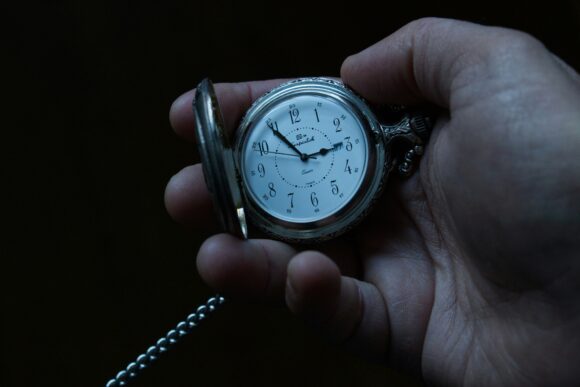
Control is an attempt to slow time psychologically—to pretend that moments can be held still if we’re careful enough.
Anxiety often isn’t fear of the future.
It’s resistance to the fact that the future will arrive whether we’re ready or not.
Depression often isn’t lack of motivation.
It’s exhaustion after trying to control what can’t be controlled.
From this view, emotional struggle isn’t personal failure.
It’s misdirected effort.
The Isolation We Rarely Admit
Beneath control is something even quieter.
Existence doesn’t come with an outside.
There is no vantage point where the flow of experience can be paused, reviewed, or reset. No one is standing behind life, keeping notes.
That doesn’t make existence lonely—but it does make it singular.
For many people, the idea of being a separate individual is less about ego and more about containment. Individuality localizes the weight of existence. It gives the sense that someone is managing this.
When that sense loosens, emotion can intensify—not because something is wrong, but because the buffering system is thinning.
Acceptance Isn’t Resignation
Acceptance is often misunderstood as passivity.
But acceptance doesn’t mean liking what’s happening, approving of it, or giving up on change.
Acceptance means no longer fighting the fact that change is happening.
When irreversibility is allowed instead of resisted:
- emotion moves more freely
- intensity passes more cleanly
- adaptability replaces rigidity
- enthusiasm returns without being forced
Acceptance doesn’t remove pain.
It removes the extra pain created by insisting that reality should pause to accommodate us.
Why This Is Hard to See
Our culture treats emotion as something that happens to individuals.
But emotion doesn’t arise inside isolated selves. It arises within experience itself, as experience recognizes that it cannot be held.
That’s why emotional clarity often doesn’t feel like relief at first.
It feels like exposure.
The strategies that once made life feel manageable—control, identity, certainty—lose their footing. And until something else takes their place, the nervous system can feel raw.
This is why clarity often feels harder the more it deepens, not because something is wrong, but because something familiar is dissolving.
👉 https://dualisticunity.com/why-anxiety-isnt-about-whats-happening/
Emotion Isn’t Asking to Be Solved
Emotion isn’t a message demanding an answer.
It’s a response to the fact that experience is moving, whether we approve or not.
When emotion is allowed to be what it is:
- pain doesn’t become suffering
- joy doesn’t become grasping
- fear doesn’t become identity
Nothing has to be fixed.
Something simply has to be felt without resistance.
A Different Kind of Ease
This doesn’t make life predictable.
It makes it workable.
When irreversibility is no longer treated as a threat, life regains its natural flexibility. You stop trying to preserve moments and start responding to them.
Not because you’ve transcended emotion—but because you’ve stopped arguing with time.
And in that quiet shift, something unexpected often appears:
Not certainty.
Not control.
But ease.