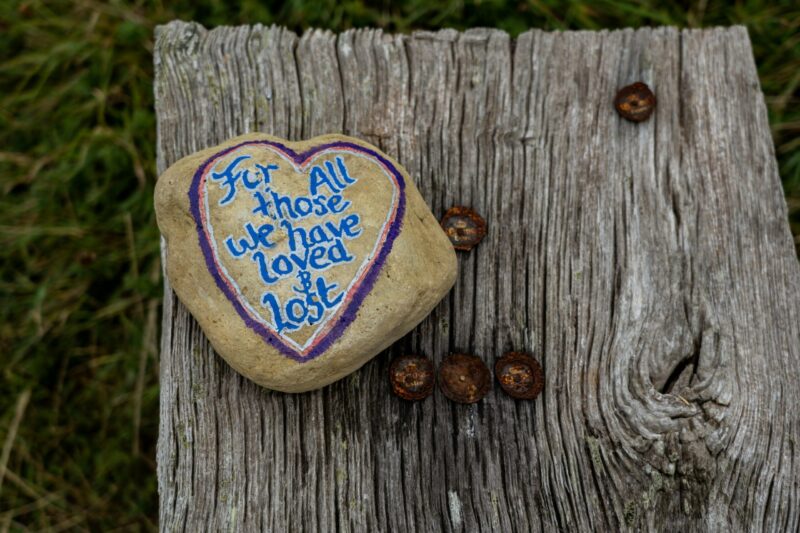
What if grief doesn’t simply reflect what we’ve lost—but also reveals who we’re becoming?
Grief has a way of dividing life into two chapters. There is the life that existed before the loss, and the life that follows it. Whether we lose a parent, partner, child, friend, home, dream, career, or even the version of ourselves we once believed we would become, grief rarely leaves us unchanged. It reshapes our routines, our priorities, our relationships, and sometimes even the way we understand the world itself. The person who emerges after profound loss often sees life through different eyes.
This can feel unsettling because we often think of change as something we choose. We imagine that growth comes through deliberate decisions, careful planning, or gradual experience. Grief reminds us that some of life’s most significant transformations arrive without asking our permission. The question is never whether grief will change us. It always does. The deeper question is how we allow that change to shape the rest of our lives.
Grief Makes It Feel Like We’ve Lost Everything
One of the most confusing aspects of grief is that it often feels much larger than the event that caused it. Losing one person can make the entire world seem unfamiliar. Places that once brought comfort suddenly feel empty. Future plans disappear overnight. Even ordinary moments—a favorite song, an empty chair at the dinner table, or a familiar scent—can become reminders of what no longer exists.
Part of this experience comes from the way our minds build relationships. The people we love become woven into our daily expectations. We unconsciously assume they will answer the phone, laugh at our jokes, celebrate milestones, or simply exist somewhere in the world alongside us. When they are gone, it isn’t only their absence that hurts. The future we imagined with them disappears as well. Grief often feels like losing everything because so much of our identity had quietly grown around what we believed would continue.
Every Experience Changes Us
Grief is not unique because it changes us. Every experience changes us. Every conversation, success, disappointment, friendship, failure, celebration, and heartbreak contributes something to the person we are continually becoming. Most of these changes happen so gradually that we barely notice them. We wake up believing we’re the same person we were yesterday, even though every experience has subtly influenced the way we think, feel, and respond to life.
Grief is different only because its impact is impossible to ignore. It interrupts the assumptions that quietly organize our lives and forces us to reconsider what matters, what is permanent, and what we can truly rely on. In doing so, it often accelerates changes that might otherwise have taken years to unfold.
The pain itself isn’t what defines us. What often shapes us more deeply is what we decide the pain means.
The Meaning We Give Our Pain
Loss hurts. That much is unavoidable. What often goes unnoticed is how quickly the mind begins trying to explain why it hurts so much. Those explanations rarely arrive as carefully considered conclusions. Instead, they emerge quietly as protective beliefs.
Someone who loses a partner may begin believing that love always ends in heartbreak. Someone betrayed by a close friend may conclude that trusting people is dangerous. A parent who loses a child may find themselves wondering whether allowing themselves to feel joy again somehow dishonors the one they lost.
These stories make sense because they promise protection. If opening your heart led to unbearable pain, then closing it feels like the safest response. The mind mistakes avoidance for healing, believing that if love created suffering, then less love must mean less suffering.
The difficulty is that avoiding pain also means avoiding connection. Protecting ourselves from future loss often requires withdrawing from the very experiences that make life meaningful in the first place.
Some Hearts Become Harder
For many people, grief slowly transforms into emotional distance. This isn’t because they become uncaring or selfish. Quite the opposite. They build walls because something precious was once taken away, and they cannot imagine surviving that kind of loss again.
Trust becomes more difficult because trust once ended in heartbreak. Vulnerability begins feeling dangerous because vulnerability reminds us how deeply another person can affect our lives. Over time, the walls that were originally built to survive one painful experience become permanent features of life itself.
The tragedy is that these protective strategies rarely distinguish between past and present. Years after the danger has passed, they continue keeping love at a distance. The person believes they are protecting their heart, but what they are often protecting is their fear.
Others Become Softer
Grief does not always close the heart. Sometimes it opens it.
People who have experienced profound loss often develop a remarkable tenderness toward others because suffering expands their awareness of what another person may be carrying. They become more patient with strangers because they know that invisible pain exists in every crowd. They offer kindness more freely because they understand how deeply a simple gesture can matter to someone having a difficult day.
Many begin finding joy in moments they once overlooked. A quiet morning, an unexpected conversation, the laughter of children, or a beautiful sunset suddenly become precious, not because life has become easier, but because they have learned firsthand how fragile every moment really is.
This softness isn’t denial. It doesn’t pretend that the loss never happened or suggest that the pain has disappeared. Instead, it represents a quiet refusal to allow grief to become the reason love disappears from their life.
Love Was Never the Mistake
After loss, it is easy to believe that loving someone so deeply was the mistake. If only we hadn’t cared so much, perhaps we wouldn’t hurt so much now.
Yet grief itself tells a different story.
We grieve because we loved. The depth of our sorrow reflects the depth of our connection. No one mourns a stranger the way they mourn someone who transformed their life. The pain is not evidence that love failed. It is evidence that love mattered.
Rather than asking us to love less in the future, grief quietly invites us to recognize that every meaningful relationship carries the possibility of loss. That possibility doesn’t diminish love’s value. It is precisely what makes every shared moment irreplaceable.
We Don’t Have to Become Our Pain
One of the greatest dangers of grief is that it slowly shifts from being something we experience to becoming something we believe we are. Instead of saying, “I experienced a devastating loss,” we begin believing, “This is who I am now.”
Identity forms around suffering more easily than we realize. We revisit memories, replay conversations, and imagine different endings until grief begins defining how we see ourselves. Eventually, we stop relating to the loss as part of our story and start relating to it as our entire identity.
Yet no experience, however painful, contains the whole of who we are. Every experience contributes to our story, but none of them become the author unless we hand them the pen.
Choosing What We Carry Forward
None of us chooses whether grief arrives. Eventually, it touches every human life. What remains within our influence is what we carry forward from it.
Some people carry fear. Others carry compassion. Some carry walls. Others carry wisdom. Neither path erases the loss, and neither forgets the person or life that came before. The difference lies in whether grief becomes a prison that confines us or a teacher that deepens our capacity to love.
The deepest lesson grief offers may not be about death at all. It may be about life. Every loss reminds us that nothing lasts forever, making every relationship infinitely more valuable while it exists.
Knowing that every relationship will eventually end, we still choose to love because a life protected from heartbreak is also a life protected from intimacy, vulnerability, and connection.
Grief changes all of us. The question it leaves behind is beautifully simple.
Will this pain become the reason you stop loving?
Or will it become the reason you love even more deeply?
Continue the Exploration
Grief changes every one of us, but it doesn’t have to define us. Beneath every experience—joy, loss, fear, love, and uncertainty—there is an awareness that remains present through it all. Learning to recognize that awareness doesn’t erase grief, but it can transform the way we relate to it.
If these ideas resonate with you, Proof That You’re God explores how identity is shaped by experience, why suffering so easily becomes part of the stories we tell ourselves, and what becomes possible when we begin seeing beyond those stories. It is an invitation not to escape life’s difficulties, but to meet them with greater clarity, compassion, and freedom.