
What the Commissioning of Silicon Valley Leaders Reveals About Power, Authority, and Modern Governance
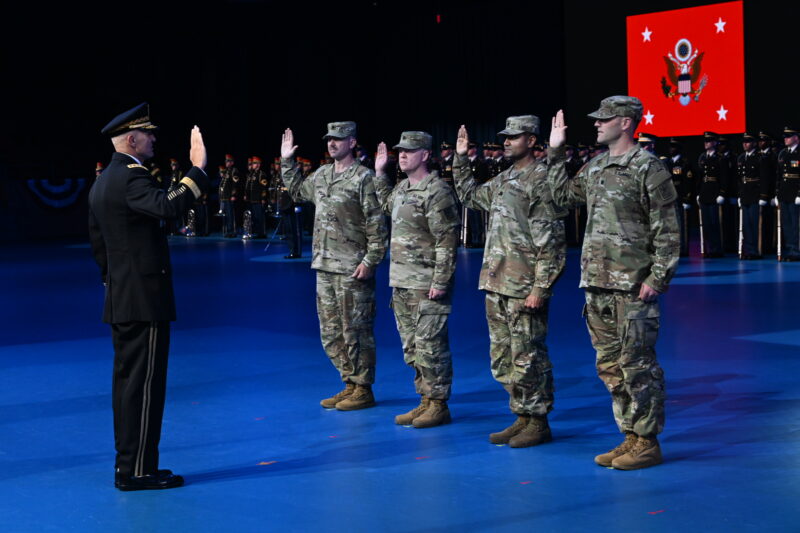
On June 13, 2025, the U.S. Army established a new initiative called Detachment 201: The Army’s Executive Innovation Corps and commissioned four prominent tech leaders as Lieutenant Colonels in the Army Reserve.
These individuals are:
- Shyam Sankar, Chief Technology Officer at Palantir Technologies
- Andrew “Boz” Bosworth, Chief Technology Officer at Meta Platforms
- Kevin Weil, Chief Product Officer at OpenAI
- Bob McGrew, advisor at Thinking Machines Lab and former OpenAI research lead
The stated aim is to bring private-sector technical insight into the Army Reserve to help guide rapid and scalable solutions to complex military challenges and “fuse cutting-edge expertise with military innovation.”
This moment is not minor.
It sits at a crossroads where civilian innovation, state power, and individual identity meet — and where our cultural narratives about authority, service, and contribution are being quietly rewritten.
A New Kind of Authority
In the American military tradition, officers rise through ranks over years — often decades — of service, training, sacrifice, and embodied experience.
Lieutenant Colonel is not an entry-level rank. It usually represents long service over 20 or more years and leadership over hundreds of people, arduous decision-making under pressure, and intimate knowledge of institutional culture.
Yet four individuals entered this rank not through time served, but through direct commissioning — a legal mechanism the Army uses to bring in specialized civilian experts into reserve positions.
To some, this feels like an inversion of traditional meritocracy. But to others, it represents an adaptive response to rapidly shifting technological landscapes.
Both interpretations are worth noticing.
Identity, Expertise, and the Narrative of Authority
In Proof That You’re God, one of the central threads is how identity binds us to stories that protect comfort rather than reveal truth.
A system holds its shape not because it is just or wise, but because we have invested our belief in how it ought to work.
When the Army hyped that these executives will help make the force “leaner, smarter, and more lethal,” the language sounded less like clarity and more like marketing — a narrative tethered to performance rather than presence.
This moment forces a deeper question:
What counts as legitimate authority?
Is it years of specialized experience?
Or is it specialized competence?
Neither answer alone captures the full complexity.
Both matter — and both are being reconciled in real time.
This blending of elite private-sector expertise with public national service is part of a broader pattern in modern life — one reason why the world increasingly feels loud, complex, and overloaded with conflicting signals rather than coherent meaning:
👉 https://dualisticunity.com/why-the-world-feels-so-loud/
The Reality of Direct Commission Roles
Direct commissioning is not new. The U.S. military has brought in civilian professionals — doctors, lawyers, engineers — at senior ranks to serve specialized functions for decades.
But historically, such commissions did not leapfrog civilians into middle field-grade ranks (like lieutenant colonel) without prior military experience.
Here’s the core nuance:
- These appointees will serve part-time as advisors — not as commanders of troops.
- They will receive some basic training — but not the same comprehensive regimen that career officers undergo.
This structure is designed for technical advisory roles, not operational command.
But the symbolism invites reflection.
The Cultural Narrative of “Tech in Uniform”
In recent years, the U.S. military has increasingly partnered with private tech firms on cybersecurity, artificial intelligence, data platforms, and autonomous systems.
Some see this as necessary modernization in a world where technological advantage can be decisive.
Others see it as a blurring of boundaries between commercial power and public authority.
This invites important questions:
- How do we ensure that public duty is not subsumed by private interest?
- How do we protect the integrity of military structures while inviting civilian expertise?
- How do we maintain trust when powerful private actors gain formal influence over public security?
These are not political talking points. They are structural anxieties about how society navigates complexity.
Awareness Beyond Panic
Panic makes stories easy. Complexity makes them hard.
We can watch these developments with anxiety about surveillance, data access, or techno-feudalism — or we can watch them with attention to underlying patterns.
We can ask:
- What does it mean when the same people who shape the platforms we use also advise the systems meant to protect us?
- What narratives of authority are being rewritten?
- How do we navigate a world where competence and credential no longer align in predictable ways?
These questions invite careful reflection rather than reaction.
Closing Reflection
The commissioning of four tech executives as lieutenant colonels is unprecedented in recent American history.
Whether you view it as necessary adaptation or uncomfortable fusion, it reveals something real about our cultural moment:
We are in a transition — not merely technological but psychological.
We are redefining what expertise means, how service is valued, and how authority is conferred.
History isn’t happening to us.
It is unfolding with our participation — in what we pay attention to, how we speak about it, and the stories we carry forward.
And that awareness — not panic, not denial — is the deepest kind of agency we have.