
There’s a moment many people quietly recognize but rarely name.
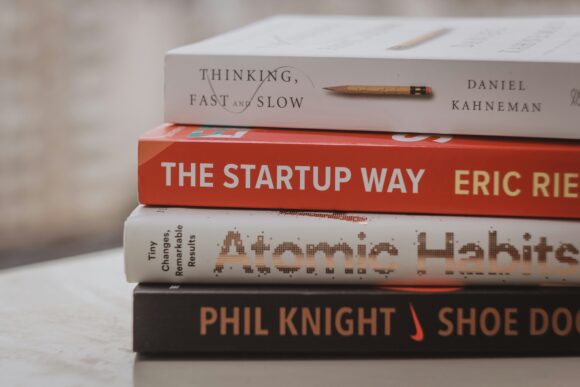
You’ve read dozens of articles. Listened to countless podcasts. Highlighted passages that felt true. Nodded along as insight after insight landed with a familiar sense of recognition. And yet, something hasn’t shifted in the way you expected.
So you keep reading.
Not because you’re curious—but because stopping feels uncomfortable.
At first, this looks like dedication. A commitment to understanding. A genuine desire to grow. But over time, something subtle changes. Reading becomes less about discovery and more about delay. Less about clarity and more about staying occupied.
This is where learning quietly turns into avoidance.
And it doesn’t happen because something is wrong with you. It happens because the mind is very good at substituting information for encounter.
Before exploring this more deeply, it helps to place it in a broader context. Much of what keeps us stuck isn’t a lack of understanding, but the attempt to control experience through understanding—a dynamic explored more fully in why control doesn’t bring relief. When reading becomes a way to manage discomfort rather than meet it, it subtly reinforces the very patterns we’re hoping to dissolve.
The Seduction of Insight
Insight feels good. There’s a rush that comes with recognizing something true—especially when it puts words to something you’ve felt but couldn’t articulate. Reading can provide that moment again and again.
The problem isn’t insight itself. The problem is mistaking insight for integration.
Insight is often instantaneous. Integration is rarely convenient.
Reading allows insight to arrive without requiring anything to change. No conversation needs to happen. No uncomfortable feeling needs to be faced. No uncertainty needs to be tolerated. You can close the tab, bookmark the quote, and carry on exactly as before—while still feeling like progress was made.
This is why reading can become addictive in a way that doesn’t look like addiction. It’s socially praised. Intellectually validated. Even encouraged.
But insight without encounter becomes a kind of anesthesia.
When Understanding Becomes a Buffer
At some point, reading stops being about curiosity and starts being about orientation.
You read to remind yourself who you are.
You read to stabilize a sense of clarity.
You read to reassure yourself that you’re “getting it.”
You read to avoid the rawness of not knowing what to do next.
Understanding becomes a buffer between you and experience.
Instead of feeling confusion, you analyze it.
Instead of sitting with anxiety, you conceptualize it.
Instead of noticing resistance, you explain it.
None of this is wrong—but it is revealing.
The mind has learned that interpretation feels safer than exposure.
The Subtle Avoidance of Uncertainty
Most avoidance isn’t obvious. It doesn’t announce itself as fear. It often disguises itself as improvement.
Reading more can be a way to avoid:
- Saying the thing you’ve been postponing
- Feeling the emotion you keep circling around
- Making a decision without guarantees
- Letting go of an identity that’s grown familiar
- Sitting in uncertainty without an explanation
The mind prefers preparation to presence.
As long as there’s more to read, there’s a reason not to act. As long as clarity feels just one article away, uncertainty can be postponed.
But uncertainty doesn’t go anywhere. It waits.
The Difference Between Exploration and Accumulation
Exploration is alive. Accumulation is static.
Exploration leaves you quieter. Accumulation leaves you heavier.
When reading is exploratory, it opens space. It invites questions. It doesn’t rush to conclusions. There’s a sense of freshness, even humility.
When reading becomes accumulation, it closes space. You begin collecting frameworks, language, and perspectives like armor. Each new idea becomes another layer between you and direct experience.
A simple question can reveal the difference:
“Is this reading helping me meet my life more honestly—or helping me postpone it more elegantly?”
The answer isn’t moral. It’s practical.
Why This Happens So Easily
The mind is pattern-driven. It learns quickly what reduces discomfort.
If reading reliably:
- Soothes anxiety
- Provides a sense of progress
- Delays difficult action
- Reinforces a coherent self-image
…it will keep choosing reading.
This doesn’t mean you’re weak. It means the strategy works—temporarily.
The trouble begins when the strategy outlives its usefulness.
At some point, more understanding doesn’t bring more clarity. It brings more distance.
The Fear Beneath the Pages
Underneath compulsive reading is often a simple fear:
“If I stop consuming, I’ll be left with something I don’t know how to be with.”
That something might be:
- Grief
- Confusion
- Desire
- Ambivalence
- A choice without certainty
- A self-image ready to collapse
Reading keeps the floor from dropping out.
But that floor was never as solid as it felt.
When Reading Becomes Identity Maintenance
There’s another layer that’s even harder to see.
Sometimes reading isn’t just avoidance of feeling—it’s avoidance of identity loss.
If you see yourself as:
- “Someone who understands”
- “Someone who’s aware”
- “Someone who’s doing the work”
Then stopping can feel like regression.
Reading reassures the identity. It keeps the narrative intact.
But identity doesn’t dissolve through understanding itself. It dissolves when it’s no longer being actively maintained.
And maintenance often looks like effort—subtle, constant, exhausting effort.
The Quiet Cost of Endless Preparation
Preparation feels responsible. But endless preparation postpones living.
You don’t need to be perfectly clear to have a conversation.
You don’t need total understanding to feel an emotion.
You don’t need another framework to notice resistance.
You don’t need a final insight to stop running.
At some point, the next step isn’t intellectual. It’s relational. Embodied. Immediate.
And that step rarely comes with instructions.
Reading That Points Back to Life
This doesn’t mean reading is useless. Far from it.
Reading is helpful when it:
- Points you back to your own experience
- Reduces reliance on explanation
- Encourages honesty over certainty
- Leaves you less interested in more content
The best reading eventually makes itself unnecessary.
It doesn’t demand loyalty. It doesn’t promise completion. It doesn’t imply you’re missing something essential.
It trusts awareness to recognize itself without accumulation.
How to Notice When It’s Time to Stop
There’s no rule here. But there are signals.
You might notice:
- A sense of restlessness after reading
- A compulsion to immediately consume more
- Insight without relief
- Familiar clarity without change
- A subtle avoidance of silence
These aren’t problems. They’re invitations.
Not to stop reading forever—but to pause long enough to notice why you’re reaching for the next article.
The Courage of Not Reaching
Sometimes the most honest move isn’t to understand more—it’s to sit without understanding.
To let confusion remain.
To let discomfort breathe.
To let uncertainty be felt rather than solved.
This can feel like falling backward without a net.
But what’s often discovered is that the ground appears when effort stops—not when it intensifies.
The Real Shift
The shift doesn’t happen when you finally read the right thing.
It happens when the compulsion to read loosens.
When curiosity replaces urgency.
When silence feels tolerable.
When experience doesn’t need narration.
At that point, reading becomes what it always was meant to be:
A pointer—not a substitute.
Closing Reflection
Reading doesn’t become avoidance all at once. It happens gradually, invisibly, through good intentions.
And it ends the same way—not through discipline, but through honesty.
When reading stops being used to manage experience, it naturally finds its proper place. Not as a shield. Not as an identity. But as a quiet companion to a life that’s already unfolding.
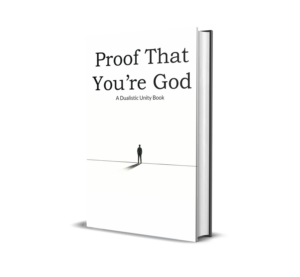
If this reflection resonates and you find yourself recognizing the moment when understanding becomes another form of delay, you may find Proof That You’re God helpful—not as something to add, but as something that gently points back to what no amount of reading can replace.