
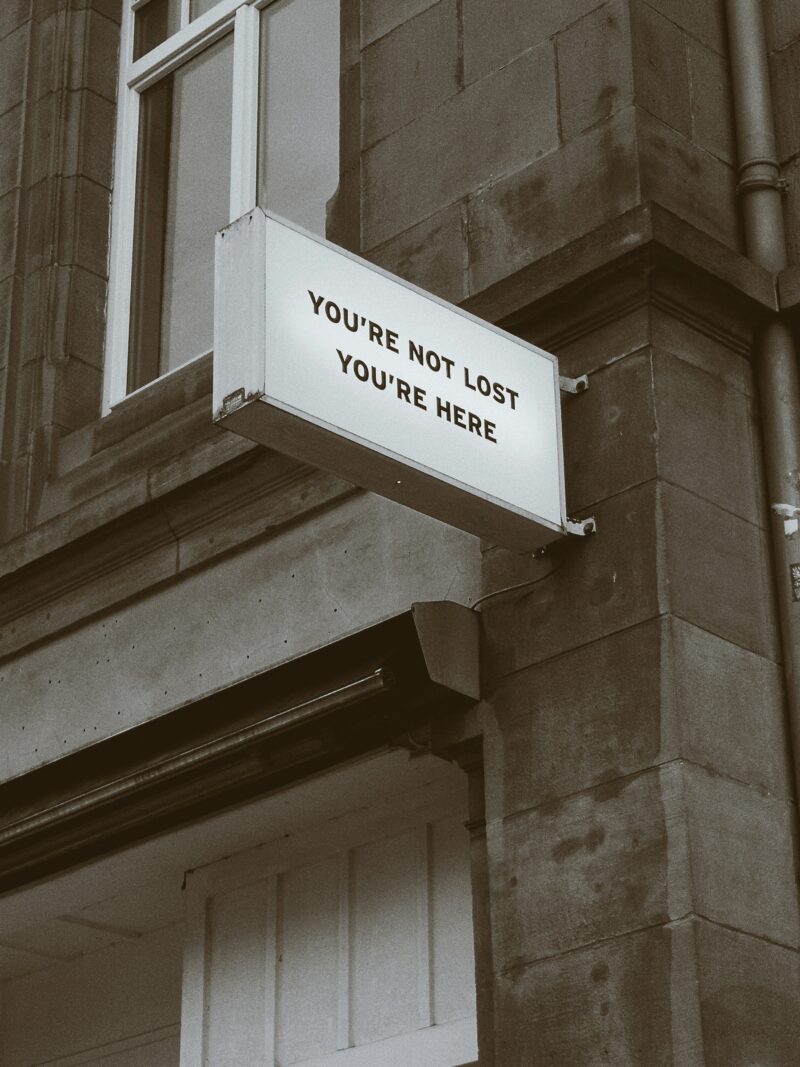
There is a particular kind of discomfort that doesn’t come from pain itself, but from exhaustion.
It shows up after you’ve tried everything you know how to try.
You’ve thought about it.
You’ve worked on yourself.
You’ve talked it through.
You’ve read the books.
You’ve applied the insights.
You’ve changed your habits.
You’ve adjusted your mindset.
And yet, something still isn’t resolved.
At that point, the discomfort isn’t just whatever you’re struggling with.
It’s the far more unsettling feeling of not knowing what else to do.
This is the moment most people miss—not because it’s unimportant, but because it feels like failure. Like you’ve reached the end of your options. Like something must be wrong with you for still being here.
But this moment isn’t a dead end.
It’s a threshold.
When Effort Stops Working
We’re conditioned to believe that if something isn’t changing, we just haven’t applied the right effort yet.
So when life doesn’t respond to our attempts—when anxiety persists, meaning doesn’t arrive, or peace remains elusive—we naturally conclude that we need to:
- try harder
- think differently
- find a better method
- adopt a more refined perspective
Effort feels responsible. It feels mature. It feels like growth.
But effort has a limit.
Eventually, it runs into a wall—not because you’re doing it wrong, but because the thing you’re trying to fix is the one doing the trying.
This is where many people unknowingly collide with the deeper structure of control and resistance, a pattern explored more broadly in why control doesn’t bring relief.
When effort no longer works, it doesn’t mean you’ve failed.
It means you’ve reached the edge of what effort can do.
The Panic Beneath “What Else Is There?”
The question “What else can I try?” sounds reasonable on the surface.
But emotionally, it often carries panic.
Because if there really is nothing else to try, then something much more uncomfortable comes into view:
Maybe this can’t be solved the way I’ve been trying to solve it.
That realization strips away the familiar sense of agency. It removes the comfort of having a next step. And without that, the mind doesn’t know where to stand.
So it rushes to fill the gap.
It looks for:
- a new framework
- a deeper explanation
- a more advanced practice
- a subtler version of the same effort
Not because those things are wrong—but because not knowing what to do feels intolerable.
Why Not Knowing Feels So Threatening
Not knowing doesn’t just feel uncomfortable.
It feels destabilizing.
When you don’t know what to try next, you lose:
- orientation
- momentum
- the sense of being “on the right track”
And beneath that loss is a quieter fear:
If I don’t know what to do, who am I in this moment?
This is where the ego quietly enters—not as arrogance or selfishness, but as a stabilizing reflex. It reaches for something—anything—that restores a sense of direction.
Not truth.
Not clarity.
Relief.
Relief from the vulnerability of not knowing.
But there’s a subtle cost to that relief.
The Moment Seeking Exhausts Itself
Eventually, even the search for new answers grows tired.
You notice that each new attempt feels strangely familiar. That each new insight promises resolution but somehow leaves the same tension intact.
At that point, the discomfort shifts.
It’s no longer just about your original issue.
It’s about the dawning recognition that seeking itself may be part of what’s maintaining the struggle.
This is a deeply unsettling realization.
Because if the effort to fix things is entangled with the problem, then stopping that effort feels irresponsible—almost dangerous.
So the mind hesitates.
And in that hesitation, a rare kind of space appears.
The Discomfort That Isn’t Asking to Be Solved
What if the discomfort you’re feeling isn’t a problem to overcome, but a signal that the usual strategies have run their course?
What if not knowing what else to try is not a deficiency—but an invitation?
This doesn’t mean giving up.
It doesn’t mean resignation.
And it doesn’t mean passivity.
It means allowing the possibility that clarity might not come from another move, another idea, or another layer of understanding.
It means staying with the rawness of not knowing—without immediately trying to escape it.
That’s not something the mind is trained to do.
Which is why this moment feels so exposed.
Why This Feels Like Losing Ground
From the mind’s perspective, not knowing looks like regression.
It feels like:
- losing progress
- undoing growth
- falling backward
But from a different perspective, it’s the first time something honest is happening.
Because for once, the narrative of improvement has paused.
There’s no version of yourself you’re trying to become.
No future state you’re aiming for.
No strategy to optimize your experience.
Just this moment—without a plan.
That can feel terrifying.
But it can also feel strangely intimate.
When Nothing Is Left to Add
When you’ve run out of things to try, something subtle changes.
Attention stops reaching outward.
Explanation loses its urgency.
The need to get somewhere softens.
What remains isn’t an answer.
It’s presence.
Not as a technique.
Not as a state.
But as the simple fact that whatever is happening is already happening—without your effort making it so.
This isn’t a breakthrough moment.
It’s a letting-be moment.
And it rarely looks impressive from the outside.
The Quiet Shift Most People Overlook
The discomfort of not knowing what else to try often passes unnoticed, because it doesn’t announce itself as progress.
It doesn’t come with clarity.
It doesn’t come with certainty.
It doesn’t come with relief—at least not right away.
What it comes with is honesty.
An honesty that says:
I don’t know how to fix this.
And maybe that matters.
Not as a conclusion—but as an opening.
Nothing to Hold On To
What’s difficult about this moment is that there’s nothing to grasp.
No method.
No teaching.
No reassurance.
Which is precisely why it’s so easily bypassed.
And yet, this is often where the deepest shifts begin—not because something new is discovered, but because the compulsion to manage experience relaxes.
Not forever.
Not perfectly.
Just enough.
An Invitation, Not an Instruction
If you’re in a place where you don’t know what else to try, there’s nothing you need to do about that.
No insight to apply.
No attitude to adopt.
No lesson to extract.
Just notice the discomfort—and the space around it.
Notice how much effort has already been expended.
Notice how little is actually required for this moment to be exactly as it is.
That noticing isn’t a solution.
But it may be the first moment you’re no longer trying to be somewhere else.
If this reflection resonates, Proof That You’re God explores this same territory gently and experientially—not by offering answers to replace the ones you’ve exhausted, but by inviting a closer look at the one who’s been trying so hard to find them.