What Bulgaria’s Protests Reveal About Change at Scale
Every so often, a moment breaks through the assumption that large systems can’t move.
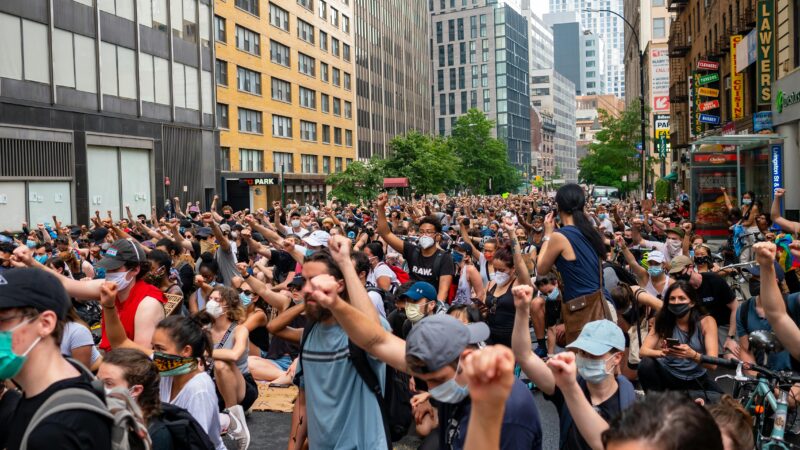
Recent protests in Bulgaria—marked by sustained public pressure, political instability, and leadership shakeups—have reignited a quiet question many people carry but rarely voice:
Can entire governments actually change when people demand it?
The answer, history suggests, is yes—but not in the way we’re taught to expect.
Change Doesn’t Always Look Like Collapse
When people hear about governments “falling,” the imagination jumps to chaos: coups, violence, instability. But many real transformations don’t arrive that way.
They arrive as:
- resignations,
- caretaker governments,
- dissolving coalitions,
- elections called early,
- authority quietly relinquished under pressure.
In Bulgaria’s case, years of public protest—often driven by frustration over corruption, economic strain, and lack of trust—have repeatedly forced political resets. Not always clean. Not always permanent. But real.
What matters isn’t whether power collapses dramatically.
It’s that pressure can still work.
Why We Assume Big Systems Are Frozen
There’s a widespread belief that once a nation is large enough—economically, politically, bureaucratically—it becomes immune to change.
Too complex.
Too entrenched.
Too powerful.
But that belief confuses scale with inertia.
Large systems don’t resist change because they’re cursed.
They resist change because they rely on collective consent, and consent is easier to maintain when people feel isolated, exhausted, or resigned.
When that resignation cracks, even massive structures begin to wobble.
Protests Are About Dignity Before Ideology
It’s tempting to analyze protests through partisan or ideological lenses. But sustained movements rarely begin with abstract theory.
They begin with lived experience:
- feeling unheard,
- watching institutions protect themselves,
- noticing effort no longer leads to fairness.
In Bulgaria—as in many countries—people didn’t take to the streets because they wanted chaos. They did so because the existing order stopped making sense.
That distinction matters.
People rise not because they want power, but because power has stopped responding.
When Officials Step Down, Something Deeper Is Happening
When leaders resign under pressure—whether willingly or reluctantly—it’s easy to frame it as failure or weakness.
But psychologically, something else is occurring.
Authority depends not just on force or law, but on credibility. When enough people withdraw belief in a system’s legitimacy, leadership becomes unsustainable.
Stepping aside can be a recognition—not of defeat—but of reality.
This is rare.
And when it happens, it deserves attention.
Bigger Doesn’t Mean Doomed
Smaller nations are often treated as exceptions:
“That could never happen here.”
But scale doesn’t eliminate human psychology.
It amplifies it.
Large nations don’t fail differently—they fail louder.
They don’t resist change more—they require more people to remember they’re not powerless.
What Bulgaria’s recurring political upheaval shows is not perfection, but possibility. Systems can be pressured. Narratives can crack. Authority can be questioned without total collapse.
The Role of Collective Psychology
Protests don’t succeed because everyone agrees.
They succeed when enough people stop pretending nothing can change.
This is where culture and collective psychology matter more than policy. When resignation is replaced by shared recognition—“We’re not imagining this”—momentum builds.
These dynamics—how perception shifts from isolation to agency—are part of a broader pattern explored in reflections on why the world feels so loud.
Change doesn’t begin with solutions.
It begins with seeing together.
What Larger Nations Can Learn
The lesson isn’t that protests guarantee outcomes.
They don’t.
The lesson is simpler—and more uncomfortable:
Large systems survive not because they’re immovable, but because people believe they are immovable.
When that belief loosens, even slightly, new possibilities enter the room.
A Different Relationship With Power
Power doesn’t only live in institutions.
It lives in expectation.
When people expect nothing, they get nothing.
When people expect accountability, systems are forced to respond—sometimes clumsily, sometimes partially, but undeniably.
Bigger doesn’t mean impervious to change.
It just means more people have to remember this at once.
Closing Invitation
This reflection is part of an ongoing exploration into collective agency, perception, and the quiet forces that shape political reality beneath headlines.
These themes are explored more deeply in Proof That You’re God, a book about awareness, responsibility, and the freedom that comes from seeing clearly rather than assuming power lives somewhere else.
Change doesn’t require perfection.
It requires participation.
And history keeps reminding us:
Even large systems still stand on human ground.