
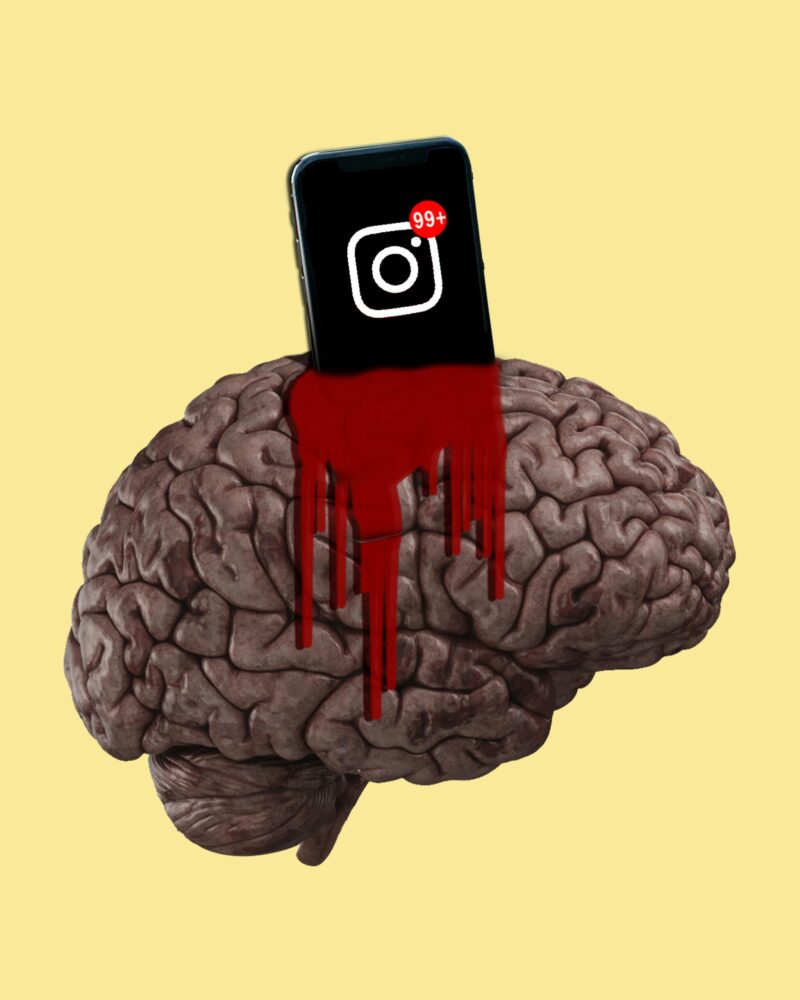
Brainrot isn’t your brain decaying. It’s your attention adapting to an environment that never stops asking for it.
If you’ve spent time on TikTok, Instagram, YouTube Shorts, X, or almost any social media platform, you’ve probably heard someone say they have brainrot.
Maybe they spent hours watching absurd memes. Maybe they couldn’t stop quoting a viral joke. Maybe they looked up from their phone after an evening of endless scrolling and realized they felt mentally exhausted despite having consumed hours of entertainment.
The word is usually used as a joke.
The experience behind it is surprisingly real.
Many people recognize the feeling of mental fog that appears after consuming endless streams of short videos, memes, internet drama, and rapidly changing content. Concentrating becomes more difficult. Reading a book suddenly feels slower than it used to. Even quiet moments seem uncomfortable without something playing in the background.
Brainrot isn’t a medical condition.
It’s a modern experience.
Understanding why it happens reveals something important about both technology and the way human attention naturally works.
What Is Brainrot?
Brainrot is an internet slang term used to describe the feeling of mental fatigue, shortened attention, obsessive thinking, or difficulty concentrating after consuming large amounts of highly stimulating online content.
Although brainrot isn’t a medical diagnosis, millions of people use the word to describe the mental fog that can follow hours of scrolling social media, watching short-form videos, jumping between memes, following internet drama, or consuming an endless stream of algorithm-driven content.
Brainrot often leaves people feeling mentally overstimulated but emotionally unsatisfied. Many describe struggling to focus on longer activities like reading, studying, or having uninterrupted conversations after spending long periods consuming rapidly changing digital content.
The term is often humorous.
The underlying experience is not.
Brainrot reflects what can happen when our attention becomes increasingly accustomed to constant novelty instead of sustained presence.
Why Does Brainrot Happen?
It’s easy to assume brainrot is simply caused by spending too much time on your phone.
The reality is more interesting.
Human attention evolved to notice novelty.
For most of history, noticing something unexpected often meant discovering food, avoiding danger, or recognizing an important opportunity. Paying attention to change helped our ancestors survive.
The internet has learned to work with that tendency.
Every swipe offers something different.
A joke.
A sports highlight.
A political debate.
A recipe.
A conspiracy theory.
A puppy.
A war.
A celebrity scandal.
A motivational speech.
Before your mind fully processes one experience, another one arrives.
Attention never settles.
It simply jumps.
Why Brainrot Changes Your Attention Span
Consider what happens during a typical scrolling session.
Every few seconds your brain receives another surprise.
Sometimes it’s funny.
Sometimes emotional.
Sometimes disturbing.
Sometimes completely meaningless.
The content itself matters less than the pace.
Over time, your nervous system begins expecting constant novelty. As that expectation grows, slower experiences can temporarily feel less engaging—not because they’ve become boring, but because your attention has become accustomed to moving quickly.
Reading requires patience.
Conversations unfold gradually.
Nature rarely changes every five seconds.
Reality hasn’t become less interesting.
Your attention has simply adapted to a very different rhythm.
Signs of Brainrot
Although everyone experiences these moments occasionally, brainrot often shows up in recognizable ways.
You may notice that:
- You instinctively open social media without thinking.
- Reading books or long articles feels unusually difficult.
- You constantly switch between apps or tabs.
- Silence feels uncomfortable.
- You reach for your phone whenever you have a free moment.
- You struggle to watch or listen to anything without multitasking.
- You feel mentally tired despite spending the day consuming entertainment.
- You become bored surprisingly quickly when nothing is stimulating you.
None of these experiences mean your brain is damaged.
They simply suggest your attention has become highly conditioned by constant stimulation.
Why Brainrot Makes You Keep Scrolling
The deeper question is why we continue scrolling after we stop enjoying it.
Most people aren’t looking for another meme.
They’re looking for a different emotional experience.
Sometimes it’s relief from stress.
Sometimes it’s boredom.
Sometimes loneliness.
Sometimes uncertainty.
Sometimes it’s simply avoiding a quiet moment that feels strangely uncomfortable.
The phone becomes a reliable way to interrupt those experiences.
Unfortunately, the relief rarely lasts.
Once the stimulation ends, the original discomfort often returns, encouraging another round of scrolling.
The cycle isn’t powered by entertainment alone.
It’s powered by avoidance.
Brainrot Isn’t Really About Content
Notice what happens when people blame a particular platform.
TikTok.
Instagram.
YouTube.
Reddit.
The platform changes.
The pattern often stays the same.
Someone can spend hours consuming educational videos while experiencing the same fragmented attention as someone watching comedy clips. Likewise, another person can enjoy social media every day without feeling overwhelmed because they engage with it intentionally instead of compulsively.
Brainrot isn’t created by one app.
It’s created by an unconscious relationship with stimulation.
Why Self-Shame Doesn’t Solve Brainrot
Many people criticize themselves after hours of scrolling.
“I’ve wasted another day.”
“My attention span is ruined.”
“I’m lazy.”
“I’m addicted.”
Self-criticism usually creates more frustration without changing the habit.
Consider this instead.
Your mind wasn’t trying to sabotage you.
It was trying to regulate your experience.
It found something that temporarily distracted you from boredom, loneliness, uncertainty, or emotional discomfort.
Understanding that doesn’t excuse the habit.
It makes changing it much more realistic.
How to Recover From Brainrot
Recovering from brainrot isn’t about deleting every app or rejecting technology altogether.
It’s about rebuilding your relationship with attention.
Start by noticing when you instinctively reach for your phone.
Pause before unlocking it.
Ask yourself:
“What am I hoping this will give me right now?”
Sometimes the answer is entertainment.
Sometimes it’s escape.
Sometimes it’s connection.
Sometimes it’s simply relief from an uncomfortable moment.
Once you recognize the need beneath the habit, new possibilities begin to appear.
If you’re mentally exhausted, rest instead of stimulating yourself further.
If you’re lonely, message a friend or spend time with someone in person.
If you’re anxious, take a short walk before opening another app.
If you’re bored, experiment with allowing boredom to exist for a few minutes instead of immediately trying to eliminate it.
Boredom isn’t the enemy.
It’s often where creativity quietly begins.
Rebuilding Your Attention
Attention works much like a muscle.
The way you use it shapes the way it develops.
Reading for fifteen uninterrupted minutes.
Taking a walk without headphones.
Leaving your phone in another room during dinner.
Watching a movie without checking notifications.
Cooking without background videos.
Sitting outside for a few minutes without reaching for stimulation.
These activities aren’t exciting because they’re designed to compete for your attention.
They’re valuable because they remind your nervous system that life doesn’t have to move at algorithm speed to feel meaningful.
The Internet Isn’t the Problem
Another way of looking at brainrot is recognizing that the internet itself isn’t the enemy.
You’re reading this article because of the internet.
It connects families across continents.
It allows people to learn almost anything.
It gives artists, teachers, creators, and communities opportunities that previous generations never had.
Technology becomes harmful only when our relationship with it becomes unconscious.
The goal isn’t to escape modern life.
The goal is to participate in it intentionally.
Final Thoughts
Brainrot doesn’t mean your brain is broken.
It means your attention has adapted remarkably well to an environment specifically designed to capture it.
The encouraging news is that attention can adapt again.
You don’t need to shame yourself for enjoying memes, videos, or social media.
You simply need to become aware of the relationship you’re building with your own attention.
When awareness returns, choice returns.
Instead of automatically reaching for whatever is most stimulating, you begin choosing what genuinely serves your life.
That’s the opposite of brainrot.
It’s conscious participation.
Frequently Asked Questions
What is brainrot?
Brainrot is an internet slang term describing mental fatigue, shortened attention, or difficulty concentrating after consuming large amounts of highly stimulating online content such as memes, short videos, and social media.
Is brainrot a real medical condition?
No. Brainrot isn’t a medical diagnosis. It’s a popular internet term used to describe a very real experience of mental overstimulation and fragmented attention caused by excessive digital consumption.
Can brainrot be reversed?
Yes. Brainrot isn’t permanent. Attention is highly adaptable. Spending less time in endless scrolling, allowing moments of boredom, practicing sustained focus, and engaging more intentionally with technology can gradually improve concentration and mental clarity.
How is brainrot different from doomscrolling?
Brainrot usually refers to overstimulation from endless online content of any kind, while doomscrolling specifically involves repeatedly consuming negative or alarming news in search of certainty or reassurance.
Continue the Exploration
Brainrot isn’t ultimately about social media. It’s about the relationship between attention, awareness, and the ways we respond to discomfort. Proof That You’re God explores why awareness allows us to participate consciously with the mind instead of becoming unconsciously carried away by its habits, making freedom less about escaping technology and more about transforming the way we relate to experience itself.