

Why Games Don’t Need Combat to Be Meaningful
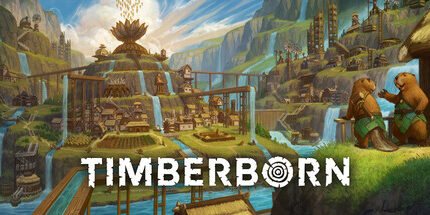
Timberborn is a game that feels familiar at first… until it doesn’t. It looks like a cozy city builder where beavers build dams and water flows through lovingly sculpted valleys. But beneath the wood grain and the cheerful paws lies a design that challenges your thinking, your patience, and your sense of care.
In a medium where combat, conflict, and domination dominate, Timberborn quietly asks a different question:
What if the deepest challenge is understanding systems, not defeating enemies?
For us — and for many players who join our live streams at Twitch.tv/DualisticUnity — Timberborn isn’t just a game we play. It’s a space of reflection, experimentation, and shared discovery.
Let’s explore why.
A City Builder Without Combat
Timberborn is a city-building simulation developed and published by independent studio Mechanistry. You guide a colony of post-human beavers, building settlements, managing resources, and planning for seasonal shifts and environmental challenges.
Here’s the first unusual thing:
There are no enemies. No combat. No weapons.
Players are not pressured to attack or conquer.
Instead, the primary threats come from the world itself — drought, shifting water levels, contaminated sources, toxic hazards, and the limits of your planning.
And yet:
The game is deeply engaging and challenging — without violence.
How does it achieve that?
Challenge as Systems, Not Conflict
In most survival or city-builder games, adversity is framed as something to defeat — a force to crush. Timberborn subverts this.
The core challenge comes from systems that respond logically and honestly to your decisions.
For example:
- Water dynamics: You must sculpt terrain, build reservoirs, and manage irrigation. If a river runs dry or your reservoir dips below a critical level, crops fail and beavers go thirsty.
- Environmental hazards: Recent major updates — like Update 5: Badwater — added toxic water (“badwater”) and badtides, making resource management more complex and demanding careful planning.
- Vertical world and transportation: Update 7: Ziplines & Tubeways introduced new terrain systems and travel methods, giving players powerful tools — but also requiring new strategies for efficiency.
None of these challenges involve attacking an enemy.
They involve adapting, observing, and responding.
This is important:
The difficulty isn’t about survival through aggression — it’s about survival through insight.
Failure is Feedback, Not Punishment
One of the most refreshing aspects of Timberborn is how failure feels:
- A drought decimates your water table — so you rebuild reservoirs.
- A toxic flood contaminates your fields — so you rethink irrigation.
- Transport bottlenecks slow your growth — so you build ziplines.
These aren’t failures in the traditional sense. They are information. They tell you:
This system behaved this way — now what will you do next?
There’s no “game over” jerk-back to the menu with a blame message. Loss and recovery are part of the same narrative.
That’s why streaming Timberborn feels so calm:
We don’t gasp at enemies — we respond to consequences — together.
Why Non-Violence Enhances Presence
Playing Timberborn fosters a rhythm uncommon in modern games:
- Observe the world — watch water flow, watch crops grow.
- Plan your next structures — aqueducts, reservoirs, or elevated platforms.
- Adjust based on outcomes.
In the absence of combat, your brain doesn’t settle into reflexive threat monitoring. Instead, it enters a flow of attention — one that prizes understanding over reaction.
This is why many of us can play for hours quietly, lost in the satisfaction of careful design, and why it feels so good to stream to others. Viewers don’t come just to watch action — they come to witness a living system, unfolding in real time, and to contribute ideas.
A Living Game in Development
Timberborn is still being refined. After launching into Early Access in September 2021, it has received seven major updates that deeply expand its mechanics and systems.
Highlights include:
- Update 5 – Badwater: New ecological hazards and seasons that shift water quality and demand creative water-management strategies.
- Update 6 – Wonders of Water: Full 3D water physics, allowing for richer irrigation and more natural flows.
- Update 7 – Ziplines & Tubeways: New transportation mechanics and terrain tools that reshape how cities expand vertically and horizontally.
- Experimental 1.0 Build: The game’s full release is approaching, introducing new objects like aquifers and geothermal features, along with more challenges and creative possibilities.

The developers remain committed to iterative improvement — often responding directly to player feedback — which makes Timberborn feel like a living project, not a fixed product.
Why This Matters Beyond Gaming
More than a city builder, Timberborn invites players into a gentle practice of attention and adaptation. Challenges here aren’t about proving dominance — they are about understanding relationships within a system and making better choices over time.
In our streams, that’s exactly what we celebrate:
Not the spectacle of triumph, but the ongoing conversation between player, environment, and community.
It’s a testament to a different philosophy:
Care can be challenging. Complexity can be peaceful. Depth doesn’t need violence.
Playing Together, Learning Together
We regularly play and stream Timberborn live at
👉 https://www.twitch.tv/DualisticUnity
Not to speedrun or conquer, but to explore, experiment, and engage with the game’s systems in real time. Viewers join in the problem-solving, the unexpected consequences, and the satisfying solutions that arise when calm attention meets open-ended design.
Timberborn isn’t just a game we play — it’s a space where understanding grows.
Reflection Questions
- How does your approach to challenge change when there’s no enemy to defeat?
- What kinds of feedback feel most meaningful to you in a system like this?
- In what areas of your life might responses replace resistance?
Continue the Exploration
This article is the first part of our mini-series
“Timberborn — A Game About Care.”
Next up: how Timberborn teaches environmental responsibility through play, without preaching.
For deeper reflections on awareness, systems, and presence in life and play, explore the book
Proof That You’re God
👉 https://www.amazon.com/dp/B0DKCMR183/
