
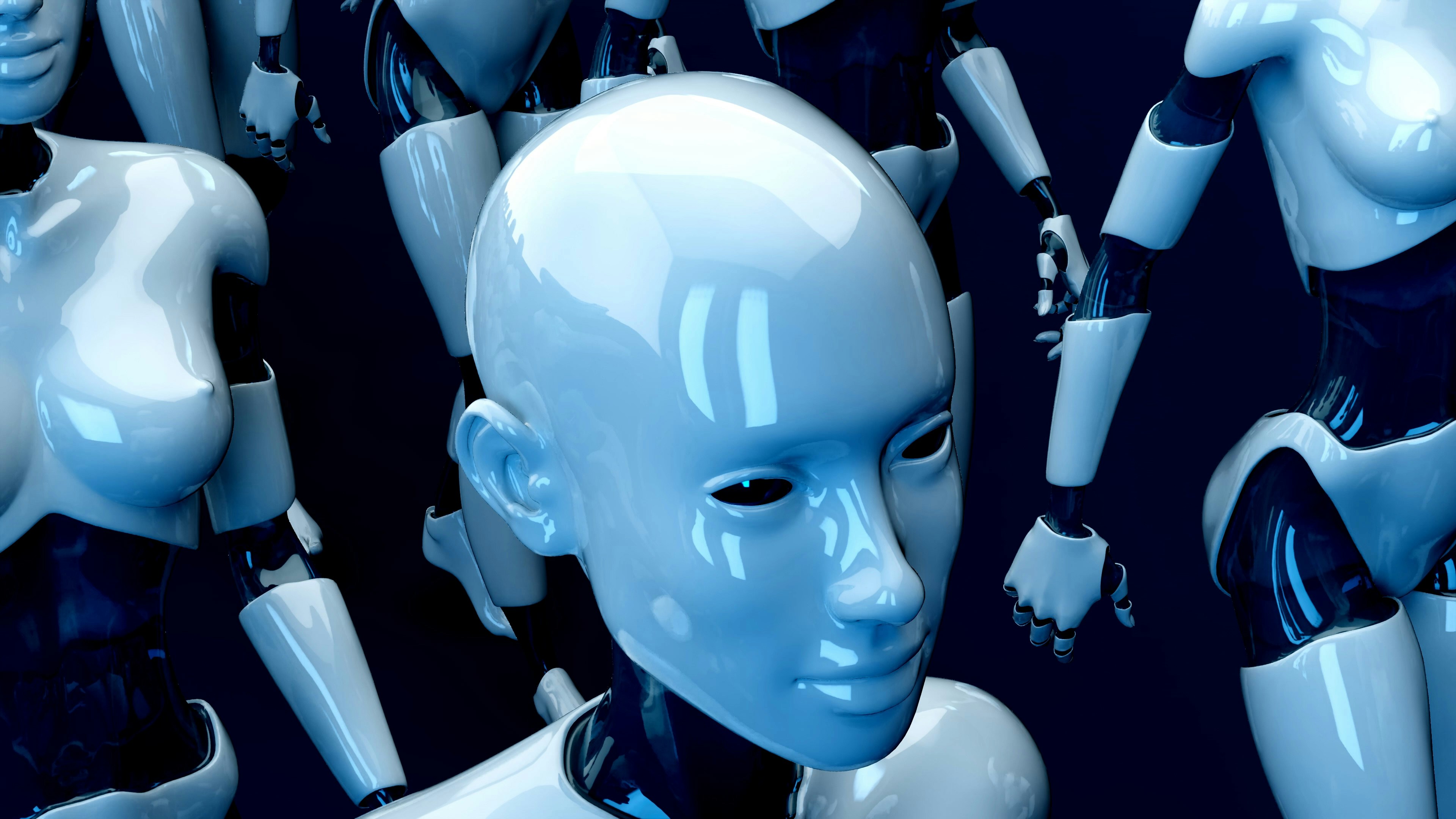
As artificial intelligence accelerates, it’s not just jobs at stake, but identities built on usefulness and competence.
The conversation around artificial intelligence has shifted.
It is no longer limited to questions of automation or job displacement. Increasingly, it touches something more personal and harder to articulate: a quiet anxiety about relevance. A concern not just about employment, but about adaptability, usefulness, and the possibility of becoming obsolete.
This fear rarely announces itself directly. It shows up as urgency to learn new tools, pressure to stay current, unease when technology advances faster than expected. Even those who are not immediately affected by AI often feel a subtle tension, as if time itself has begun moving too quickly.
What’s being threatened is not only economic security. It is a sense of self.
When Competence Becomes Identity
Modern identity is closely tied to capability. From an early age, value is associated with what one can do, produce, or contribute. Skills become currency. Expertise becomes proof of worth.
As long as progress is gradual, this arrangement feels stable. One can adapt, retrain, improve. But when technological change accelerates beyond the pace of individual adjustment, competence stops feeling reliable.
From the Dualistic Unity perspective explored in Proof That You’re God, this anxiety reveals a deeper attachment: identity fused with usefulness.
When the self is defined by what it can do, impermanence becomes threatening. Change is no longer neutral; it is existential.
Why the Fear Extends Beyond Employment
Much of the public discussion frames AI anxiety as a labor issue. While economic consequences are real, this framing misses the psychological dimension.
Even people who are financially secure or professionally established report unease. The fear is not always I will lose my job. It is I will no longer matter in the way I used to.
This is why new technologies can provoke defensiveness, comparison, and exhaustion. Each advance implicitly asks a question identity struggles to answer: What is my value now?
When that question remains unresolved, anxiety becomes ambient rather than acute.
Impermanence as a Threat to the Self-Story
At its core, technological acceleration confronts identity with impermanence.
Skills expire. Knowledge dates. Roles shift. The future becomes harder to predict. For an identity structured around continuity and improvement, this instability feels dangerous.
The mind responds by trying to outrun change: learning faster, optimizing constantly, staying vigilant. But no amount of adaptation can ultimately secure a self built on permanence in an impermanent world.
From a non-dual perspective, the suffering here does not arise from technology itself, but from the belief that identity must be preserved through competence.
What Softens When Usefulness Is Questioned
Questioning this does not mean rejecting technology, ambition, or learning. It means examining the assumption that worth depends on staying ahead.
When usefulness is no longer treated as the foundation of self, something loosens. Adaptation becomes optional rather than compulsory. Learning becomes curiosity rather than survival.
The future remains uncertain, but it no longer feels like a referendum on personal value.
This shift does not eliminate practical challenges. It changes how they are held.
Presence in an Accelerating World
Technology will continue to evolve. Skills will continue to change. Roles will continue to dissolve and re-form.
What remains available, even in acceleration, is presence—not as withdrawal from progress, but as freedom from measuring oneself against it.
When identity is not anchored to competence, impermanence loses its sting. Change becomes a condition of life rather than a threat to selfhood.
If this resonates…
These themes—identity, usefulness, and the quiet suffering created by impermanence—are explored more deeply in
Proof That You’re God
https://www.amazon.com/dp/B0DKCMR183/
Not as a response to technology, but as an inquiry into what remains when identity stops depending on what it can do.