
Most of us grow up with a comforting story about morality.
Good people do good things.
Bad people do bad things.
If someone lies, cheats, manipulates, steals, or causes suffering, we assume there must be something fundamentally wrong with them. Likewise, if someone is kind, generous, and compassionate, we assume they are incapable of causing serious harm.
Reality is far more unsettling.
History, psychology, and everyday life repeatedly show that ordinary people are capable of extraordinary kindness and profound harm, often within the same lifetime. Human beings are not divided neatly into heroes and villains. We are constantly making choices while navigating limited information, competing priorities, emotional reactions, and unintended consequences.
This does not mean morality is meaningless.
It means morality is far more complex than assigning permanent labels to people.
We Judge Others by Their Actions and Ourselves by Our Intentions
One of the most consistent findings in psychology is that we tend to explain our own mistakes differently than we explain the mistakes of others. Researchers call this the actor-observer bias. When we hurt someone, we usually think about our intentions. We remember our stress, our fear, our misunderstanding, or the circumstances that influenced our decision. When someone else hurts us, however, we are more likely to focus on what they did rather than what they were trying to accomplish.
Imagine forgetting a friend’s birthday because work became overwhelming. You might tell yourself you never meant to hurt them. If that same friend forgets your birthday, it is much easier to conclude that they simply do not care. The behavior may be identical, yet our interpretations are completely different.
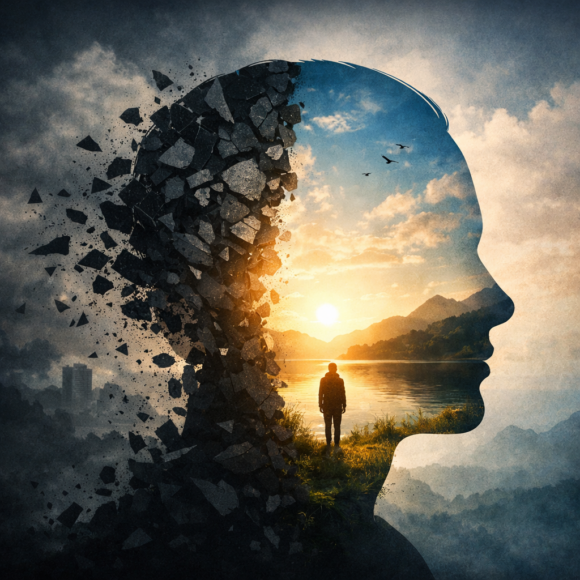
Our minds naturally protect our identity by separating who we are from what we have done.
History Rarely Divides People So Cleanly
Consider this throughout history. Some individuals celebrated as heroes have also made decisions that caused tremendous suffering. Likewise, many people remembered primarily for terrible actions were capable of love toward their families, generosity toward friends, or moments of genuine compassion.
This does not excuse harmful behavior.
Nor does it erase the good someone may have done.
It simply reminds us that human beings cannot be reduced to a single moment or a single label.
Psychologist Philip Zimbardo argued that ordinary people can behave in profoundly harmful ways under particular social conditions. Stanley Milgram’s obedience experiments likewise demonstrated that many participants were willing to administer what they believed were dangerous electric shocks when instructed by an authority figure. These studies have been debated and refined over the years, yet they continue to challenge the comforting belief that only “bad people” participate in harmful acts.
Sometimes the greatest danger lies not in monstrous individuals but in ordinary people who stop questioning themselves.
Good Intentions Can Still Produce Harm
Another way of looking at morality is to ask a more difficult question.
What if your intentions and your impact are not the same thing?
Parents sometimes protect their children so intensely that they unintentionally prevent them from developing confidence and independence.
Governments create policies intended to improve society that later produce unexpected economic or social consequences.
Friends offer advice believing they are helping, only to realize years later that their certainty discouraged someone from pursuing a dream.
Doctors recommend treatments using the best available evidence, only for later research to reveal serious side effects that were previously unknown.
None of these examples necessarily involve malicious intent.
Yet real harm can still occur.
Good intentions matter.
They simply do not determine outcomes.
Every Choice Helps Someone and Hurts Someone
Notice what happens whenever governments pass new laws.
Some people benefit.
Others experience new burdens.
Businesses open and create employment while simultaneously competing with existing local shops.
Medical breakthroughs save lives while raising difficult ethical questions.
Technological innovations connect families across continents while also contributing to anxiety, misinformation, and social isolation.
Life rarely presents choices that produce only positive consequences.
Most decisions involve trade-offs.
The difficulty begins when we refuse to acknowledge those trade-offs because we are convinced our motives alone guarantee righteousness.
Certainty Can Become Morally Dangerous
It is easy to assume that believing you are one of the “good people” automatically makes your decisions good.
History repeatedly suggests otherwise.
Many atrocities have been committed by individuals convinced they were acting for justice, security, freedom, progress, religion, civilization, or the greater good. People rarely wake up believing they are the villain in someone else’s story. More often, they believe they are protecting what matters most.
This is precisely why humility is so important.
Humility does not mean refusing to make decisions.
It means recognizing that even our most deeply held convictions deserve continued examination.
We Cannot Predict Every Consequence
One possibility is that human beings consistently overestimate their ability to predict the future.
Every decision creates consequences that extend far beyond what we can see. Choosing one career may introduce you to the person you eventually marry. Missing a flight may save your life. Accepting one job may unintentionally prevent another opportunity that would have changed everything.
The same uncertainty applies to our influence on others.
A brief conversation may inspire someone for decades.
A careless comment may become an insecurity they carry for years.
An act of honesty may end one relationship while allowing another healthier one to begin.
The farther consequences travel through time, the less able we become to predict them.
Our choices ripple outward long after we stop thinking about them.
Accountability Is Different From Shame
Recognizing our capacity to cause harm should not lead to paralysis.
It should lead to accountability.
There is an important difference.
Shame says, “I am a bad person.”
Accountability asks, “What effect did my actions have, and what can I learn from them?”
The first freezes growth because identity becomes the focus.
The second makes growth possible because attention shifts toward awareness and responsibility.
Healthy accountability allows us to apologize without believing we are permanently broken. It allows us to repair relationships when possible while accepting that not every consequence can be undone.
Beyond Good People and Bad People
The deeper question is not whether you are a good person.
It is whether you are willing to remain teachable.
People who believe they have already arrived morally often become the least curious about the effects of their behavior. By contrast, people who accept that they are capable of both wisdom and error often remain open to feedback, correction, and growth.
This perspective does not eliminate responsibility.
It deepens it.
Instead of asking whether someone belongs in the category of good or bad, we begin asking more useful questions. What happened? What assumptions shaped this decision? Who benefited? Who was harmed? What was intended? What actually occurred? What can be learned moving forward?
Those questions are far more difficult than assigning labels.
They are also far more likely to produce understanding.
Living With Moral Uncertainty
Over time, many of us discover that morality is less about maintaining the identity of being a good person than it is about developing the awareness to keep learning from our choices. We will inevitably help people without realizing it. We will also inevitably hurt people without intending to. Neither reality defines us completely.
What defines us more consistently is our willingness to remain honest about both.
When we stop protecting the story that we are always right, we become capable of seeing the consequences of our actions more clearly. Ironically, accepting that we are capable of causing harm may be one of the qualities that helps us cause less of it.
Awareness begins where certainty ends.
Continue the Exploration
Much of our suffering comes from trying to protect an identity—especially the identity of being a good person. Yet awareness asks something different of us. It invites us to look honestly at our actions, our assumptions, and their consequences without collapsing into shame or hiding behind certainty.
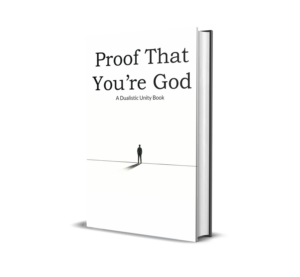
If this article resonated with you, consider reading Proof That You’re God. The book explores how identity, certainty, awareness, and perception shape the way we understand ourselves and others. Sometimes becoming more compassionate begins by recognizing that every human being is capable of both wisdom and error.