It’s a familiar argument.
When conversations about faith and science reach a standstill, Christians often point to famous scientists who “believed in God.” Names like Einstein, Planck, Heisenberg, and others are offered as evidence that belief isn’t naïve—that even the most rigorous scientific minds recognized a divine source behind reality.
At first glance, this seems compelling. Why would such disciplined thinkers speak about God at all if there were nothing there?
But when you slow down and look more closely at what these scientists actually meant, a quiet distinction begins to emerge.
They weren’t denying God.
They were referring to something very different than the personal, interventionist God many people associate with religion.
When “God” Means Something Other Than Religion
For many religious believers, God is understood as:
- a personal being
- separate from the universe
- capable of intention, judgment, and intervention
- distinct from creation itself
This conception carries moral authority, narrative history, and relational expectations. God listens. God responds. God acts.
But when scientists speak about God, they are often using the word in a fundamentally different way.
This is where much of the confusion enters the conversation, because the same word is being used to point at very different things.
In other words, when these scientists said “God,” they were not saying “Jesus.” They were not endorsing Christianity by another name. They were using inherited religious language to gesture toward what they encountered through inquiry: a universe that behaves as if it is ordered from within, not governed by an external ruler acting through history.
Why Scientists Keep Using the Word “God” at All
Historically, “God” was the strongest word available to point at what felt ultimate.
Long before modern science existed, the word functioned as a placeholder for:
- the source of order
- the reason there is something rather than nothing
- the fact that reality is intelligible at all
As scientific inquiry deepened, many thinkers retained the word—but its meaning shifted.
When scientists spoke of God, they were often acknowledging:
- that the universe follows consistent laws
- that those laws can be discovered
- that reality is coherent rather than arbitrary
In other words, they weren’t affirming doctrine.
They were expressing astonishment that reality makes sense.
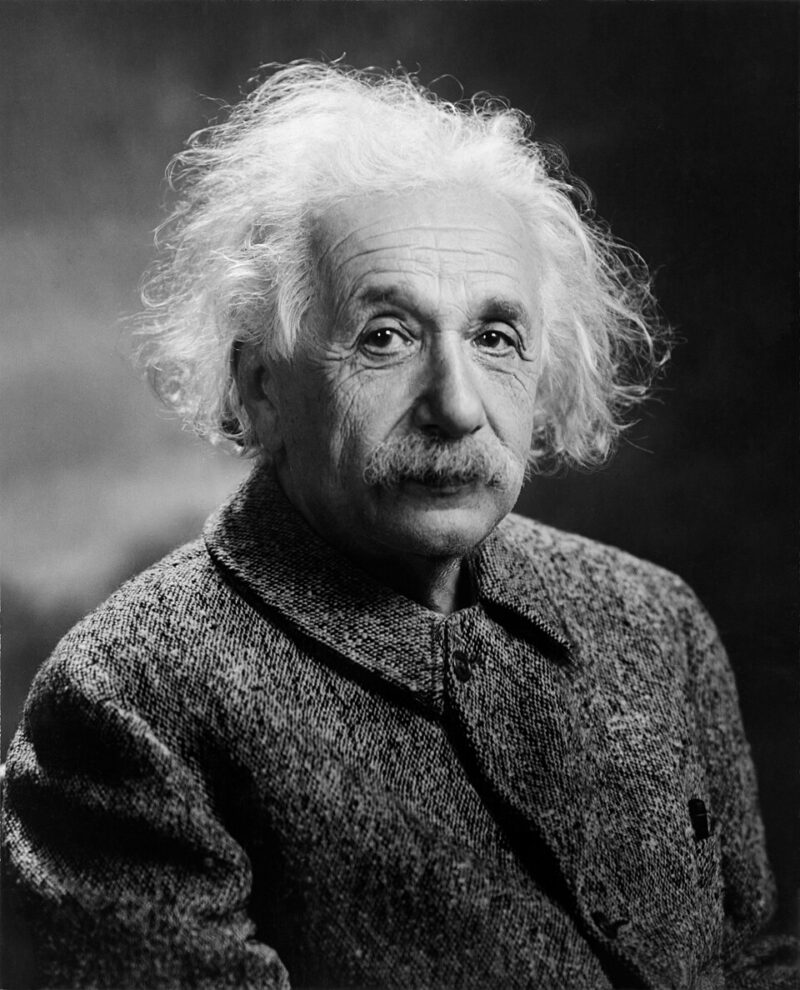
Einstein’s “God” Was Never a Person
Albert Einstein is perhaps the most frequently cited example.
Christians often quote him as evidence that science ultimately affirms God. But Einstein was explicit—repeatedly—that he did not believe in a personal deity.
He rejected:
- a God who answers prayers
- a God who intervenes in human affairs
- a God who rewards or punishes individuals
When Einstein spoke of God, he was referring to the order and harmony of the universe itself—an idea closely aligned with Spinoza, for whom God and nature were not separate.
Einstein’s “God” was not a being.
It was the intelligibility of existence.
Planck, Heisenberg, and the Language of Intelligence
Max Planck and Werner Heisenberg—two architects of modern physics—also spoke openly about God. But again, the meaning is easy to misread.
Planck spoke of a conscious, ordering principle behind matter. But this was not a being making decisions or issuing commands. It was closer to the idea that structure arises from within reality itself.
Heisenberg described physics as an encounter with the “ideas” behind nature. His language sounded theological, but his meaning was philosophical. He was pointing at coherence, not intervention.
In both cases, “God” functioned as a word for intelligence inherent to existence—not a ruler acting upon it.
Where the Argument Quietly Breaks Down
This is where the common apologetic move misfires.
When a Christian says, “Even scientists believe in God,” what is often meant is:
Scientists ultimately affirm the same God my religion describes.
But when scientists say, “I believe in God,” what they often mean is:
Reality is ordered, coherent, and not reducible to randomness alone.
The same word is doing different work.
The disagreement persists not because either side is dishonest, but because the distinction is rarely examined.
God as Reality, Not a Resident of Reality
What many scientists seem to converge on—often without agreeing on language—is the sense that reality itself behaves intelligently.
Not intelligently designed, as if assembled by an external craftsman.
But intelligent in expression.
The universe is not a pile of disconnected parts. It is a seamless process in which:
- laws remain consistent
- patterns repeat across scales
- observation itself is possible
This points to a radically different understanding of God.
Not a being inside the universe.
Not a creator standing outside creation.
But reality itself—unfolding as energy, matter, law, awareness, and experience.
This same tension appears in other areas of understanding, including the broader pattern explored in why clarity often feels harder the more we understand.
Why This Feels Threatening
This reframing quietly destabilizes several assumptions religion often relies on:
- external authority
- moral enforcement from beyond
- hierarchical separation between creator and creation
If God is not outside reality, obedience loses its anchor.
If God is not other, separation becomes harder to justify.
This doesn’t make religion wrong.
But it does make it incomplete.
And incompleteness often feels like threat.
The Intuition Beneath the Disagreement
Ironically, both scientists and religious believers are responding to the same intuition.
That reality is not accidental.
That existence is not meaningless.
That something profound is unfolding—not imposed, but inherent.
Religion personalizes this intuition.
Science abstracts it.
Both are reaching toward the same mystery from different angles.
Letting the Word Point More Carefully
If “God” is understood not as a supernatural ruler, but as reality itself recognizing itself, many long-standing debates soften.
Science no longer threatens faith.
Faith no longer needs borrowed authority.
And the question shifts from:
“Does God exist?”
To something more intimate:
“What is this reality that is appearing as us, through us, and to us?”
An Invitation Beyond Belief
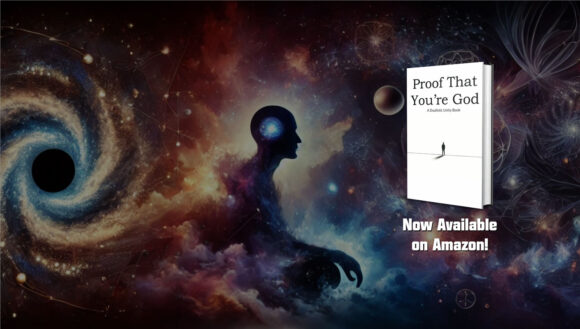
Proof That You’re God was written for this precise tension—not to argue against religion, and not to replace science with spirituality, but to explore what becomes visible when the assumption of separation is gently questioned.
If this article resonates, you may find Proof That You’re God meaningful. Not as a declaration of belief, but as an invitation to notice what remains when God is no longer imagined as somewhere else—and reality is allowed to speak for itself.