

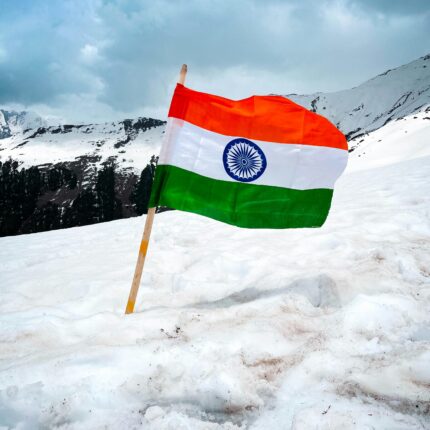
How remembrance shapes identity — and what awareness reveals beneath it
Every year on December 16, Vijay Diwas is observed to commemorate India’s victory in the 1971 war — a moment remembered for courage, sacrifice, and the birth of a nation.
On the surface, it is a historical remembrance.
A date. A victory. A story passed forward.
But beneath every collective memory lies something quieter and more intimate: the way identity is shaped through remembrance itself.
What we choose to remember — and how we remember it — does more than honor the past. It silently defines who we believe we are in the present.
Memory as a Collective Mirror
Nations, like individuals, are formed through stories.
Shared victories, shared losses, shared turning points — these events become reference points that unify millions of lives that will never meet. Through remembrance, history becomes identity.
But memory is never neutral.
It highlights certain moments and softens others. It organizes chaos into narrative. It offers meaning where reality was once uncertain.
In this way, remembrance doesn’t simply preserve the past — it creates continuity.
The Human Need to Remember
At its core, remembrance serves a deeply human function.
It helps answer unspoken questions:
- Where did we come from?
- What was endured?
- What must not be forgotten?
Victory Days, memorials, anniversaries — these rituals stabilize identity across time. They remind us that we belong to something larger than our individual lives.
But they also reveal something subtler:
identity depends on memory to feel real.
When Memory Becomes Attachment
In Proof That You’re God, a recurring exploration is how identity forms through association — with thoughts, stories, roles, and histories.
Collective memory is one of the most powerful associations there is.
When remembrance turns rigid, it can harden into:
- Fixed narratives
- Emotional reactivity
- Us-versus-them perspectives
This isn’t failure — it’s conditioning.
Memory becomes a structure the mind uses to locate itself. And when that structure feels threatened, defensiveness naturally follows.
The invitation is not to abandon memory — but to see it clearly.
Awareness and the Space Around History
Awareness doesn’t erase history.
It changes our relationship to it.
When remembrance is held with presence:
- Honor replaces pride
- Gratitude replaces superiority
- Reflection replaces reaction
We can respect sacrifice without turning it into identity armor. We can acknowledge victory without needing it to define worth.
In this way, awareness introduces space — allowing memory to inform rather than imprison.
What Vijay Diwas Ultimately Points Toward
At its deepest level, Vijay Diwas is not only about military success or national triumph.
It is about:
- Lives given
- Consequences endured
- A reminder of cost, not just outcome
And in that recognition, humility naturally arises.
The past doesn’t ask to be repeated — it asks to be understood.
Remembering Without Losing Presence
Collective memory becomes most meaningful when it doesn’t pull us out of the present.
When remembrance invites:
- Reflection instead of repetition
- Gratitude instead of grievance
- Awareness instead of identity fixation
History then becomes a teacher — not a weapon.
And presence becomes the ground from which remembrance stays alive, rather than reactive.
An Open Reflection
As we honor moments like Vijay Diwas, consider:
- What parts of my identity are rooted in memory?
- Where does remembrance bring clarity — and where does it create rigidity?
- What changes when history is honored without being clung to?
These questions don’t demand answers.
They invite awareness.
Continue the Exploration
The relationship between memory, identity, and awareness is explored more deeply in Proof That You’re God — an inquiry into how meaning forms, dissolves, and reveals what was never separate from us.
👉 Proof That You’re God
https://www.amazon.com/dp/B0DKCMR183/
History remembers.
Awareness understands.