

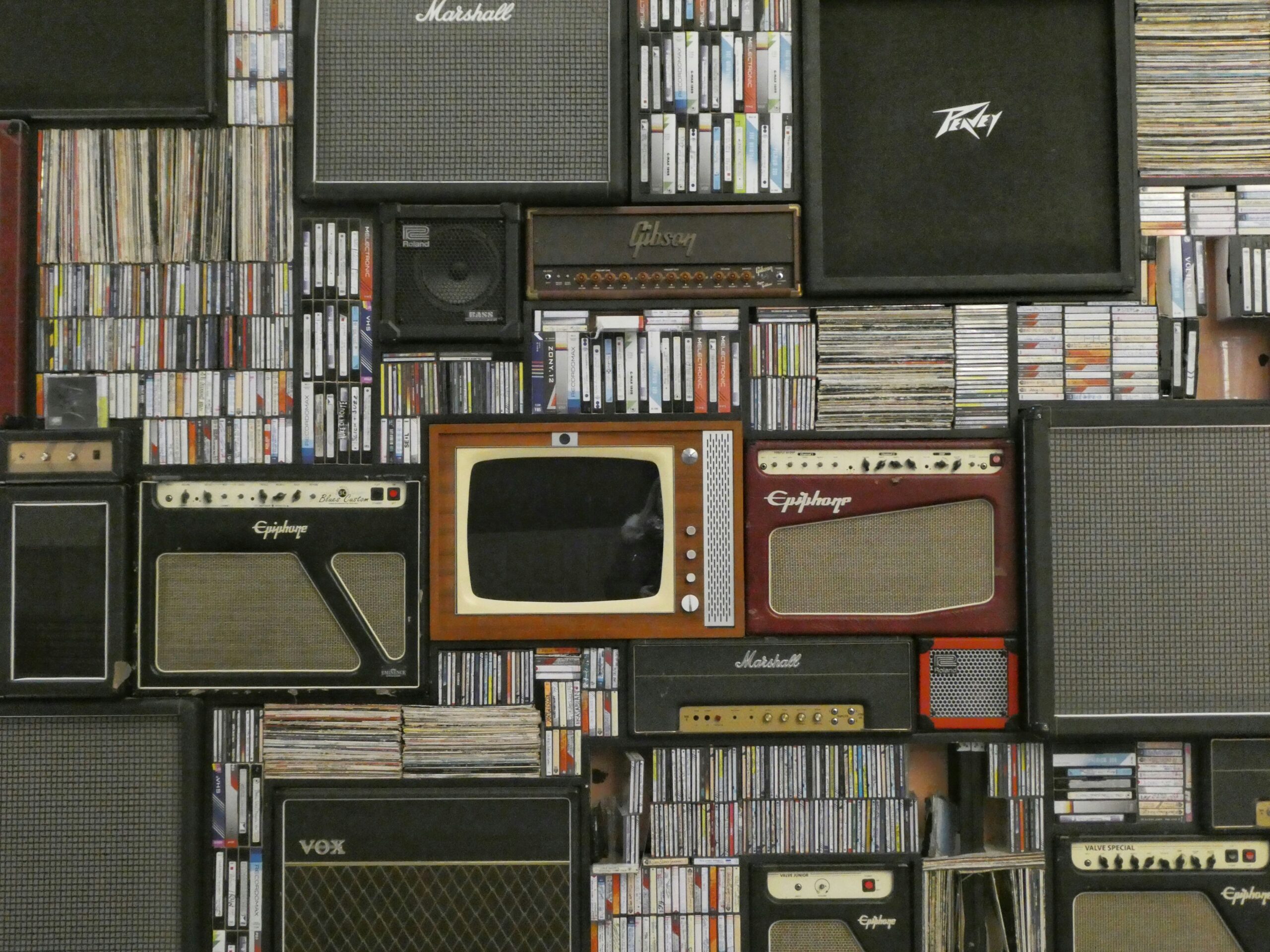
Why culture’s return to simplicity reflects something deeper than aesthetics
Vinyl records are back.
VHS tapes are being collected.
Flip phones, landlines, and offline hobbies are quietly resurfacing.
At first glance, this looks like nostalgia — a playful longing for the past, fueled by aesthetics and irony. Architectural Digest and other cultural observers have noted the growing fascination with retro tech and low-tech living as a design and lifestyle trend.
But beneath the surface, something more intimate is happening.
This isn’t just about old objects.
It’s about a modern nervous system trying to breathe.
When Faster Stops Feeling Better
We live in the most connected era in human history — and yet, many people feel chronically scattered.
Notifications fracture attention.
Endless content erodes depth.
Efficiency replaces intimacy.
The promise of technology was freedom. The experience, increasingly, is saturation.
So when culture reaches backward — toward analog tools, tactile media, slower rituals — it isn’t regression. It’s regulation. A subconscious attempt to reintroduce boundaries where none exist digitally.
Low-tech isn’t the point.
Presence is.
Nostalgia as a Signal, Not a Solution
Nostalgia often gets dismissed as escapism. But psychologically, it’s rarely about the past itself.
It’s about how the past felt.
- Less interruption
- Fewer identities to maintain
- Clearer separation between private and public
- Time that wasn’t constantly monetized
What people are missing isn’t VHS tapes. It’s unfragmented attention.
This is why “slow living,” digital minimalism, and offline rituals resonate so deeply right now. They promise something technology can’t deliver on its own: depth without demand.
The Deeper Longing Beneath the Trend
In Proof That You’re God, a recurring insight is that meaning isn’t created through accumulation — of experiences, identities, or tools — but revealed when the mind stops reaching.
The cultural turn toward simplicity mirrors this inward movement.
Not because analog life is inherently superior, but because:
- Fewer inputs reduce internal noise
- Slower pace reveals unnoticed awareness
- Limits create space
Presence doesn’t come from what we add.
It comes from what we stop feeding.
Low-Tech as a Mirror, Not an Answer
There’s a subtle trap here.
We can turn simplicity into another identity:
- The “offline” aesthetic
- The curated slow life
- The minimalist persona
But the relief people feel when unplugging isn’t caused by the absence of devices — it’s caused by the absence of constant self-management.
When attention isn’t being pulled outward, awareness naturally settles inward.
That’s not nostalgia.
That’s recognition.
What the Slow-Down Is Really Pointing Toward
Culture doesn’t slow down unless something hurts.
The resurgence of low-tech signals a collective exhaustion with:
- Performing constantly
- Processing endlessly
- Existing as data
And underneath that exhaustion is a quiet realization:
Nothing meaningful was ever missing — it was just drowned out.
Presence doesn’t require a different era, device, or lifestyle.
It requires noticing what’s already here when the noise pauses.
An Open Reflection
As trends cycle and simplicity resurfaces, consider:
- What am I actually longing for when I crave “simpler times”?
- Is it the object — or the quality of attention it represents?
- What happens when I slow down without replacing one identity with another?
These aren’t questions to answer — only to sit with.
Continue the Exploration
This cultural reflection points toward a deeper inquiry explored throughout Proof That You’re God — an examination of identity, awareness, and why meaning isn’t created, but uncovered.
👉 Proof That You’re God
https://www.amazon.com/dp/B0DKCMR183/
The world doesn’t need to slow down for presence to appear — it only needs to be noticed.