
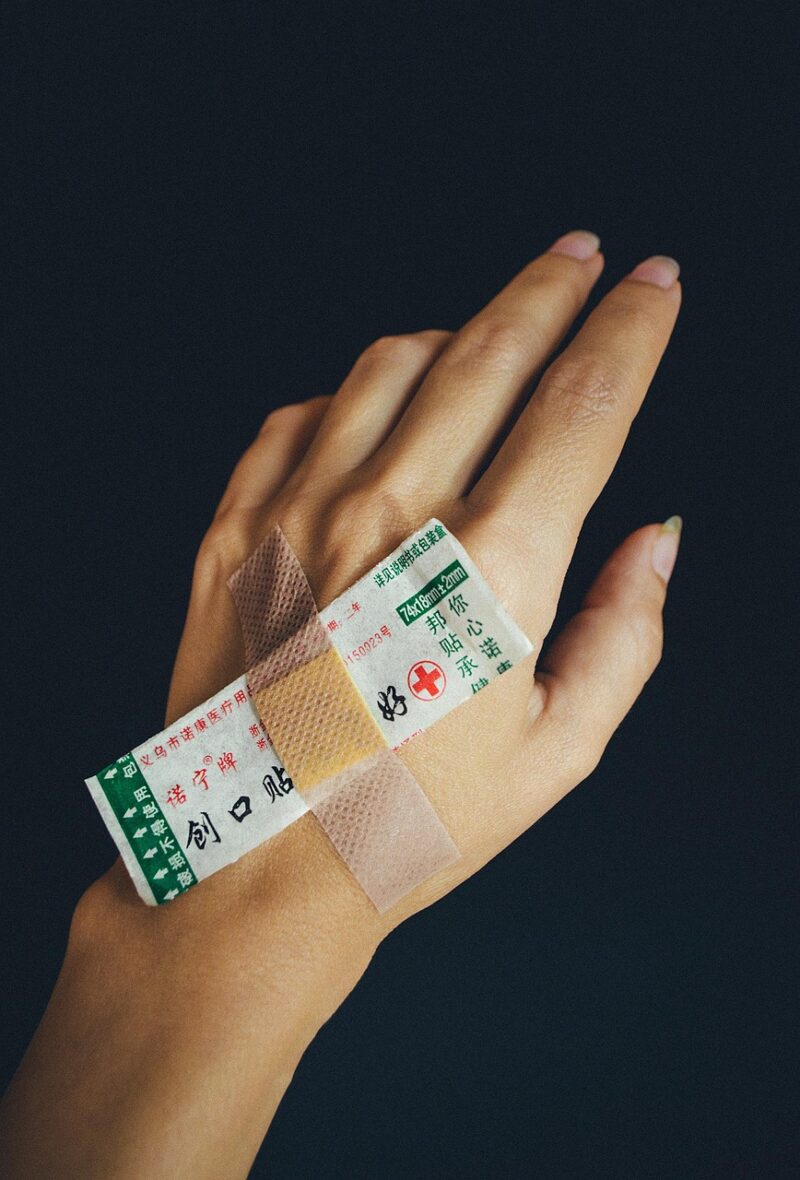
What We Were Really Being Taught About Healing
“Don’t pick at it.”
It’s one of those phrases almost everyone heard growing up.
A scraped knee. A scab on an elbow. A healing cut that itched just enough to demand attention.
Don’t pick at it.
You’ll make it worse.
Let it heal.
At the time, it sounded practical. Medical. Obvious.
But years later, many of us are doing the exact opposite — not just with our skin, but with our inner lives.
We pick at memories.
At regrets.
At old conversations.
At wounds that already hurt enough on their own.
And we call it processing.
The Body Already Knows How to Heal
A scab exists for a reason.
It’s not pretty.
It’s not comfortable.
It itches. It pulls. It reminds you something happened.
But it’s doing quiet, intelligent work.
The body doesn’t heal by revisiting the injury over and over.
It heals by protecting, closing, and reorganizing.
When we pick at a scab, we don’t speed healing — we interrupt it.
We reopen what was already closing.
We introduce infection where the body was restoring order.
We turn a temporary wound into a chronic one.
And still, we keep picking.
Because the discomfort feels unresolved.
Why “Don’t Pick at It” Was Never Just About Skin
What that old advice was really pointing to wasn’t obedience or patience.
It was trust.
Trust that healing happens without constant interference.
Trust that not all discomfort requires action.
Trust that time and intelligence are already at work beneath the surface.
But most of us didn’t learn how to apply that wisdom internally.
So we grew up and did what our culture quietly trained us to do:
We began managing ourselves.
Internal Wounds Itch Too
An old shame resurfaces.
A breakup you thought you were over.
A mistake from years ago that still tightens the chest.
There’s a familiar urge:
Let me think about this again.
Let me understand it one more time.
Let me replay it differently.
We tell ourselves we’re being responsible. Self-aware. Honest.
But often, we’re just picking.
Reopening emotional tissue that was already reorganizing itself.
Scratching at meaning that doesn’t need to be extracted again.
Mistaking discomfort for something unfinished.
Not every ache is a message.
Not every memory needs a post-mortem.
Some things are simply healing.
When Insight Becomes Interference
One of the quieter insights woven through Proof That You’re God is this:
awareness heals when it’s receptive, not when it’s controlling.
There’s a difference between noticing a wound and managing it.
Modern self-help culture often collapses the two.
We’re encouraged to:
- analyze endlessly
- identify root causes
- “do the work” immediately
- resolve everything consciously
But healing doesn’t always respond to scrutiny.
Sometimes attention soothes.
Sometimes attention irritates.
And sometimes, attention re-injures.
This is especially true when identity gets involved — when the self starts orbiting the wound, using it as a reference point for who it is and why it feels the way it does.
That pattern is visible in how we relate to control more broadly, explored in depth in why control doesn’t bring relief.
Picking is a form of control.
The Addiction to “Fixing”
Why is it so hard to leave wounds alone?
Because picking gives the illusion of agency.
Doing something feels better than waiting.
Intervening feels safer than trusting.
Engagement feels like care.
But the nervous system doesn’t always read interference as support.
Often, it reads it as danger.
This is why:
- rumination increases anxiety
- over-processing delays emotional closure
- constant self-monitoring exhausts the system
The mind thinks it’s helping.
The body feels like it’s under attack.
Just like skin.
Physical Wounds, Emotional Wounds — Same Pattern
Notice the parallels:
| Physical | Emotional |
|---|---|
| Scab itches | Memory resurfaces |
| Picking feels relieving | Rehashing feels productive |
| Healing is delayed | Closure stays elusive |
| Risk of infection | Risk of identity fixation |
In both cases, the urge comes from discomfort — not from wisdom.
The body doesn’t heal because you pick.
The psyche doesn’t integrate because you revisit endlessly.
Healing happens when conditions are right.
When “Let It Heal” Feels Like Neglect
Here’s where people get stuck.
If I’m not engaging with it…
If I’m not thinking about it…
If I’m not fixing it…
Am I avoiding?
Sometimes, yes.
But often, no.
Avoidance is pushing away.
Letting heal is allowing.
The difference isn’t effort — it’s relationship.
Avoidance says: “This shouldn’t be here.”
Healing says: “This is already changing.”
The Nervous System Prefers Safety Over Insight
We tend to overvalue understanding and undervalue safety.
But the nervous system heals in environments that feel:
- predictable
- non-threatening
- spacious
- patient
Constant probing doesn’t create safety.
It creates vigilance.
And vigilance keeps wounds open.
This is why some breakthroughs come after we stop trying so hard — after we stop narrating, interpreting, correcting.
The scab falls off when it’s ready.
What “Don’t Pick at It” Looks Like Internally
It doesn’t mean:
- suppressing emotions
- bypassing pain
- pretending nothing happened
It means:
- noticing urges without obeying them
- allowing feelings to move without commentary
- letting silence do some of the work
It means trusting that not all healing is cognitive.
Some of it is organic.
A Different Kind of Care
Real care isn’t constant attention.
It’s appropriate attention.
Just like you wouldn’t scrub a wound raw to help it heal, you don’t need to interrogate every ache of the psyche to prove you’re growing.
Sometimes the most loving thing you can say is:
“I see you. And I’ll stop touching this now.”
Closing Reflection
We were taught “don’t pick at it” because someone understood something we forgot:
Healing has its own intelligence.
The body knows how to close.
The psyche knows how to integrate.
Awareness doesn’t need to interfere to be present.
Some wounds don’t need more insight.
They need less handling.
And if this resonates, it may be because you’ve been trying to heal something that was already healing — quietly — before you got involved.
If you’d like to explore this terrain more deeply, Proof That You’re God looks at how identity, awareness, and control often interfere with the very relief they’re seeking — and what happens when we finally stop picking.
Sometimes, the work isn’t to fix.
It’s to let the scab fall off on its own.