
One of the most persistent messages within parts of the manosphere is that modern society has turned against men.
According to this narrative, men are constantly judged simply for being male. They are told their masculinity is toxic, viewed with suspicion, blamed for society’s problems, and expected to apologize for things they never personally did. Feminism, “woke culture,” universities, the media, and changing social norms are often identified as the primary causes.
For many men, these claims resonate because they describe genuine feelings.
Feeling misunderstood.
Feeling unwanted.
Feeling blamed.
Feeling uncertain about what it means to be a good man today.
The emotions deserve to be taken seriously.
The explanation deserves to be examined just as carefully.
Feeling Judged Is Not the Same as Being Hated
One of the first distinctions worth making is between perception and intention.
Many men report feeling that discussions about patriarchy, toxic masculinity, or male violence sound like attacks on men themselves. If someone repeatedly hears headlines about male aggression, sexism, or abuse, it is understandable that they may begin to wonder whether society sees men primarily as problems.
Research in psychology suggests that people naturally personalize criticism directed at groups they identify with. Social identity theory shows that when an important part of our identity feels threatened, we often experience criticism of the group as criticism of ourselves.
This response is deeply human.
It also means that conversations about systems can easily be heard as accusations against individuals.
That distinction is often lost online.
What Feminism Actually Says
Another way of looking at this debate is to begin with definitions rather than assumptions.
Feminism is broadly defined by scholars and major dictionaries as the movement advocating for the political, economic, and social equality of the sexes.
Like every large social movement, feminism contains many schools of thought. Liberal feminists, radical feminists, intersectional feminists, socialist feminists, ecofeminists, and others sometimes disagree sharply with one another.
There are certainly individuals who identify as feminists and express hostility toward men.
There are also individuals who identify as conservatives, liberals, religious believers, atheists, environmentalists, or members of nearly any other movement who express hostility toward particular groups.
Those individuals should not automatically be treated as representative of millions of people who share only one label.
Most mainstream feminist scholarship argues that rigid gender expectations harm both women and men, albeit often in different ways.
What Does “Toxic Masculinity” Mean?
Few phrases have generated as much misunderstanding as “toxic masculinity.”
Many people hear the phrase and understandably conclude it means masculinity itself is toxic.
That is not how psychologists and many gender researchers typically use the term.
The American Psychological Association and numerous researchers use the concept to describe specific cultural expectations that encourage harmful behaviors, such as suppressing emotion, resolving conflict through aggression, avoiding vulnerability, refusing to seek help, or believing that dominance defines manhood.
The focus is on certain norms.
Not on being male.
In fact, many psychologists argue that these same expectations contribute to men’s higher rates of suicide, workplace fatalities, substance abuse, untreated mental illness, and reluctance to access healthcare.
The criticism is directed at restrictive expectations, not male existence.
Men Face Real Challenges
Acknowledging this does not require pretending men have no legitimate concerns.
Research consistently identifies several issues disproportionately affecting men.
Men account for the vast majority of workplace fatalities in many countries.
They die by suicide at substantially higher rates than women in countries such as the United States, Canada, Australia, and the United Kingdom, although women attempt suicide at comparable or higher rates in some studies.
Men are less likely to seek mental health treatment.
They often report smaller emotional support networks.
Researchers have also documented increasing loneliness among many men, declining participation in community organizations, and fewer close friendships than previous generations.
These are real issues.
They deserve serious attention regardless of political ideology.
Why Does It Feel Like Masculinity Is Under Attack?
Consider what has changed over the past several decades.
Women’s educational attainment has increased dramatically.
Women’s labor force participation has expanded.
Expectations surrounding parenting, relationships, and household labor have evolved.
Public conversations about sexual harassment, consent, domestic violence, and workplace discrimination have become more visible.
Rapid social change often produces uncertainty.
Roles that once appeared clearly defined become more negotiable.
The difficulty begins when uncertainty is interpreted as persecution.
If someone grew up believing men should always be providers, protectors, and decision-makers, changing expectations may feel less like an expansion of possibilities and more like the loss of a familiar identity.
That emotional response is understandable even if the underlying cause is more complex than deliberate hostility toward men.
Does Society Judge Men More Harshly?
The answer depends on what type of judgment we are discussing.
Research suggests that men and women are judged differently in different situations.
Men are more likely to be perceived as physically threatening by strangers, particularly in contexts involving children or personal safety.
Women are more likely to be judged on physical appearance, age, caregiving expectations, and sexual behavior.
Men often face greater stigma around emotional vulnerability.
Women often face greater scrutiny regarding leadership, motherhood, and appearance.
Social expectations remain powerful for both sexes.
They simply operate differently.
Reducing these patterns to “society hates men” or “society hates women” overlooks the complexity researchers consistently observe.
The Internet Magnifies Conflict
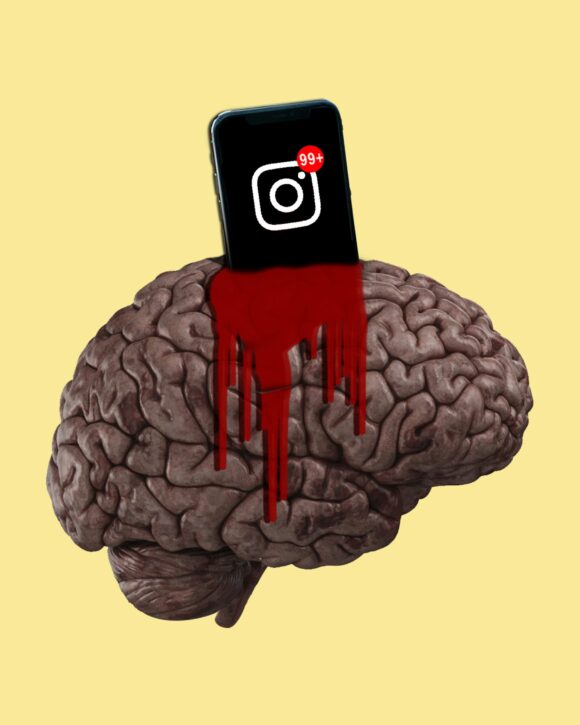
What often goes unnoticed is that social media platforms reward emotionally intense content.
Algorithms prioritize material that generates comments, outrage, and prolonged engagement.
Moderate voices rarely spread as quickly as inflammatory ones.
A creator saying, “Some people misunderstand masculinity,” is unlikely to receive the same attention as someone declaring, “Modern society hates men.”
The same dynamic exists across political perspectives.
Extreme statements travel farther.
This creates a distorted perception of public opinion.
Psychologists sometimes refer to this as availability bias: we estimate how common something is based on how easily examples come to mind.
If your online feed repeatedly shows videos criticizing men, it becomes easy to believe everyone feels that way.
The reverse is equally true.
Most Women Do Not Hate Men
Survey research paints a far less dramatic picture than internet debates often suggest.
Most women report wanting healthy relationships with men.
Most women have fathers, brothers, sons, partners, friends, coworkers, mentors, or colleagues they care about deeply.
Most heterosexual women actively seek loving romantic relationships with men.
Even among women who identify as feminists, research generally finds support for equality rather than hostility toward men as a group.
Disagreement with certain behaviors is not the same as hatred toward an entire sex.
This distinction matters because once disagreement becomes interpreted as hatred, productive conversation becomes much more difficult.
Identity Can Turn Every Conversation Into a Battle
The deeper question is why these discussions become so emotionally charged.
Identity provides one answer.
When masculinity becomes something we feel obligated to defend, every criticism risks becoming personal.
The same pattern appears across politics, religion, nationality, race, and ideology.
People stop asking, “Is this claim accurate?”
They begin asking, “Does this threaten who I am?”
Psychological research consistently shows that identity-based reasoning makes it harder to evaluate evidence objectively because protecting the self becomes intertwined with protecting a belief.
This is not unique to men.
It is a feature of being human.
Beyond Defending Masculinity
Another way of looking at masculinity is not as something under attack but as something continually evolving.
History shows that ideas about manhood have never remained fixed.
Ancient Roman masculinity differed from medieval masculinity.
Victorian masculinity differed from twentieth-century masculinity.
Expectations surrounding fatherhood, work, emotional expression, education, and relationships have all changed repeatedly across cultures and generations.
Change is not necessarily evidence of decline.
Sometimes it reflects society discovering healthier ways to live together.
That process is rarely simple.
It often produces disagreement, confusion, and resistance before new norms gradually emerge.
Seeing One Another Beyond the Labels
The internet often frames modern gender discussions as a battle between men and women.
Reality is usually less dramatic.
Most men are trying to build meaningful lives.
Most women are trying to do the same.
Both experience pressures, insecurities, disappointments, and hopes.
Both inherit cultural expectations they did not create.
Both sometimes misunderstand the fears of the other.
The challenge is not choosing which side deserves compassion.
It is recognizing that compassion becomes more difficult the moment we reduce people to categories instead of seeing them as individuals.
Continue the Exploration
Many of the strongest conflicts in modern culture begin with identity. Once we believe an idea threatens who we are, curiosity becomes difficult and defensiveness becomes almost automatic. Yet awareness grows when we become willing to examine not only other people’s assumptions but our own.
If this article resonated with you, consider reading Proof That You’re God. The book explores how identity, fear, certainty, and awareness shape our relationships with ourselves and with one another. Sometimes the path toward understanding begins not by defending an identity, but by becoming curious about how it was constructed in the first place.