
There’s a particular kind of silence that isn’t chosen.
You want to explain what’s happening to you—but when the moment comes, nothing coherent forms. The words feel inaccurate. Too dramatic. Too small. Too misleading.
So you say something simpler instead.
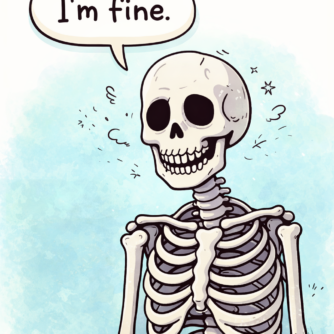
“I’m fine.”
“I don’t know.”
“It’s hard to explain.”
And the conversation moves on.
What’s happening here isn’t secrecy or avoidance. It’s not a lack of self-awareness or courage. More often, it’s that your experience hasn’t resolved into something speakable yet.
This difficulty often shows up alongside subtle anxiety or internal disorientation—not because something dramatic is happening, but because something structural is shifting. We explore that broader pattern in why anxiety isn’t about what’s happening.
Language Works Best for Finished Experiences
Language evolved to describe things that have edges:
- events with beginnings and endings
- emotions with names
- problems with causes
- stories with conclusions
But much of inner life doesn’t arrive finished.
It arrives as:
- mood without emotion
- tension without narrative
- change without direction
- movement without meaning
When experience is still forming, language lags behind it.
And trying to speak too early can feel dishonest.
You’re Not Withholding — You’re Oriented Differently
People often assume that if you can’t talk about something, you must be hiding it.
But there’s another possibility:
You’re not oriented toward explanation yet.
Explanation requires:
- distance
- perspective
- structure
- narrative coherence
If you’re still inside the experience—still feeling it, still reorganizing around it—those conditions aren’t available.
So words fail not because you’re guarded, but because you’re close.
Why Everything You Say Feels Wrong
When you try to describe what’s happening, you may notice:
- nothing sounds quite true
- each explanation feels reductive
- metaphors feel off
- emotional labels feel inaccurate
That’s because language compresses.
It turns living process into static description.
And when your experience is primarily process, compression feels like distortion.
This Often Happens During Identity Transitions
Difficulty speaking often coincides with periods where identity is loosening:
- motivations are changing
- old goals no longer pull
- familiar roles feel thin
- values are reorganizing
In these phases, there isn’t a stable “I” yet to speak from.
So the voice stalls.
Not because you’re lost—but because you’re between reference points.
The Pressure to Explain Makes It Worse
Well-meaning questions can unintentionally increase the block:
- “What’s wrong?”
- “How do you feel?”
- “Can you explain it better?”
- “What do you want to do?”
These assume the experience has already formed into answers.
When it hasn’t, the nervous system tightens.
And silence becomes the only honest response.
Why You Default to Saying “I Don’t Know”
“I don’t know” often gets mistaken for confusion.
But many times, it’s accuracy.
It’s not:
- “I haven’t thought about it.”
- “I’m avoiding it.”
- “I’m disconnected.”
It’s:
“What’s happening hasn’t taken shape yet.”
And forcing shape too early can freeze something that needs time to move.
Emotional Language Isn’t Always Available
Another reason speech fails is that the experience isn’t primarily emotional.
It might be:
- existential
- somatic
- perceptual
- orientational
There may not be sadness, anger, or fear—just shift.
And most emotional vocabularies aren’t built for that.
Silence Is Sometimes the Most Accurate Expression
We tend to treat silence as absence.
But sometimes, silence is precision.
It’s the refusal to turn something alive into something prematurely defined.
This kind of silence isn’t withdrawal.
It’s containment.
Why This Can Feel So Isolating
Even though silence may be honest, it often leads to distance.
Others don’t know how to meet what isn’t articulated.
You don’t know how to bridge the gap without falsifying yourself.
So connection thins.
Not because you don’t want it—but because there’s nothing finished to offer yet.
The Mistake: Trying to Translate Too Soon
A common reaction is to try harder:
- journaling aggressively
- analyzing endlessly
- forcing insights
- rehearsing explanations
But meaning isn’t manufactured through pressure.
It emerges when experience has enough room to clarify itself.
A Different Way to Speak (When You Do)
Sometimes the most accurate language isn’t explanatory at all.
It sounds more like:
- “Something is shifting, but I can’t name it yet.”
- “I’m not in crisis—just in transition.”
- “I’m okay, but undefined.”
- “I don’t have a story for this yet.”
This kind of speech doesn’t resolve the listener’s curiosity.
But it preserves honesty.
Why Some Experiences Must Be Lived Before They’re Spoken
Not everything is meant to be talked through in real time.
Some experiences need to:
- complete their movement
- settle into shape
- reveal their contours
- find their own language
Only then does speech become descriptive instead of defensive.
You’re Not Bad at Communication
Difficulty speaking during inner change doesn’t mean:
- you’re emotionally unavailable
- you lack insight
- you’re disconnected
- you’re failing at vulnerability
It means your experience is ahead of your language.
And that’s not a flaw.
It’s a phase.
What Helps Without Forcing Clarity
What tends to support this phase is:
- patience
- permission not to explain
- presence without interrogation
- relationships that tolerate ambiguity
Clarity returns on its own timeline.
And when it does, the words arrive easily.
Language Will Catch Up
Eventually, something stabilizes.
Not everything—but enough.
Perspective forms.
Distance appears.
Meaning condenses.
And suddenly, what felt unsayable becomes simple.
Not because you solved it—but because you lived through it.
Closing Reflection
You can’t talk about what’s happening to you not because you’re hiding—but because it’s still happening.
Some experiences don’t want to be explained while they’re unfolding.
They want to be lived honestly and without pressure.
Silence, in these moments, isn’t absence.
It’s respect for something that hasn’t finished becoming itself yet.
If this exploration resonates and you’d like to continue understanding why clarity, identity, and expression often lag behind inner change, Proof That You’re God invites that inquiry—not by demanding articulation, but by staying with what’s present long enough for language to arise naturally.