

Video games are everywhere.
They’re played by children and adults, casually and obsessively, alone and together. They show up on phones during short breaks, on consoles after work, and on PCs for hours at a time. They span genres, aesthetics, skill levels, and intentions.
And yet, they’re often discussed in narrow terms.
As distractions.
As hobbies.
As escapes.
As problems to manage or defend.
None of those frames quite capture what’s actually happening when people play.
This article isn’t here to argue that video games are good or bad, healthy or unhealthy. It’s here to look more closely at what games are — psychologically and experientially — and why they hold attention so reliably across cultures and generations.
Not as a verdict.
As an observation.
The Pull of Play
Play doesn’t need justification.
Long before games were digital, humans played. They invented rules, challenges, competitions, and imaginary worlds. They did this not because it was productive, but because it was engaging.
Video games didn’t invent this impulse. They refined it.
They offer structured play — bounded environments where rules are clear, stakes are defined, and feedback is immediate.
That pull isn’t mysterious. It’s human.
What’s worth noticing is why this pull can feel so strong, especially in contrast to everyday life.
What Games Offer That Life Often Doesn’t
Daily life is complex.
Goals are vague.
Feedback is delayed.
Effort doesn’t always correlate with outcome.
Agency can feel diluted by systems, expectations, and constraints.
Games, by contrast, tend to offer clarity.
There is something to do.
You know when you’re doing it.
You can see progress.
You can fail without lasting consequence.
This doesn’t make games superior to life. It makes them contained.
Contained experiences are easier to engage with fully.
Clear Goals and Immediate Feedback
In most games, the objective is known.
Reach the destination.
Defeat the opponent.
Solve the puzzle.
Build the system.
You don’t need to infer whether you’re making progress. The game tells you.
This kind of feedback is rare in everyday life, where effort often unfolds without clear markers. You may work hard for years without knowing if it “counts.” You may do the right thing without recognition or result.
Games compress that uncertainty.
They don’t remove effort — they make it legible.
Agency Within Constraints
Games are not open-ended freedom.
They are carefully constrained systems.
You can’t do anything — but what you can do matters.
Within those constraints, agency becomes tangible. Choices have visible effects. Decisions shape outcomes. Skill improves performance.
This creates a sense of authorship.
Not over life itself, but over a defined space where action matters.
That feeling of agency isn’t an escape from reality. It’s a contrast to how constrained agency can feel elsewhere.
Challenge That Feels Worthwhile
Difficulty in games is rarely resented in the same way difficulty in life often is.
Players seek challenge.
They tolerate repetition.
They accept failure.
Why?
Because the challenge is voluntary and meaningful within the system.
Effort in games is chosen, not imposed. The stakes are clear. Failure doesn’t threaten identity or survival. It simply informs the next attempt.
This changes the emotional tone of effort.
What’s being engaged here isn’t masochism — it’s consent.
Control and the Pleasure of Mastery
Games often provide a form of control that feels clean.
Inputs produce outputs.
Practice produces improvement.
Systems behave consistently.
This doesn’t mean games make players controlling people. It means they offer environments where control is limited, predictable, and earned.
In life, control is often ambiguous. Effort doesn’t guarantee outcome. Systems shift. Rules change. Mastery is partial at best.
Games offer a contained arena where learning stabilizes.
That stability can feel deeply satisfying.
Violence, Competition, and Expression
Violent or competitive games often attract the most scrutiny.
But intensity alone doesn’t explain their appeal.
Competition offers clear contrast: win or lose, succeed or fail. It sharpens focus. It clarifies stakes.
Violence, in games, often functions symbolically rather than literally. It externalizes conflict. It provides a channel for intensity, aggression, or power that doesn’t require interpretation.
This doesn’t make such games inherently beneficial or harmful.
It simply acknowledges that expression doesn’t always need justification to be engaging.
Intensity has its own gravity.
Catharsis Without Consequence
One of the overlooked aspects of games is consequence management.
Failure resets.
Loss doesn’t linger.
Death is reversible.
This doesn’t trivialize action — it contextualizes it.
Games allow players to explore risk, dominance, competition, and consequence without permanent cost. That exploration doesn’t necessarily point to pathology. Often, it reflects a space where expression can occur without long-term stakes.
Again, not as therapy.
As play.
Non-Violent and Systems-Based Play
Not all engagement is competitive or combative.
Many games revolve around building, optimizing, experimenting, and maintaining systems.
Cities.
Farms.
Factories.
Ecosystems.
These environments invite curiosity rather than domination. They reward patience, iteration, and observation.
What’s engaged here is often flow.
Attention narrows.
Time softens.
Action and response align.
This kind of play doesn’t escape reality — it mirrors how humans naturally learn and adapt.
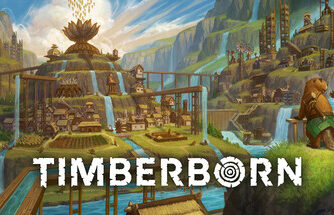
This dynamic is explored more specifically in “Timberborn and the Joy of Non-Violent Challenge.”
Immersion and Time
One of the most common observations about gaming is time distortion.
Hours pass unnoticed.
Attention feels absorbed.
The outside world fades.
This isn’t unique to games. It happens in art, conversation, creativity, and problem-solving.
What games do particularly well is structure immersion.
They provide continuous engagement loops that keep attention anchored.
This isn’t hypnosis. It’s coherence.
When experience is internally consistent and feedback is continuous, the mind doesn’t need to check out.
It stays.
Identity in Play
When playing a game, identity shifts subtly.
You become the character.
The strategist.
The builder.
The competitor.
This isn’t dissociation. It’s temporary identification.
Roles in games are clear, bounded, and reversible. You can step into them without carrying them forever.
For many people, this flexibility is refreshing.
In everyday life, identity is heavier. Roles persist. Expectations accumulate.
Games offer a space where identity can be tried on and set down.
Games as Mirror, Not Escape
It’s common to frame gaming as escapism.
Sometimes it is.
But escape implies avoidance — and that frame misses something important.
Games often reveal what feels constrained, missing, or unresolved elsewhere.
A lack of agency.
A hunger for clarity.
A desire for meaningful effort.
A need for contained challenge.
These aren’t flaws.
They’re signals.
Not instructions to play more or less — simply reflections of what’s being engaged.
Games don’t create these needs. They respond to them.
Play Doesn’t Need Defense
Games don’t need justification.
They don’t need to be productive.
They don’t need to teach lessons.
They don’t need to be optimized.
They matter because play matters.
Because structured experience matters.
Because agency matters.
Because meaning doesn’t only arise from outcomes — it arises from engagement.
Seeing this doesn’t require defending games against criticism or elevating them above other forms of life.
It simply places them in context.
Related Explorations
If this resonates, these related articles explore the same pattern through different lenses:
Closing Orientation
Video games aren’t problems to solve or solutions to adopt.
They’re mirrors.
They show how attention moves.
How effort feels when it’s chosen.
How meaning forms within structure.
How control operates when it’s bounded.
Noticing this doesn’t demand change.
It just adds clarity.
And clarity, here, isn’t an answer — it’s a way of seeing what play has been doing all along.
These themes are explored more fully in Proof That You’re God, not in relation to games specifically, but in how structured experience shapes attention and meaning.