

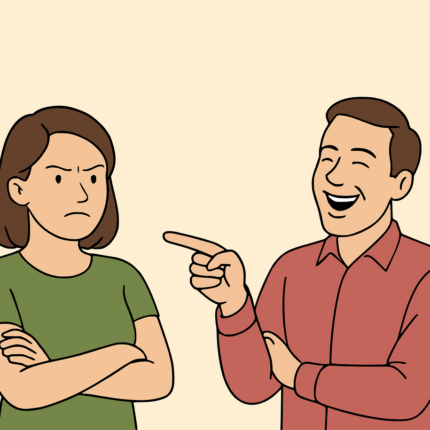
You didn’t hurt them. You just stopped performing or refused to start performing.
That’s usually the moment things fall apart.
One day, you’re easy to be around. Safe. Grounded. “Such a good listener.”
The next, you’re cold. Arrogant. Detached. Suddenly they’re wounded—and somehow it’s your fault.
Nothing obvious happened. No argument. No insult. No betrayal.
You just didn’t contort yourself to manage their feelings.
And for some people, that’s unforgivable.
There’s a strange pattern you start noticing once you stop managing other people’s emotions.
You meet someone new. Make a new friend. Conversation flows. There’s laughter, curiosity, a sense of ease. Everything feels mutual, light, human.
Then something shifts.
They begin to need you.
Not in the healthy way—where connection deepens naturally—but in a quiet, sticky way. A way that carries expectations you never agreed to. A way that subtly demands reassurance, validation, emotional regulation, and compliance.
And the moment you don’t provide it—with the correct tone, timing, or facial expression—you become the problem.
The Unspoken Contract No One Told You About
Many people walk through life with an invisible contract in hand:
“If I feel uncomfortable, you are responsible for fixing it.”
At first, it may be vulnerability or the appearance of vulnerability.
They share insecurities. Past wounds. Stories of being misunderstood or mistreated. You listen. You empathize.
But slowly, the contract reveals itself.
You’re no longer just present—you’re managing. Your words are filtered. Your honesty softened. Your boundaries negotiated away in exchange for peace.
And when you finally stop performing emotional labor you never signed up for, the script flips.
Now you’re cold.
Now you’re distant.
Now you’ve “changed.”
Victimhood as a Defense Mechanism
Here’s the part few people want to admit:
Victimhood is often not about pain—it’s about control.
When someone defines themselves by being wounded, they gain moral leverage. Any resistance you offer becomes proof of your cruelty. Any boundary you set becomes confirmation that they’re right about the world.
This is why some people don’t actually want to heal.
Healing would remove the story. Their pain is special.
And without the story, they’d have to face the uncomfortable truth:
No one is obligated to regulate their inner world for them.
Sometimes what’s really being defended isn’t a feeling — it’s a self-concept. A role. A narrative that says “this is who I am, and this is what others owe me.” When that identity is threatened, the system reaches for whatever restores stability — blame, moral leverage, certainty, or a rewritten story where you become the villain.
If you want the deeper mechanics of this, The Self You’re Trying to Hold Together breaks down how identity forms around narrative maintenance — and why it reacts so strongly when you stop performing your assigned role.
Why Submissive Niceness Is Mistaken for Kindness
There’s a cultural myth that says being “good” means being agreeable.
Smile.
Reassure.
Lower your voice.
Make yourself smaller.
But kindness without honesty isn’t kindness—it’s appeasement.
And appeasement teaches people the wrong lesson:
That their discomfort is more important than your authenticity.
The moment you stop playing that role, you’re accused of being harsh, arrogant, or unloving. Not because you are—but because you’re no longer managing their feelings.
The Real Reason People Get Upset With You
It’s rarely about what you said.
It’s about what you didn’t do.
You didn’t rescue.
You didn’t mirror their emotional state.
You didn’t shrink to preserve their self-image.
Your neutrality feels like abandonment to someone who relies on others to feel okay.
And that’s not cruelty.
That’s clarity.
The Cost of Constant Emotional Availability
If you’re always available to fix, soothe, or validate, you eventually disappear.
Your preferences dull.
Your honesty erodes.
Your presence becomes a performance.
And the irony?
The people who benefit most from this arrangement often accuse you of being inauthentic—because on some level, they can feel it too.
There Is Another Way to Relate
Connection doesn’t require submission.
It requires self-responsibility.
Two people meeting without needing the other to complete, stabilize, or rescue them.
This kind of relationship (including friendship) feels different. There’s space. There’s friction without collapse. There’s disagreement without emotional blackmail.
And yes—some people won’t like it.
They’ll drift away. They’ll label you. They’ll rewrite the story with you as the villain.
Let them.
That story was never about you anyway.
If You Want to Go Deeper
If this resonated, it’s likely because you’ve felt the pressure to be emotionally responsible for others—or the confusion that comes when you stop.
Our book, Proof That You’re God, explores this dynamic at the root level: identity, need, control, and the quiet ways we give our power away to feel safe and accepted.
It’s not a self-help manual.
It’s an invitation to question who you think you are—and who you think others need you to be and vice versa.
You can find it here:
👉 https://www.amazon.com/dp/B0DKCMR183/
Read it slowly. Question everything. Especially the parts that feel uncomfortable.
That discomfort isn’t a problem.
It’s the doorway.