
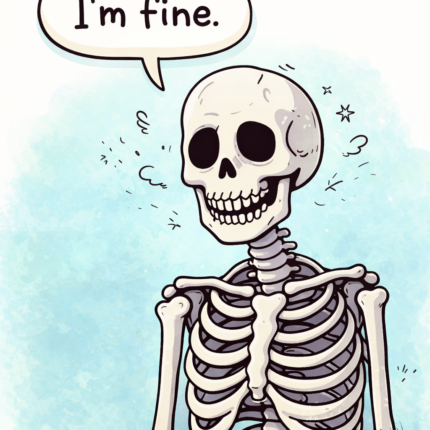
There’s a particular kind of distance that doesn’t come from pain.
It comes from being… fine.
Not great.
Not terrible.
Not in crisis.
Not especially joyful.
Just fine.
On the surface, this should be a relief. Nothing is wrong. Life is functioning. You’re coping. You’re getting through your days without major disruption.
And yet, something feels off.
You don’t feel distressed enough to ask for help.
You don’t feel fulfilled enough to feel alive.
You don’t feel justified in naming the emptiness.
So you stay quiet.
This experience often shows up alongside subtle anxiety or emotional flattening—not because something bad is happening, but because nothing in particular is. We explore that broader pattern more deeply in why anxiety isn’t about what’s happening.
“Fine” Is Socially Acceptable—but Internally Vague
“Fine” is a socially perfect answer.
It reassures others.
It avoids burden.
It ends the conversation politely.
But internally, “fine” is ambiguous.
It doesn’t describe much.
It doesn’t invite curiosity.
It doesn’t open connection.
It’s not an emotion—it’s a placeholder.
And living inside a placeholder can feel strangely isolating.
Why “Fine” Feels Safer Than Honest Emotion
For many people, “fine” develops as a survival strategy.
It avoids:
- conflict
- concern from others
- having to explain yourself
- confronting emotions you don’t fully understand
“Fine” keeps things smooth.
But smoothness often comes at the cost of depth.
Over time, you may notice that while nothing is wrong, nothing is really happening either.
The Loneliness of Not Being in Crisis
There’s a strange cultural rule we absorb early:
Pain must be intense to be legitimate.
If you’re not falling apart, you shouldn’t complain.
If you’re functioning, you should be grateful.
If you’re okay, you shouldn’t question it.
So when discomfort exists without drama—without a clear story—it doesn’t feel valid.
You’re left with a quiet sense of:
“I don’t know what to say about my life.”
And that can be deeply alienating.
Emotional Flatness Is Hard to Share
Strong emotions create connection.
Joy invites celebration.
Grief invites support.
Anger invites engagement.
But “fine” doesn’t invite anything.
It doesn’t give others a way in.
And it doesn’t give you a way out.
So conversations stay shallow—not because you want them to, but because there’s nothing clear to offer.
Why “Fine” Often Appears After Coping Too Long
Feeling fine often emerges after extended periods of effort.
You’ve:
- adjusted
- adapted
- lowered expectations
- learned how to manage
- stopped reacting as much
This isn’t failure.
It’s capacity.
But capacity without expression can turn into emotional numbness—not dramatic numbness, just a quiet dulling.
Life keeps moving.
You keep functioning.
But something essential feels muted.
When Identity Is Built Around Being “Okay”
Some people become known as:
- the stable one
- the easy one
- the low-maintenance one
- the one who’s always fine
This identity is rewarded.
But it can become a trap.
Because once “being fine” becomes who you are, not feeling fine starts to feel like a betrayal—of others, or of yourself.
So you stay fine.
Even when you’re not sure what that means anymore.
“Fine” Can Hide a Lack of Orientation
Often, what’s missing beneath “fine” isn’t emotion—it’s direction.
You may not feel bad.
But you also don’t feel pulled.
No urgency.
No deep interest.
No strong resistance.
Just ongoing neutrality.
This can feel unsettling because desire and distress are both forms of orientation. When neither is present, the system feels unanchored.
Why This Can Feel More Isolating Than Pain
Pain has a narrative.
“Fine” doesn’t.
Pain says: something is wrong.
“Fine” says: nothing is clear.
And clarity—even painful clarity—can feel more connective than ambiguity.
When you’re in pain, you can explain yourself.
When you’re “fine,” you can’t.
The Mistake: Trying to Upgrade “Fine” Into Positivity
When people notice the emptiness of “fine,” they often try to replace it with positivity:
- gratitude practices
- mindset work
- reframing
- self-improvement
But “fine” doesn’t need to be upgraded.
It needs to be listened to.
Because often, “fine” is a pause—not a conclusion.
What “Fine” Might Be Signaling
Feeling fine can be a sign that:
- old motivations have loosened
- fear is no longer driving
- identity is reorganizing
- expectations have dropped
- something quieter is emerging
It’s not numbness in the pathological sense.
It’s transition without a script.
Why This Phase Is So Hard to Name
This phase is hard to articulate because it doesn’t match common emotional categories.
It’s not sadness.
It’s not joy.
It’s not anxiety.
It’s not peace.
It’s more like:
- being present without direction
- being stable without meaning
- being okay without engagement
And without language, experience feels isolating—even when shared.
Presence Doesn’t Always Feel Alive
There’s a misconception that presence always feels vibrant or blissful.
Sometimes presence feels neutral.
Sometimes it feels quiet.
Sometimes it feels empty.
That doesn’t mean something is missing.
It means nothing is being forced.
And for a nervous system used to intensity—positive or negative—that can feel strange.
Connection Requires Permission to Be Undefined
One of the most healing shifts is allowing yourself to say:
“I’m okay, but I don’t really know how I feel.”
That sentence opens space.
It invites honesty without drama.
It allows connection without performance.
It names the ambiguity instead of hiding it.
And ambiguity is often where real intimacy begins.
You’re Not Supposed to Know What “Fine” Means Yet
Feeling fine isn’t the end of the story.
It’s a middle.
A place where old pressures have relaxed, but new orientation hasn’t formed yet.
Trying to resolve it too quickly often recreates the same patterns under a different name.
Letting it exist creates room for something more genuine to emerge.
Closing Reflection
Feeling “fine” can be alienating because it doesn’t give you a role, a narrative, or a reason to reach out.
But it can also be a quiet invitation—to stop performing emotion and start noticing what’s actually here.
Not to fix it.
Not to improve it.
Just to allow it to clarify on its own.
If this exploration resonates and you’d like to continue making sense of emotional neutrality, identity shifts, and the quieter phases of awareness without forcing them into meaning, Proof That You’re God invites that inquiry—not by telling you how to feel, but by staying with what’s present long enough for honesty to return.