What if the question isn’t whether you’re enough—but where you learned to measure yourself?
There are moments when the feeling arrives quietly. You see someone else’s success. You make a mistake. You receive criticism. You fail to meet your own expectations. Suddenly, a familiar thought appears.
“I’m not good enough.”
For some people, it lasts a few minutes. For others, it’s been present for years. It shapes careers. Relationships. Dreams left unpursued. Conversations never started. A life lived carefully, just in case someone else confirms what we’ve already begun to suspect. But before asking how to stop feeling this way, perhaps we should ask something even more important.
Where did the idea of “enough” come from in the first place?
Compared to What?
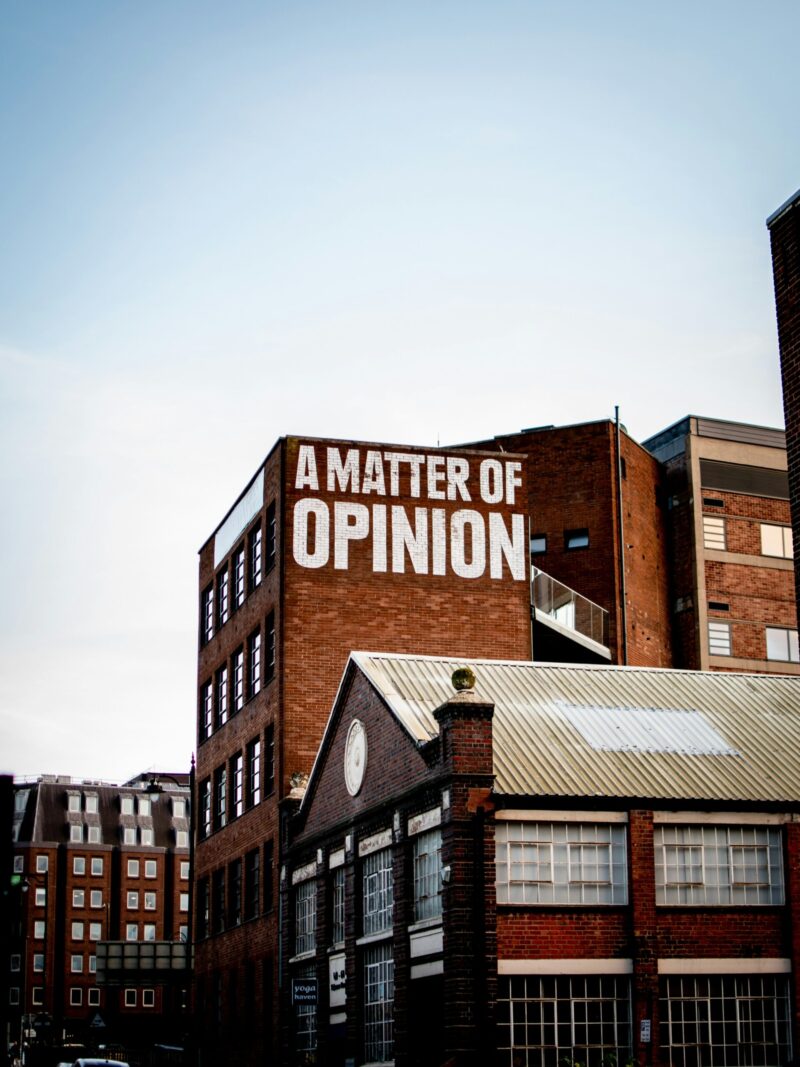
Imagine holding a ruler. Before it can tell you whether something is long or short, one question has to be answered. Compared to what? The same is true of feeling “not enough.” Not enough compared to whom? A sibling? A co-worker? An ideal version of yourself? Someone on social media? An expectation you never consciously chose? Feeling inadequate always depends on a comparison.
Without a standard, “not enough” has no meaning.
The Finish Line Keeps Moving
Perhaps you’ve noticed something curious. You achieve something you’ve wanted for years. A promotion. A relationship. A degree. Recognition. For a brief moment, you feel complete.
Then life continues.
Soon another goal appears. Another standard. Another version of yourself you believe you should become. If enoughness can disappear overnight, was it ever something you possessed? Or was it always tied to a finish line that kept moving?
We Learn to Measure Ourselves
No one is born believing they’re inadequate. Children laugh before they’re funny. Dance before they’re talented. Draw before they’re artists. They participate long before they evaluate. Gradually, however, we begin learning measurements.
Grades, Popularity, Performance, Appearance, Income, Followers, and/or Achievements.
None of these are inherently harmful.
But they quietly teach us that value can be measured. Eventually, we stop asking, “What am I experiencing?” and begin asking, “How am I performing?”
The Voice That Sounds Like Your Own
Over time, external expectations become internal conversations.
A teacher, or a friend, parent, culture, religion, and society. Their voices gradually become our own. One day we criticize ourselves without realizing we’re repeating ideas that were handed to us years ago. The inner critic often feels deeply personal.
Yet much of what it says wasn’t originally written by us.
What If Nothing Is Wrong?
This can feel like an uncomfortable question. Because if nothing is fundamentally wrong with you…
what happens to the decades you’ve spent trying to fix yourself?
Many of us organize our lives around becoming someone who will finally deserve peace. Someone who is more successful, more attractive, more productive, more spiritual, or more confident.
Always becoming. Rarely arriving. But perhaps peace doesn’t appear after becoming enough. Perhaps it begins when we question the belief that we were lacking in the first place.
Understanding Instead of Fixing
Modern culture loves improvement. There is always another habit to optimize. Another goal to reach. Another version of yourself waiting just beyond the horizon.
Growth is beautiful. But growth motivated by curiosity feels very different from growth motivated by inadequacy. One expands life. The other postpones it. The question isn’t whether you’ll continue learning. The question is whether your learning comes from appreciation or from the belief that you must earn the right to exist comfortably inside your own life.
You Were Never a Problem to Solve
This doesn’t mean you’ll never make mistakes. Or that criticism should be ignored. Or that growth doesn’t matter. Understanding yourself isn’t the same as pretending you’re perfect. It simply means recognizing that your humanity isn’t something you graduate into.
You’re already participating, learning, and changing.
You are already enough to begin.
Life isn’t asking you to prove your worth. Only to live it.
Questions Worth Sitting With
Instead of asking, “How do I become enough?”
Try asking:
- Compared to whom do I feel “not enough”?
- Who first taught me what enough looked like?
- If no one could evaluate me, what would I still want to become?
- Am I growing because I’m curious—or because I’m trying to escape myself?
- What if I stopped treating my life as a performance?
These aren’t questions to answer once. They’re questions to live with.
Final Thoughts
Feeling “not good enough” is one of the most common experiences of being human. But common doesn’t mean true. Perhaps you’ve spent years trying to solve a problem that was never your existence. Only your understanding of it.
Maybe enoughness isn’t a destination waiting somewhere in the future. Maybe it’s the quiet realization that life has never asked you to become someone worthy of being alive.
It simply asked you to be alive. And perhaps that’s where understanding begins.
Continue the Exploration
If this article resonated with you, you’ve reached another layer of the same conversation.
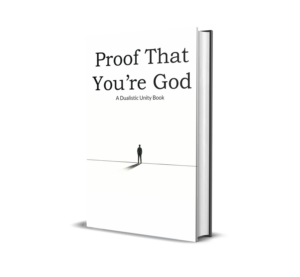
Proof That You’re God explores how fear, comparison, approval, identity, and the feeling of “not being enough” all emerge from the same habit of measuring ourselves against ideas we’ve inherited rather than experiences we’ve understood. The invitation isn’t to believe you’re perfect. It’s to discover what changes when you stop treating your life as something that needs to earn its value before it can be fully lived.