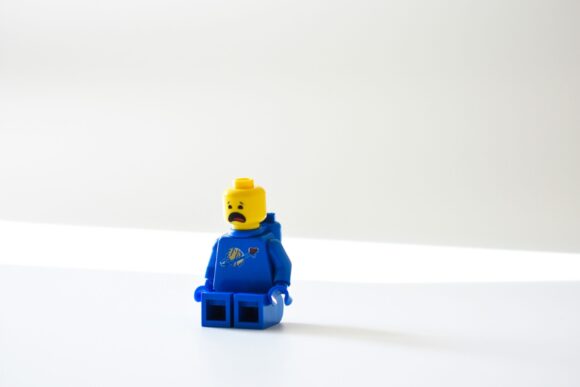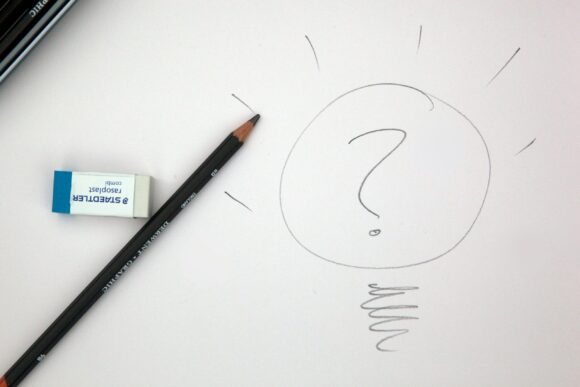

If goals worked the way they’re supposed to, more people would feel at ease by now.
Most of us have tried setting them carefully. Realistic goals. Measurable goals. Small, achievable goals that are meant to build momentum. We’ve read the books, listened to the talks, maybe even experienced short periods where things genuinely seemed to improve.
And yet, despite all that effort, something keeps slipping.
Progress doesn’t feel stable. Motivation comes and goes. When goals are met, the satisfaction fades faster than expected. When they aren’t, everything feels heavier than it should.
This often leads to a quiet, unsettling question:
Why does something that’s supposed to help so often feel like it’s making things worse?
When Goal-Setting Starts to Feel Like Pressure
At first, goals can feel grounding. They give shape to uncertainty. They offer something solid to move toward when life feels scattered or overwhelming.
But over time, many people notice a subtle shift.
Goals stop feeling supportive and start feeling demanding.
Instead of creating clarity, they begin to generate pressure. Every day becomes a kind of test. Progress is something you either prove or fail to prove. Even rest can feel undeserved if it isn’t justified by productivity.
And when a goal is missed, the problem isn’t just the missed outcome—it’s the meaning attached to it.
A skipped workout, an unfinished project, a delayed milestone doesn’t register as a neutral event. It registers as evidence. Evidence that you’re falling behind. That you’re losing momentum. That something about you isn’t working the way it should.
What’s confusing is that this reaction often happens even when life is objectively hard—when energy is low, circumstances change, or priorities shift.
Instead of adapting naturally, the system turns inward.
What’s wrong with me?
The Momentum Trap
This is why so much motivational advice emphasizes small, achievable goals. They appear to work because they build momentum. Each completed task creates a sense of forward motion—a feeling that life is moving rather than stalling.
And for a while, this works.
But momentum built on achievement has a hidden weakness.
When movement is defined by outcomes, it becomes conditional. Progress exists only as long as things are going well. The moment something slips, momentum doesn’t just slow—it collapses.
Failure doesn’t feel like part of the process.
It feels like going backwards.
This creates a fragile rhythm:
- Success feels good, but temporary
- Failure feels personal, even when it isn’t
- Motivation becomes something you’re always trying to recover
Instead of movement feeling natural, it starts to feel like something you have to constantly maintain.
The Quiet Exhaustion Beneath It All
Over time, this way of moving through life produces a kind of background exhaustion.
Not because you aren’t capable.
Not because you lack discipline.
But because everything feels like it’s riding on results.
There’s little room to slow down without guilt. Little space to explore without worrying whether it’s “productive.” Little tolerance for uncertainty, because uncertainty threatens the sense of progress holding everything together.
Even success can become stressful.
If things are going well, there’s something to protect. Something to live up to. Something that now has to continue.
This is often where people feel stuck—not because they aren’t moving, but because every form of movement feels risky.
What’s Actually Being Measured
At some point, it becomes worth asking a different question.
Not Why am I failing at goals?
But What am I actually using goals to measure?
For many people, goals quietly become a way of measuring themselves.
Am I disciplined enough?
Am I improving?
Am I moving forward—or falling behind?
When achievement becomes the reference point, the sense of self rises and falls with outcomes. Pride appears when things go well. Doubt, fear, or frustration appear when they don’t.
This isn’t because success is a problem.
It’s because success was never meant to carry identity.
When who you are becomes tangled with what you accomplish, movement becomes unstable. The internal ground shifts every time circumstances change—which they always do.
This instability—where progress feels fragile and meaning seems dependent on outcomes—isn’t just a personal struggle. It reflects a deeper tension many people live inside without language for it: the sense that life is constantly almost working, but never quite landing. This underlying disorientation is explored more fully in the broader inquiry into meaning and purpose, where the feeling of falling behind often points to orientation rather than effort:
A Different Kind of Movement
There is another way movement can happen—one that doesn’t depend on constant achievement to feel real.
It doesn’t begin by asking What should I accomplish next?
It begins with a quieter question:
What kind of life is taking shape through how I’m moving right now?
This isn’t a question about outcomes.
It’s a question about orientation.
When movement is understood this way, missed goals don’t signal collapse. They become information. Adjustments. Lessons.
Forward motion no longer requires everything to go right.
It requires presence.
Life as Something Being Formed
Historically, mastery was never rushed.
Artists and sculptors once spent decades shaping a single body of work—not because they were inefficient, but because the work reflected who they were becoming over time. The revisions, missteps, and detours weren’t interruptions to the masterpiece. They were inseparable from it.
Our lives—inner and outer—are no different.
They aren’t projects to complete.
They’re forms taking shape.
Seen this way, movement stops being about hitting milestones and starts being about refinement. About learning how to respond more honestly and coherently to what life presents.
The direction isn’t toward a destination.
It’s toward mastery.
And mastery isn’t defined by avoiding mistakes. It’s defined by what’s learned through them.
When Progress Stops Being Fragile
This shift changes the texture of movement.
Effort still exists. Goals may still appear. Discipline still matters. But none of it carries the weight of identity.
Failure no longer signals a fall.
Success no longer inflates the self.
The familiar loop—achievement, pride, failure, collapse, fear, desire, frustration, focus, momentum, achievement, pride, failure, collapse—loses its grip because there’s nothing left to protect.
Progress stops being something you can lose overnight.
And paradoxically, this is often when movement becomes steadier—not because you’re forcing momentum, but because you’re no longer afraid of losing it.
Closing Reflection
Goals promise relief in the future.
Direction changes how the present is lived.
When movement is no longer organized around achievement, life stops feeling like a series of tests and starts feeling like a process you’re already inside of.
Not something to finish.
Something to inhabit.
This deeper inquiry into identity, movement, and the illusion of arrival is explored throughout Proof That You’re God, where seeking is examined not as a flaw to overcome, but as an experience already unfolding.