

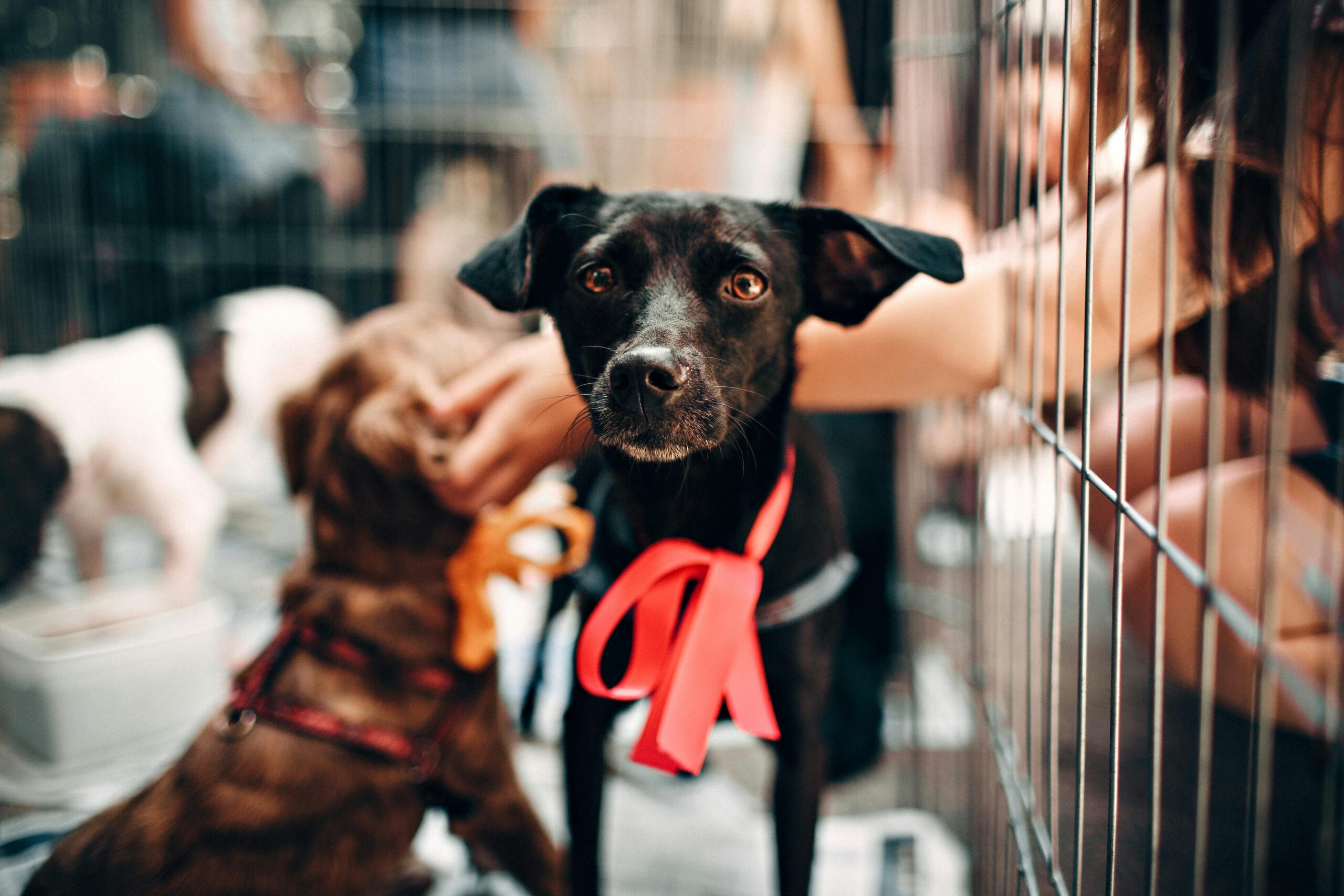
Animals recognize love and safety as we do — and the season reveals our shared responsibility
The holidays are often described as a time of connection.
Connection to family.
Connection to tradition.
Connection to something larger than ourselves.
But there is a quiet truth that often goes unspoken during this season: the circle of who is affected by our choices extends far beyond humans.
Every year, as decorations go up and schedules fill, animals across the United States and Canada experience a very different version of the holidays. Shelters become overcrowded. Foster networks stretch thin. Animals are surrendered, abandoned, or overlooked at precisely the time when care and stability matter most.
And yet, the holidays also bring a rare opportunity.
An opportunity to slow down.
An opportunity to soften.
An opportunity to expand our understanding of connection beyond our own species.
This article explores why animal adoption and care matter especially during the holidays — not from sentimentality or obligation, but from awareness. Because animals are not accessories to human life. They are conscious beings, participants in the same field of experience we are, and they recognize love, safety, and presence just as clearly as we do.
Animals Are Not “Other” — They Are Aware
One of the most deeply ingrained assumptions in modern culture is that animals are somehow less than humans — less aware, less conscious, less affected by what happens around them.
But anyone who has spent real time with animals knows this is not true.
Animals experience:
- fear and safety,
- comfort and distress,
- attachment and loss,
- curiosity and play,
- trust and betrayal.
They may not conceptualize these experiences in language, but they feel them directly. In many ways, animals live closer to raw awareness than humans do — unfiltered by narrative, self-image, or abstraction.
From the perspective of Dualistic Unity, this matters profoundly.
Awareness is not owned by humans.
It is not produced by intellect.
It is not restricted by species.
Animals are awareness expressing itself through a different nervous system, a different body, a different way of moving through the world.
Which means when an animal is neglected, stressed, abandoned, or cared for — something aware is experiencing that reality.
This isn’t philosophy for its own sake.
It’s a call to honesty.
Much of what separates humans from animals is not awareness, but story. Humans carry a continuous narrative about who they are, what they represent, and what responsibility means — and that narrative often becomes something that must be maintained, defended, or justified.
This tension between direct awareness and the psychological self is explored more deeply in The Self You’re Trying to Hold Together, which looks at how identity forms around narrative — and how much effort it takes to keep that narrative intact.
Why the Holidays Are Especially Difficult for Animals
Animal shelters consistently report increased strain during the holiday season. The reasons are complex, but predictable.
Common Holiday Stressors for Animals
- Impulse adoptions driven by emotion rather than readiness
- Post-holiday returns when novelty fades or routines resume
- Increased travel, leading to surrender or abandonment
- Cold weather, increasing risk for stray and outdoor animals
- Reduced staffing and resources due to holiday schedules
- Financial strain on rescues due to seasonal giving patterns
Many animals enter shelters during the holidays not because they were unloved — but because they were adopted or kept without sufficient awareness of what long-term care actually requires.
Love without responsibility does not create safety.
And animals are exquisitely sensitive to instability.
Adoption Is Not a Gift — It’s a Commitment
One of the most important distinctions to make during the holidays is this:
Adoption is not rescue. It is relationship.
Animals do not need to be “saved” by heroes.
They need consistency, patience, and reliability.
Adopting an animal means committing to:
- years of care,
- routine,
- veterinary needs,
- emotional regulation,
- and presence even when it’s inconvenient.
This doesn’t make adoption heavy or burdensome.
It makes it real.
When adoption is approached with awareness, it becomes one of the most reciprocal relationships a human can experience. Animals do not offer conditional affection. They do not measure worth. They respond to what is actually present.
Which is why thoughtful, intentional adoption — especially during the holidays — has such transformative potential.
Animals Recognize Love Without Needing Explanation
Animals do not need reassurance speeches.
They do not need promises.
They do not need future planning.
They recognize love through:
- tone of voice,
- consistency of care,
- bodily calm,
- patience,
- presence.
A rescued animal relaxing into a home does not happen because it understands it is “safe now.”
It happens because safety is felt.
This is why animals often mirror the nervous systems of the humans around them. A calm, grounded presence creates calm. A chaotic, anxious environment creates stress.
Animals teach us this not intentionally — but honestly.
They do not adapt to our stories.
They adapt to our state.
Supporting Animals Without Adopting
Adoption is not the only meaningful way to care for animals during the holidays — and it is not always the right choice.
In fact, one of the most responsible acts a person can make is recognizing when adoption is not appropriate for their current life situation.
Other powerful ways to support animals include:
Fostering
Providing temporary care gives animals relief from overcrowded shelters while allowing rescues to save more lives.
Volunteering
Time, consistency, and attention matter deeply — especially during holiday staffing shortages.
Donating Supplies
Food, blankets, toys, cleaning supplies, and medical funds directly improve animal well-being.
Supporting Spay/Neuter Programs
Preventing suffering is as important as responding to it.
Sharing Adoption Responsibly
Helping animals find stable, informed homes rather than impulse placements.
Compassion does not require ownership.
It requires participation.
Trusted Animal Welfare Organizations (United States & Canada)
If you are moved to support animal care this holiday season, these organizations are widely respected for ethical standards, transparency, and long-term impact.
United States
- The Humane Society of the United States
National advocacy, disaster response, and rescue support. - ASPCA
Rescue, adoption, medical care, and cruelty prevention. - Best Friends Animal Society
Focused on ending kill shelters through community-driven solutions. - Petfinder
A trusted network connecting adopters with verified shelters and rescues.
Canada
- SPCA Canada
Supporting provincial SPCAs and humane societies nationwide. - Toronto Humane Society
One of the country’s largest animal welfare organizations. - BC SPCA
Rescue, adoption, and animal protection across British Columbia. - PAWS
Supporting wildlife rehabilitation and domestic animal care.
Supporting established organizations ensures that compassion is paired with infrastructure — which is what animals truly need.
Animals as Teachers of Presence
One of the least discussed aspects of caring for animals is how much they give back — not through performance, but through presence.
Animals:
- don’t pretend,
- don’t manipulate narratives,
- don’t perform identity,
- don’t hide discomfort behind politeness.
They are immediate. Honest. Responsive.
Living with animals invites humans into a different rhythm — one where attention matters more than explanation, and consistency matters more than intention.
In this way, animals are not passive recipients of care.
They are participants in relationship.
The Holiday Invitation
The holidays invite us to ask a simple but profound question:
Who is included in our definition of “us”?
If compassion stops at our own species, it is incomplete.
If care is extended only when convenient, it is fragile.
When animals are included — not sentimentally, but responsibly — something expands.
We move from ownership to relationship.
From impulse to commitment.
From separation to shared life.
Animals do not need us to save them.
They need us to see them.
Something to Reflect On
- How do you relate to animals — as possessions, companions, or fellow beings?
- What does responsibility actually mean when love is involved?
- Where might your circle of care expand this season?
Care does not begin with action.
It begins with recognition.
Animals remind us what presence looks like without explanation.
Caring for them — consciously and responsibly — is not separate from caring for ourselves or each other.
For a deeper exploration of awareness, relationship, and shared being, you can explore our book:
Proof That You’re God
https://www.amazon.com/dp/B0DKCMR183/
Love is not limited by species.
Awareness isn’t either.