Across history, cultures separated by oceans and centuries have returned to the same forms.
A sun.
A circle.
A pillar.
A tree.
A flower.
A spiral.
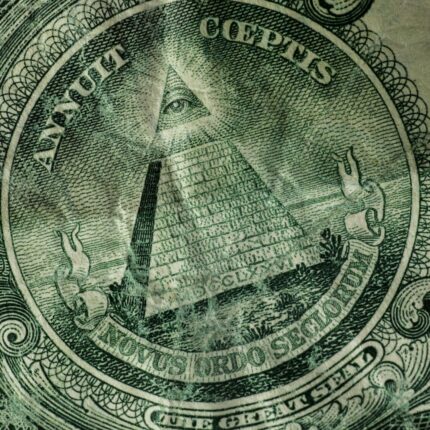
A triangle.
These symbols appear again and again—in religion, art, myth, architecture, dreams, and even modern branding. They persist even when belief systems collapse, when gods are renamed, and when explanations change.
This raises a quiet but persistent question:
Why do symbols matter at all?
Not as decoration.
Not as superstition.
But as something that seems to touch human experience more deeply than language ever does.
To understand this, we have to start somewhere uncomfortable for modern thinking: not with culture, but with perception itself.
Observer and Observed Are Not Separate
We’re taught, often without realizing it, that reality exists “out there” and we exist “in here,” observing it.
But lived experience doesn’t actually support that split.
Perception is not passive. We don’t receive reality like data. We participate in it. Experience happens as a whole—sight, sensation, meaning, emotion, and interpretation arising together.
If observer and observed are not truly separate, then meaning isn’t something we assign to the world after the fact.
Meaning is something the world is already expressing through us.
Symbols emerge precisely at this intersection.
They are not signs pointing to meaning elsewhere.
They are meeting points—where inner structure and outer form coincide.
That’s why they feel alive.
Why Certain Symbols Appear Everywhere
When consciousness expresses itself through form—through bodies, environments, time, and limitation—it repeatedly encounters the same constraints.
Those constraints give rise to the same shapes.
A circle is not arbitrary. It emerges wherever there is:
- continuity without beginning or end
- return without loss
- unity without hierarchy
The sun becomes sacred not because ancient people were naive, but because it mirrors a felt structure of existence:
- a source that gives without depletion
- a center without intention
- presence without effort
A tree appears again and again because it embodies:
- rootedness and growth
- vertical movement between ground and sky
- visible structure arising from invisible nourishment
These forms don’t spread because cultures copy one another.
They recur because consciousness keeps recognizing itself under similar conditions.
Symbols Are Not Representations—They Are Recognitions
Modern thinking often treats symbols as representations: a thing that stands in for something else.
But this misses what gives symbols their power.
A symbol doesn’t mean something in the way a word does.
It activates something.
When you see a flower, you don’t translate it into concepts first. Something immediate is felt:
- unfolding
- fragility
- impermanence
- beauty without justification
This happens before thought.
Symbols work because they operate below language, at the level where experience organizes itself.
They compress what cannot be explained linearly into a single perceptual encounter.
The Difference Between a Symbol and a Sign
This distinction is essential.
A sign points away from itself.
A symbol points inward.
A stop sign refers to an instruction.
A logo refers to a brand.
But a symbol doesn’t direct you outward toward an action or object. It invites you into a relationship.
This is why true symbols don’t get “used up.”
You don’t understand a symbol once and move on. You revisit it as you change, and it reveals different layers—not because the symbol changed, but because you did.
When symbols are reduced to mere signs—commercialized, politicized, or overused—they lose depth. They stop participating in meaning and start merely signaling identity.
Why Symbols Speak When Words Fail
Language is linear. Experience is not.
Words unfold in sequence. They require explanation, comparison, and definition. Symbols arrive whole.
This is why:
- dreams communicate in images, not arguments
- children respond to symbols before concepts
- art moves people without explanation
- rituals work even when participants “don’t believe”
Symbols don’t argue with the mind.
They bypass it.
They speak directly to the structure of experience itself.
Symbols and Collective Consciousness
If consciousness were truly divided into separate, isolated units, symbols wouldn’t work across cultures or time.
But shared symbols function like resonant nodes in a single field of awareness.
They gather attention, emotion, memory, and meaning not because they are imposed, but because they align with something already lived.
This is why collective symbols emerge most strongly during periods of instability:
- when old narratives collapse
- when certainty dissolves
- when language fails to keep up with experience
Symbols offer orientation when explanations fracture.
This dynamic plays out continuously in culture and media, where collective psychology gravitates toward familiar images not for nostalgia alone, but for stability in uncertainty.
👉 https://dualisticunity.com/why-the-world-feels-so-loud/
The “Secret Language” Isn’t Hidden—It’s Pre-Verbal
Calling symbolism a “secret language” can sound mysterious or conspiratorial.
But the secrecy isn’t intentional.
It’s developmental.
Before we learned to describe experience, we lived it. Symbols operate at that foundational layer—not primitive, but primary.
They communicate how reality feels to itself, not what it thinks about itself.
That’s why symbolism feels intuitive even when it can’t be explained.
You don’t decode a symbol.
You recognize it.
Why Symbols Still Matter in a Rational Age
Modern society often believes it has outgrown symbols.
But look closely:
- national flags still provoke emotion
- brand logos shape identity
- interface icons guide behavior
- memes spread faster than arguments
Symbolism never left.
It just moved.
The danger isn’t symbolism itself—it’s unconscious symbolism. Symbols wield power whether we acknowledge them or not.
The difference between manipulation and insight is awareness.
Symbols as Orientation, Not Control
Symbols are often misunderstood as tools to control consciousness.
In reality, they do the opposite when used honestly.
They slow experience down.
They invite reflection.
They resist premature explanation.
A symbol doesn’t tell you what to think.
It reminds you how to look.
In this way, symbols don’t add meaning to reality.
They reveal the meaning already present.
Living in a Symbolic World Without Belief
You don’t need to believe in anything for symbolism to matter.
Symbols don’t require faith. They require attention.
When you notice how symbols shape perception—individually and collectively—you start to see reality not as a collection of objects, but as a conversation between form and awareness.
A conversation you’re already part of.
A Clear Way to Say It
If this entire exploration had to be distilled into a single sentence, it might be this:
Symbols have power because they are places where inner and outer reality coincide. They don’t represent meaning—they allow meaning to recognize itself.
Why This Matters
Understanding symbolism isn’t about decoding hidden messages or reclaiming ancient wisdom.
It’s about recognizing how experience organizes itself—how awareness encounters its own structure through form.
Once this is seen, the world doesn’t become mystical.
It becomes intimate.
Reality stops feeling like something happening to you and starts feeling like something happening as you.
A Final Reflection
Symbols have endured not because humanity is confused, but because humanity is perceptive.
They are traces of recognition—left behind whenever awareness meets itself honestly within limitation.
Not secrets to uncover.
Reminders to notice.
An Invitation
Many of these explorations—observer and observed, identity, meaning, symbolism, and the nature of experience itself—are explored more fully in Proof That You’re God. The book isn’t a system or belief, but a companion for those noticing how reality begins to recognize itself without explanation.
If this article resonated, the book exists as a place to stay with these questions more privately and without interruption.