
Most people don’t feel limited because their lives are objectively small.
They feel limited because their energy is trapped—tied up in maintaining an identity, managing emotion, and trying to become something more than what they already are.
That’s the quiet frustration behind most self-help efforts. We try to optimize motivation, confidence, discipline, or mindset without ever questioning the structure that’s exhausting us in the first place.
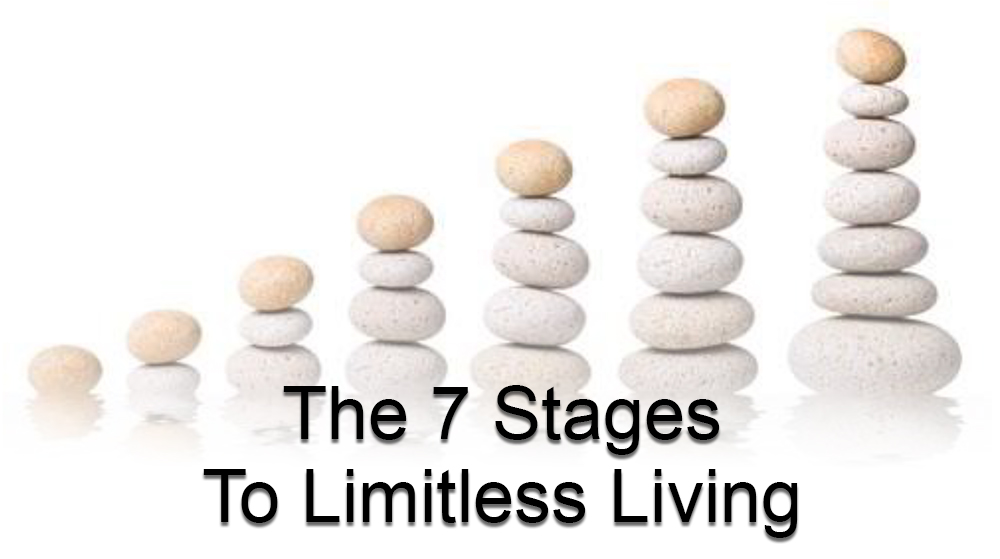
The 7 Stages to Limitless Living, one of our earliest works, was written from this exact realization:
the problem isn’t that we lack drive—it’s that we’re directing it through a misunderstanding of who we are.
This framework isn’t about becoming better, more positive, or more successful versions of ourselves. It’s about removing the internal friction that drains clarity and discovering what action looks like when it no longer depends on self-image.
What follows is not a checklist, but a lived progression—one that many people recognize only in hindsight, once the struggle to “get somewhere” begins to soften.
Stage 1: Finding Your Real Self (And Why It’s Not What You Think)
The first stage is often the most destabilizing—not because it adds new insight, but because it removes a false assumption.
Most personal development begins with the idea that you are what you think about yourself. Your traits, history, strengths, weaknesses, and ambitions are treated as the core of who you are. From there, improvement becomes an endless project of refinement.
But clarity begins with seeing something simpler and more confronting:
You are not what you think.
Thoughts describe. They don’t define.
When this becomes more than an idea—when it’s seen experientially—the pressure to constantly manage identity starts to loosen. Motivation no longer has to come from fear of failure or desire for validation. Energy begins to free up, not because life changed, but because the burden of self-definition softened.
This is often the first crack in the structure people unconsciously defend.
Stage 2: Balancing — Moving Beyond Positive vs. Negative Thinking
Many systems teach positivity as the solution to suffering. Stay optimistic. Reframe the negative. Focus on what feels good.
But this stage introduces a subtler insight:
positivity can become another form of avoidance.
Balancing doesn’t mean suppressing negativity or forcing optimism. It means seeing both sides of thought without clinging to either. When you explore the opposite of what you believe—especially beliefs about yourself—rigidity gives way to understanding.
This is where many people first notice how much effort goes into maintaining emotional states. When that effort relaxes, attention sharpens. You begin to see reality more clearly, instead of filtering it through what you want to feel.
This shift mirrors what we often explore when talking about anxiety—not as something caused by events, but by resistance to internal experience, as explored more deeply in our article on why anxiety isn’t actually about what’s happening.
Stage 3: Words, Identity, and the Power of Self-Definition
At this stage, attention turns outward—specifically to language.
Not inspirational language. Not affirmations.
But the quiet, habitual ways we describe ourselves and others.
“I’m just not good at that.”
“That’s not who I am.”
“I’ve always been this way.”
These statements feel harmless. Practical. Even honest.
But they quietly solidify identity, turning thought into a boundary. When you notice how often language is used to stabilize self-image—either to protect it or to enhance it—another layer of internal tension becomes visible.
This isn’t about correcting speech. It’s about seeing how words convert momentary experience into permanent identity, and how much energy is spent defending those identities once they’re spoken aloud.
Stage 4: Choice — The Freedom to Reason Clearly
When self-image loosens, something unexpected happens: choice becomes clearer.
Not reactive choice. Not emotionally driven choice.
But choice rooted in understanding.
Without the constant need to protect or promote an identity, actions no longer have to justify who you are. They simply respond to what’s happening.
This is where people often feel a quiet sense of responsibility return—not as pressure, but as agency. You’re no longer acting to become someone. You’re acting because action is appropriate.
This stage marks the transition from internal conflict to internal coherence.
Stage 5: Will and Courage — Acting Without Emotional Dependence
Motivation fluctuates.
Will doesn’t.
This stage draws a clear distinction between emotional drive and something far steadier. Will isn’t loud or urgent. It doesn’t spike and crash. It moves slowly, consistently, and without drama.
When action is no longer fueled by fear, approval, or self-enhancement, courage emerges naturally. Not heroic courage—but the simple willingness to face uncertainty without needing guarantees.
Obstacles stop feeling personal. Challenges stop threatening identity. Life becomes something to meet rather than manage.
Stage 6: Enthusiasm — When Energy Becomes Self-Sustaining
The word enthusiasm comes from a root meaning “filled with life.”
This stage isn’t about excitement or hype. It’s what happens when will becomes effortless. When presence replaces striving. When action flows because resistance has dropped.
Enthusiasm here feels childlike, but not naive. There’s intensity without tension. Focus without force. Engagement without burnout.
People often describe this stage as a return—not to who they used to be, but to what was always available before identity took over.
Stage 7: Success — Redefined
By this point, success no longer means achievement in the conventional sense.
It’s not a milestone.
It’s not a finish line.
It’s not something you finally feel once everything is resolved.
Success becomes a way of living—a state where clarity, action, and understanding are aligned. Where effort isn’t wasted on internal resistance. Where energy is available for what matters, without needing constant self-justification.
Ironically, this is often when external success becomes more accessible—not because it’s chased, but because attention is no longer divided.
Why This Framework Still Matters
The 7 Stages to Limitless Living isn’t a polished system. It wasn’t meant to be. It’s an early articulation of insights that would later deepen into Proof That You’re God and years of dialogue through the Dualistic Unity Podcast, retreats, and daily group exploration.
What makes it powerful is its honesty.
It doesn’t promise transformation.
It doesn’t sell certainty.
It doesn’t offer identity upgrades.
It simply points—again and again—to the same quiet truth:
When you stop trying to become someone, life begins to move freely.