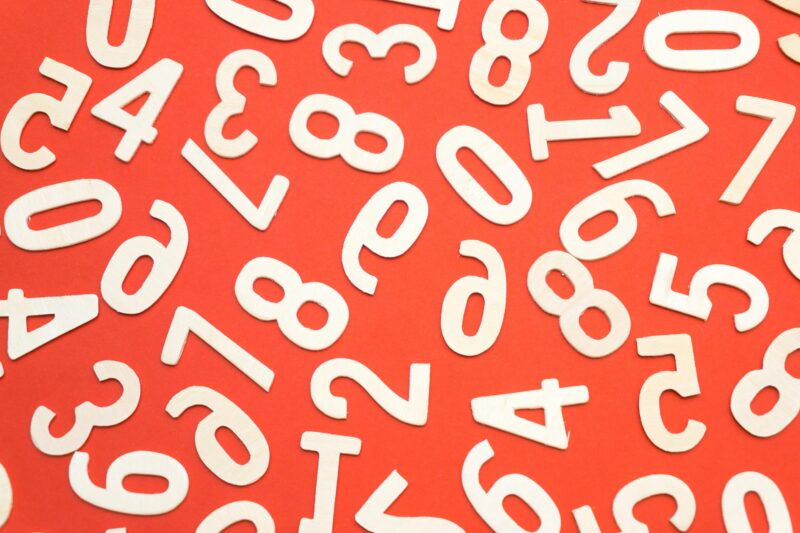
There is something uniquely compelling about numbers.
They feel clean. Objective. Unarguable. A 7 is a 7 no matter who you are or how you feel. In a world saturated with interpretation, ambiguity, and emotional uncertainty, numbers seem to offer a rare kind of stability. This is part of why numerology has endured across cultures, eras, and belief systems—not as a fringe curiosity, but as a deeply human response to existential tension.
Numerology doesn’t survive because people are irrational. It survives because the mind is meaning-hungry.
When life feels chaotic, incoherent, or overwhelming, symbolic systems step in to organize experience. They don’t just explain reality—they soothe the nervous system. And numerology, perhaps more than most symbolic frameworks, carries the promise of order without the messiness of psychology.
Early in that search for meaning, it’s common to encounter broader questions about why meaning itself feels so elusive—why it always seems just out of reach, even when the explanations are elegant and compelling. That tension is explored more fully in our hub article on why meaning so often feels just out of reach, which looks at the deeper pattern behind humanity’s endless search for symbolic coherence.
What Numerology Is Really Offering
On the surface, numerology appears to be about numbers: life paths, destiny numbers, cycles, and vibrational meanings. But beneath that surface, it’s offering something far more fundamental.
It offers orientation.
Numerology answers questions the mind is quietly asking long before it cares about truth:
- Who am I?
- Why am I the way I am?
- Is there a pattern to this?
- Does this mean something?
When someone discovers their numerological profile, the relief they feel isn’t intellectual—it’s emotional. Pieces seem to fit. Traits feel validated. Struggles feel contextualized. There’s a sense that life isn’t random after all.
This relief doesn’t come from belief alone. It comes from recognition. Or at least, the feeling of recognition.
Pattern Recognition and the Comfort of Coherence
The human brain is a pattern-recognition machine. Long before language, long before philosophy, pattern recognition was a survival tool. Seeing connections meant staying alive.
Numerology taps directly into this ancient circuitry.
When numbers appear repeatedly—birthdates, repeating digits, cycles aligning with life events—the mind experiences a subtle thrill. Something clicks. The world feels responsive, almost conversational. As if reality itself is speaking in symbols.
This is not stupidity. It’s intimacy.
The problem isn’t that the mind sees patterns. The problem is what happens next.
When Meaning Becomes Identity
At some point, numerology stops being interesting and starts becoming personal.
“I’m a Life Path 3.” “This challenge makes sense because of my number.” “I’m meant to struggle with this.”
What began as curiosity quietly solidifies into identity.
This is where the system starts doing double duty. It doesn’t just explain experience—it defines the experiencer. And once identity enters the picture, the stakes change.
Now, meaning isn’t just comforting. It’s necessary.
To question the system feels like questioning oneself. To doubt the numbers feels like destabilizing the fragile coherence they provide. So the mind protects the framework, often unconsciously.
Not because it’s true.
But because it’s holding something together.
Why Numbers Feel Safer Than Stories
Unlike psychological narratives, numbers feel impersonal. They don’t accuse. They don’t moralize. They simply are.
This is part of numerology’s appeal. It offers explanation without blame. Struggle without pathology. Destiny without choice paralysis.
In that sense, numerology often feels safer than introspection.
You don’t have to confront fear, grief, or uncertainty directly. You can translate them into symbols. You can point to a chart instead of sitting with discomfort.
And for a while, that translation works.
The Quiet Cracks
Eventually, though, subtle inconsistencies appear.
Predictions don’t land quite right. Explanations feel retrofitted. Different systems yield different meanings.
The mind starts noticing the interpretive flexibility it once ignored.
This can be deeply unsettling—not because numerology fails, but because the sense of meaning it provided begins to wobble. The numbers no longer feel quite as authoritative. The certainty softens.
At this stage, many people double down. They refine interpretations. Learn more systems. Seek more precise calculations.
Others drift away quietly, unsure how to articulate why something that once felt profound now feels thin.
Meaning vs. Experience
What starts to become clear—often without words—is that numerology never actually delivered meaning itself.
It delivered a relationship to experience.
The sense of meaning came from feeling oriented, recognized, and contextualized. From the relief of not being lost.
When that orientation weakens, the mind assumes meaning has been lost.
But what’s really being exposed is the difference between symbolic meaning and lived experience.
Symbols organize. Experience happens.
Awareness and the Collapse of Symbolic Authority
As awareness deepens, something subtle but irreversible occurs.
You don’t stop seeing patterns. You stop needing them.
Numbers still appear. Synchronicities still happen. But they no longer carry the same gravitational pull. They don’t define identity. They don’t dictate interpretation. They’re noticed—and allowed to pass.
This isn’t disenchantment. It’s intimacy without dependence.
In Proof That You’re God, this shift is described as the moment meaning stops being something you extract from life and starts being something you notice dissolving into experience itself. Not because meaning was wrong—but because it was never separate from what was happening.
What Remains When Numbers Stop Explaining You
When numerology loses its authority, something gentler often takes its place.
Not answers. Not frameworks.
But a direct relationship with uncertainty.
Life stops needing to justify itself symbolically. Traits don’t require cosmic explanation. Challenges don’t need destiny narratives.
Experience becomes sufficient.
This doesn’t mean numerology was a mistake. It means it served its purpose.
Symbols as Scaffolding, Not Foundations
Symbolic systems like numerology function best as scaffolding—not as permanent structures.
They help orient the mind while it learns to tolerate ambiguity. They offer coherence while deeper questions are still unbearable.
But scaffolding is meant to be removed.
When it isn’t, it becomes a cage.
An Invitation Beyond Meaning
If you’re drawn to numerology, there’s nothing wrong with that pull. It points to a sincere desire to understand life, yourself, and the patterns that seem to shape both.
But if you’ve noticed the system no longer satisfies the way it once did, that may not be a failure of belief—it may be a sign of maturation.
Meaning doesn’t disappear when symbols loosen.
It gets quieter.
Less explainable.
More immediate.
Proof That You’re God explores this transition not as a loss of meaning, but as an intimacy with experience that no longer needs symbolic mediation. It doesn’t ask you to abandon systems like numerology—it invites you to notice what remains when they stop doing the work they were never meant to carry forever.