
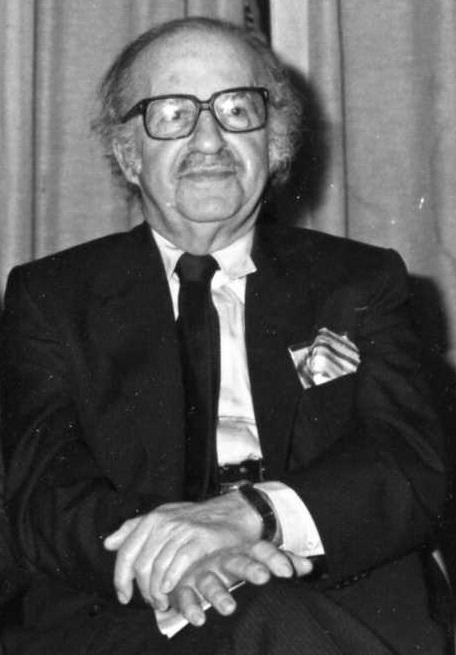
Who was Isaiah Kenen?
Isaiah Leo “Si” Kenen was a Canadian-born American journalist, lawyer, Zionist activist and political lobbyist. He is best known for establishing the American Zionist Committee for Public Affairs, the organization that was renamed the American Israel Public Affairs Committee—AIPAC—in 1959. He directed the organization until retiring in 1974.
Kenen’s significance extends beyond the creation of one organization. He helped develop a durable method of influencing American foreign policy through congressional lobbying, policy information and constituent pressure. Instead of treating support for Israel as a temporary humanitarian response to Israel’s creation, he worked to make it a continuing responsibility of the United States government.
His career also illustrates an important transition in pro-Israel advocacy: Kenen initially performed information and diplomatic work connected directly to Zionist institutions and Israel, but later presented his lobbying as the domestic political activity of American citizens.
Birth and family background
Kenen was born on March 7, 1905, in St. Stephen, New Brunswick, Canada, a small town near the border with Maine. His parents were Emmanuel and Rebecca Kenen. His father had been born in Kyiv—then part of the Russian Empire—and worked in Canada as an insurance agent.
Kenen grew up in a family deeply involved in the Zionist movement. His father helped establish a B’nai Zion organization in Toronto and participated in the early international Zionist movement. The idea that Jewish people should create and sustain a national home was therefore not something Kenen encountered only as an adult; it formed part of his family and political upbringing.
That background would shape almost every stage of his later career. Journalism gave him experience constructing public arguments, law taught him how legislation and government operated, and Zionist organizing gave him a cause around which to apply those skills.
Education in Toronto
Kenen studied philosophy at the University of Toronto. He met Beatrice Bain there, whom he later married.
A philosophical education did not lead him into an academic career. He moved toward journalism, public affairs and law, fields that required him to translate complicated political questions into arguments that could persuade readers and public officials.
Kenen and Beatrice had one son, Peter B. Kenen, who became a prominent international economist and professor at Princeton University.
His early journalism career
Kenen began working as a journalist in Canada, including employment with the Toronto Star. In 1926, when he was approximately 21, he moved to Cleveland, Ohio. He subsequently worked in journalism there, including for the Cleveland News.
Journalism was formative to the lobbying style he later developed. A successful political advocate must understand what information legislators need, how to condense an argument, which facts are persuasive and how to maintain relationships with reporters and policymakers. Kenen learned those skills before he became known primarily as a lobbyist.
He was also involved in the labor movement surrounding American journalism. Biographical accounts identify him as a participant in the early Newspaper Guild, created to represent journalists and other newspaper employees.
This part of his life complicates any simple portrayal of Kenen as merely a conservative foreign-policy operative. His political outlook was rooted in the liberal, labor-oriented and internationalist culture of many mid-20th-century Jewish activists. The AIPAC he created was not originally built around contemporary Republican politics or the modern religious right.
Legal training and work in Cleveland
While working in Cleveland, Kenen studied law. He was admitted to the Ohio bar in 1933.
His legal training gave him a practical understanding of legislation, regulatory language and the division of authority among Congress, the executive branch and diplomatic institutions. Those skills became especially valuable when he began lobbying Congress over foreign assistance.
Kenen also became increasingly active in Cleveland’s organized Zionist community. In 1941, he became president of the Cleveland Zionist District.
By then, the persecution of European Jews and the growth of Nazism had given Zionist organizing far greater urgency. Advocates were no longer discussing Jewish national independence as a distant aspiration. They were confronting the destruction of European Jewish communities and the refusal of many governments to admit substantial numbers of refugees.
Kenen later described World War II as a defining moment in which many American Jews concluded that they could not depend entirely on other governments to guarantee Jewish safety. This conviction became central to his advocacy for an independent Jewish state and, later, for American support of Israel.
Work for the Jewish Agency
During the 1940s, Kenen became an information director for the Jewish Agency for Palestine, the principal political organization representing the Zionist movement before Israel was established.
His role involved explaining the Zionist case to American audiences and cultivating support for establishing a Jewish state in British-administered Palestine. This required engagement with journalists, civic organizations, Jewish institutions and government officials.
Kenen also worked with the American Zionist Emergency Council, established during World War II to coordinate American Zionist political activity. After Israel’s creation, that body became the American Zionist Council, an umbrella organization representing several American Zionist groups.
This institutional history is important because AIPAC did not suddenly appear as a completely independent organization. It emerged from an existing network of American Zionist organizations and from Kenen’s prior work within that network.
Connection to Israel’s government and United Nations delegation
Following Israel’s establishment in 1948, Kenen worked with Israel’s delegation to the United Nations. Historical accounts describe him as an information officer or public-relations representative associated with the delegation and Israel’s foreign-affairs apparatus.
During this period, Kenen’s work had an official connection to Israel. He was registered under the United States’ Foreign Agents Registration Act, or FARA, in connection with his work for Israel’s information operation.
That fact is frequently raised in arguments about AIPAC’s origins. It is accurate to say that Kenen performed work connected to the Israeli government before creating the organization that became AIPAC. It would not be accurate to treat this, by itself, as proof that contemporary AIPAC is legally an arm of the Israeli government.
The transition between the two roles is one of the most consequential parts of his career.
Why Kenen moved toward domestic lobbying
The new State of Israel faced an enormous financial and social burden. Hundreds of thousands of Jewish immigrants and refugees arrived during its first years, while the country maintained extensive military and security responsibilities.
Israel needed economic assistance from the United States. Kenen recognized that major assistance could not be secured solely through conversations between Israeli diplomats and the State Department. Congress controlled appropriations, and members of Congress were responsive to American organizations and their constituents.
Kenen later explained the practical distinction underlying his approach: embassies dealt with the State Department, while American voters communicated with Congress. His solution was to move pro-Israel lobbying into an organization formally grounded in American civic and political participation.
This was both a legal and strategic transformation. It placed the argument for aid to Israel inside American domestic politics rather than leaving it exclusively in the hands of foreign diplomats.
Founding the organization that became AIPAC
The exact founding date is sometimes presented differently. Kenen himself associated the beginning of the Israel lobby that became AIPAC with 1951. Other historical accounts emphasize its organization under the name American Zionist Committee for Public Affairs, or AZCPA, in 1953 or its institutional separation from the American Zionist Council in 1954.
The apparent discrepancy reflects different stages of development rather than necessarily conflicting facts:
- Kenen began a dedicated congressional lobbying effort around 1951.
- It operated in association with the American Zionist Council.
- The American Zionist Committee for Public Affairs became a distinct lobbying body.
- In 1959, it adopted the name American Israel Public Affairs Committee.
The separation also had a tax and legal purpose. The American Zionist Council was tax-exempt and conducted broader educational and public-relations work. A separate body was better suited to engage openly in legislative lobbying without using the Council’s tax-exempt funds for that activity.
His original vision for AIPAC
Kenen did not initially build AIPAC as a large campaign-finance organization. During his leadership, the organization’s influence rested primarily on four activities:
Legislative monitoring: Kenen watched bills, foreign-aid measures and policy debates that affected Israel.
Policy information: He supplied members of Congress and their staffs with arguments, facts and legislative recommendations.
Personal relationships: He developed contacts with legislators across party lines.
Constituent mobilization: When congressional pressure was needed, he contacted Jewish community leaders and other supporters who could approach their own representatives as American voters.
This last point was essential. A direct request from a foreign representative could be treated as foreign lobbying. A request from voters in a legislator’s district carried domestic political legitimacy and potential electoral consequences.
The organization remained relatively small during much of Kenen’s tenure. Its power came less from a vast central bureaucracy than from its ability to activate local networks.
Securing economic assistance for Israel
One of Kenen’s earliest objectives was obtaining American assistance to help Israel absorb immigrants and stabilize its economy.
Historical accounts credit his early lobbying operation with helping obtain $65 million in U.S. assistance in 1951 and approximately $73 million the following year. Such claims should not be interpreted to mean that Kenen personally created or controlled the entire appropriations process. The Truman administration, members of Congress, other Jewish organizations and broader political conditions all contributed. Nevertheless, securing congressional support for aid was central to his work.
The early aid was not structured like the predominantly military assistance Israel receives today. Israel’s immediate problems included housing, food, infrastructure and the absorption of refugees and immigrants. Kenen initially presented support for Israel partly as a humanitarian and nation-building obligation.
As the Cold War developed, advocates increasingly supplemented the humanitarian argument with a strategic one: Israel could serve as a reliable democratic and military partner in a region affected by Soviet influence and political instability.
The name change in 1959
In 1959, the American Zionist Committee for Public Affairs was renamed the American Israel Public Affairs Committee (AIPAC).
Removing the word “Zionist” served several purposes. It made the organization more accessible to people who supported Israel but did not belong to a Zionist organization. It also framed the U.S.–Israel relationship as a matter of American public policy rather than exclusively an internal Jewish ideological cause.
This broader framing became central to AIPAC’s identity. The organization sought support from labor leaders, liberals, conservatives, religious communities and national-security policymakers, even when those groups had different reasons for supporting Israel.
Kenen’s lobbying style
Accounts of Kenen’s work generally describe his style as personal, restrained and collegial compared with the more professionalized and electorally aggressive organization AIPAC later became. He relied heavily on meetings, correspondence, legislative briefings and local community contacts.
He also emphasized bipartisanship. Israel’s security, in his view, could not safely depend on a single party or president. A durable relationship required support among Democrats and Republicans and in both the legislative and executive branches.
Kenen’s AIPAC did not operate its own candidate PAC or super PAC. The organization’s direct entry into federal election spending came decades after his death, when AIPAC established a PAC and supported the formation of the United Democracy Project in 2021.
It is therefore misleading to project AIPAC’s present campaign-finance structure backward onto Kenen’s organization. He created much of the lobbying and grassroots architecture, but not its modern system of direct endorsements and large-scale independent election expenditures.
The Suez Crisis and the Eisenhower administration
The 1956 Suez Crisis presented Kenen with one of his most difficult early challenges. Israel, Britain and France attacked Egypt after Egyptian President Gamal Abdel Nasser nationalized the Suez Canal. President Dwight Eisenhower opposed the invasion and pressured the attacking countries to withdraw.
Kenen worked to defend Israel’s position and preserve congressional support, but the Eisenhower administration ultimately compelled Israel to leave the Sinai Peninsula. The episode demonstrated that pro-Israel lobbying could influence Congress but could not always overcome a determined president.
It also reinforced Kenen’s belief that long-term domestic political organization was necessary. A single diplomatic relationship or sympathetic administration could not be relied upon permanently.
Building a permanent congressional constituency
During the 1960s, Kenen continued transforming support for Israel from an emergency campaign into an established congressional position.
The 1967 Arab-Israeli War strengthened Israel’s standing among many American policymakers. Israel’s rapid military victory encouraged the view that it was not merely a vulnerable recipient of humanitarian assistance but a capable regional power and potential strategic partner.
Kenen used this changing environment to promote continued aid, military cooperation and diplomatic backing. The organization expanded gradually, although it remained much smaller than the contemporary AIPAC.
His most enduring accomplishment was not any one appropriation. It was the creation of a repeatable lobbying system in which congressional offices expected organized input from pro-Israel advocates and understood that Israel policy mattered to politically engaged constituencies.
The 1973 war and the end of his leadership
The October 1973 Arab-Israeli War became another major turning point in the relationship between the United States and Israel. The United States organized a large military resupply effort, and Congress approved substantial emergency assistance.
By then, Kenen’s central argument—that support for Israel should be institutionalized in American policy—had gained far greater acceptance than it possessed when he began lobbying in the early 1950s.
Kenen retired from AIPAC’s leadership in 1974. He was succeeded by Morris J. Amitay, under whom the organization became more professionalized, assertive and institutionally expansive.
Kenen had led the organization from its formative period for more than two decades. His successor inherited an established congressional network rather than having to create one from nothing.
Life after AIPAC
Retirement did not end Kenen’s involvement in public affairs. He remained active as a writer, commentator and defender of Israel.
He founded and edited the Near East Report, a publication covering Israel, the Middle East and American policy. Through it, he continued to explain legislation and advocate for the U.S.–Israel relationship.
He also wrote two autobiographical or historical works:
- Israel’s Defense Line: Her Friends and Foes in Washington, published in 1981.
- All My Causes: An 80-Year Life Span in Many Lands and for Many Causes, Some We Won and Some We Lost but We Never Gave Up, published in 1985.
These books are valuable primary sources for understanding how Kenen interpreted his own career. They should also be read critically. Like most memoirs, they present events from the author’s perspective and may emphasize his intentions and achievements differently from independent historians.
Personal life
Kenen married Beatrice Bain, whom he had met while they were students at the University of Toronto. Their son, Peter Kenen, became a leading scholar of international economics at Princeton.
Publicly available biographical accounts contain much more information about Kenen’s political work than his private life. He appears to have devoted most of his adult career to journalism, Zionist advocacy, legislative lobbying and writing.
He was commonly known as “Si” Kenen, a shortened form of Isaiah.
Death
Isaiah Kenen died in Washington, D.C., on March 23, 1988, shortly after his 83rd birthday.
By the time of his death, AIPAC had become substantially larger and more influential than the organization he had initially operated. The U.S.–Israel relationship had also changed from limited postwar assistance into extensive military, diplomatic and strategic cooperation.
The controversy surrounding his transition from foreign representative to American lobbyist
Kenen’s career cannot be understood fully without examining the disputed legal and political questions surrounding AIPAC’s origins.
Before creating the separate lobbying organization, Kenen performed information work connected to the Israeli government and registered under FARA. He then shifted into a role formally connected to American Zionist organizations and developed a lobbying operation grounded in American citizen participation.
Critics view this transition as evidence that the new organization preserved the objectives of Israeli diplomacy while avoiding the legal and political stigma of foreign-agent registration.
Supporters argue that American citizens have every right to organize around a foreign-policy position, just as Americans organize in support of Ukraine, Cuba, Armenia, Ireland, Taiwan, Saudi Arabia or numerous other countries and causes. Under this interpretation, the crucial fact is that Kenen’s organization represented American members and was not formally directed by a foreign government.
The historical record verifies that his earlier and later roles were closely related in subject and purpose. Establishing whether a particular organization was legally acting under a foreign government’s direction requires more than demonstrating agreement, communication or shared objectives.
That distinction remains central to present debates about AIPAC.
What made Kenen effective?
Kenen understood several political realities unusually well.
First, he recognized that foreign policy was not produced exclusively by presidents and diplomats. Congress controlled funding and could influence diplomatic policy through legislation, hearings and public pressure.
Second, he understood that lawmakers listened differently to constituents than to foreign officials. An American citizen asking for support for Israel was participating in domestic democracy, even though the policy benefited another country.
Third, he understood the value of continuity. A temporary campaign might secure one appropriation. A permanent organization could return every year, monitor every bill and cultivate officials throughout their careers.
Fourth, he avoided tying Israel permanently to one political ideology. His objective was not simply to elect a particular party but to make support for Israel a bipartisan assumption.
Finally, he combined moral and strategic arguments. Israel could be presented as a refuge for persecuted Jews, a democracy, a military partner and a Western-aligned state. Different arguments appealed to different political audiences.
How Kenen’s organization differed from modern AIPAC
Kenen would recognize some features of today’s AIPAC:
- Its focus on Congress
- Its emphasis on bipartisanship
- Its use of constituent advocacy
- Its promotion of American military assistance
- Its effort to make support for Israel politically consequential
Other features are products of a much later period:
- Formal endorsements of federal candidates
- AIPAC’s own political action committee
- A closely affiliated super PAC
- Tens of millions of dollars in direct and independent election spending
- Large-scale digital advertising and voter targeting
- Highly professionalized fundraising and political data operations
Kenen built the foundation, but contemporary AIPAC is not simply the same organization operating at a larger scale. It employs forms of electoral intervention that were not part of his original model.
How should he be understood historically?
Kenen can be understood in several ways simultaneously.
He was a committed Zionist who believed Jewish survival required a secure Jewish state.
He was a Canadian immigrant who became an influential participant in American politics.
He was a journalist who learned to organize political information persuasively.
He was a lawyer who understood how to work through legislation and congressional appropriations.
He was once connected to official Israeli information work and later became the architect of an American domestic lobbying organization.
He was also an institution builder whose influence continued long after his retirement and death.
Supporters regard him as a central figure in protecting a vulnerable state and constructing a valuable alliance. Critics regard his work as the foundation of a lobbying system that has made extraordinary American support for Israel difficult to question or condition.
Both perspectives begin with the same documented accomplishment: Isaiah Kenen created an enduring structure through which support for Israel became embedded in American congressional politics.
Timeline
| Year | Event |
|---|---|
| 1905 | Born in St. Stephen, New Brunswick |
| 1920s | Studied philosophy at the University of Toronto |
| 1926 | Moved to Cleveland |
| 1933 | Admitted to the Ohio bar |
| 1941 | Became president of the Cleveland Zionist District |
| 1940s | Worked in information and public affairs for Zionist institutions |
| 1948–1949 | Worked with Israel’s United Nations delegation |
| 1951 | Began the congressional lobbying operation that became AIPAC |
| 1953–1954 | American Zionist Committee for Public Affairs emerged as a distinct lobbying body |
| 1959 | Organization renamed the American Israel Public Affairs Committee |
| 1974 | Retired from AIPAC |
| 1981 | Published Israel’s Defense Line |
| 1985 | Published All My Causes |
| 1988 | Died in Washington, D.C., aged 83 |
Continue the Exploration
Whether you consider yourself pro-Israel, pro-Palestine, pro-American, critical of American foreign policy, politically undecided, or you’re only beginning to learn about this history, we invite you to keep exploring.
History is rarely changed by reading a single article. Understanding grows when we become willing to examine not only events, but also the assumptions, identities, cultures, fears, loyalties, and narratives that shape the way every one of us interprets those events. Two people can look at the same facts and reach very different conclusions, not because one necessarily cares more than the other, but because each is viewing them through a different lens.
Our goal is not to tell you what to think. It is to encourage the kind of awareness that allows us to think more clearly, ask better questions, recognize our own biases, and remain open to learning—even when the answers are uncomfortable.
If this article sparked your curiosity, consider exploring our collection of articles on identity, culture, perception, awareness, belief, fear, conflict, and the psychology of being human. These subjects may seem unrelated at first, but they often reveal the deeper patterns that influence politics, history, and human relationships across every nation and generation.
For readers who want to explore these questions even further, our book, Proof That You’re God, examines how identity, perception, and consciousness shape the way we experience ourselves, one another, and the world we share. Whatever conclusions you ultimately reach about Israel, Palestine, the United States, or any other subject, we hope your understanding continues to expand through curiosity, careful investigation, and a willingness to question both the world around you and the assumptions within yourself.