Most people assume they are living their own life.
After all, you chose your career—or at least it feels like you did. You have your own opinions, your own goals, your own relationships, your own routines. From the inside, your life appears uniquely yours.
Yet psychology, sociology, and neuroscience all point toward an uncomfortable reality: human beings are profoundly shaped by their environments. We inherit languages, cultures, beliefs, values, traditions, habits, fears, and expectations long before we become aware that we are inheriting them. Many of the assumptions we call “my personality” or “my preferences” were quietly constructed through years of observation, repetition, and adaptation.
This is not a flaw in human nature. It is how learning works.
The deeper question is not whether your life has been influenced by others. Every human life has. The more interesting question is how much of your life still belongs to those influences, even when they no longer serve you.
Rather than offering answers, this article offers questions. Not because questions are mysterious, but because honest questions often reveal assumptions that confident answers hide.
Whose Definition of Success Are You Chasing?
Imagine achieving every goal you’ve been working toward.
You earn more money. Your career advances. People admire your accomplishments. You buy the house, the car, or the lifestyle you’ve imagined for years.
Now ask yourself something surprisingly difficult.
If no one else ever knew you had achieved those things, would they still matter as much?
It is easy to assume success is self-explanatory. Yet history shows that ideas of success change dramatically across cultures and throughout time. What one society celebrates, another may ignore entirely. Even within the same family, siblings can inherit very different definitions of what a “successful life” looks like.
Consider where your own definition came from. Did you consciously choose it, or did you absorb it from parents, teachers, media, friends, or the culture you happened to grow up in?
Which Beliefs Have You Never Questioned?
Every person inherits beliefs before they inherit the ability to evaluate them.
Some beliefs prove incredibly helpful. Others quietly outlive their usefulness. The challenge is that familiar beliefs rarely feel inherited. They simply feel true.
Think about the statements that immediately feel obvious to you.
Money creates security.
Hard work always pays off.
You should never disappoint people.
Family always comes first.
Real men don’t cry.
Strong women never need help.
Failure should be avoided.
Are these universal truths?
Or are they ideas that became so familiar you stopped noticing they were ideas at all?
Questioning inherited beliefs is not the same as rejecting them. Sometimes we examine a belief and decide it genuinely reflects our values. Other times we discover we have been carrying someone else’s conclusions for decades.
How Many Decisions Are Driven by Fear?
Notice what happens when you examine your biggest decisions.
Did you choose your career because it genuinely interested you, or because it felt safer than the alternatives?
Do you stay busy because productivity feels meaningful, or because stillness makes you uncomfortable?
Do you avoid difficult conversations because you value peace, or because conflict feels threatening?
The answers may not be simple, and that is precisely the point. Human motivation is rarely driven by a single cause. We often make decisions for several reasons at once. Bringing those reasons into awareness allows us to distinguish genuine preference from unconscious habit.
Are Your Opinions Actually Yours?
It has never been easier to inherit opinions.
News feeds, algorithms, podcasts, political parties, influencers, family traditions, and online communities constantly offer ready-made explanations for nearly everything. Many of them are thoughtful. Many are not. The challenge is not that information exists. The challenge is how easily repeated information begins to feel like personal understanding.
Consider one of your strongest opinions.
Can you explain why you believe it without repeating someone else’s language?
Could you explain the strongest argument against your own position fairly enough that someone who disagrees with you would recognize it as accurate?
Intellectual honesty does not require changing your mind every week. It requires remaining curious enough to notice when certainty has replaced investigation.
Who Would You Be Without the Audience?
Human beings naturally care about reputation. Throughout evolutionary history, belonging to a group increased the chances of survival. Being accepted mattered.
It still does.
The difficulty begins when imagined audiences begin directing every decision we make.
Imagine removing every observer from your life.
No one could praise you.
No one could criticize you.
No one could compare themselves to you.
Which parts of your daily routine would remain exactly the same?
Which ambitions would disappear?
Which hobbies would suddenly become more enjoyable?
Which dreams would finally become possible?
The answers can reveal how much of your life has become organized around being seen rather than genuinely experienced.
Are You Solving Problems That Actually Exist?
The human brain evolved to anticipate danger. Psychologists refer to this as a negativity bias: our attention naturally gives greater weight to potential threats than to neutral or positive experiences because doing so historically improved survival.
While this tendency once helped humans avoid predators, it can also lead modern minds to spend enormous amounts of time preparing for situations that never occur.
Think about the problems occupying your attention today.
How many exist in this exact moment?
How many exist only as predictions about tomorrow?
How much energy is spent managing imagined futures rather than participating in the present?
Preparing for the future has value. Living entirely inside predictions often does not.
Are Your Relationships Built on Honesty or Performance?
Most people want to be loved.
There is nothing unusual about that.
Yet another way of looking at this is to ask a different question.
Do you want to be loved for who you are, or for the version of yourself you believe others will accept?
Have you become quieter to avoid conflict?
More agreeable to avoid rejection?
More successful to feel worthy?
More helpful because saying no feels dangerous?
Healthy relationships require kindness and compromise, but they do not require becoming invisible. If another person only knows the version of you that has been carefully edited for approval, they cannot truly know you at all.
If You Had to Start Over, What Would Stay?
Imagine waking up tomorrow with no career, no titles, no accomplishments, no possessions, and no expectations from anyone else.
You still possess your curiosity.
Your attention.
Your capacity to learn.
Your ability to care.
Your ability to create.
What would you begin building?
What kind of person would you choose to become?
Which values would remain even if every external measure of success disappeared?
These questions are not designed to erase your current life. They are designed to help you notice which parts of it feel genuinely alive and which parts exist only because they have never been examined.
The Life You Inherited Is Not the Life You Must Continue
Every human being begins life by inheriting a world they did not choose. We inherit names, languages, customs, beliefs, economic conditions, cultures, religions, political systems, family dynamics, and countless assumptions about what makes someone valuable. None of us begin with a blank slate.
Growing up, however, is not simply the process of accumulating more experiences. It is also the process of recognizing which inherited patterns genuinely reflect who we are and which continue only because they have never been questioned.
This does not require rejecting your upbringing, abandoning your family, or reinventing yourself from scratch. In many cases, honest reflection deepens appreciation for what has been passed down. In other cases, it reveals that some inherited ideas no longer fit the person you are becoming.
The goal is not to become someone entirely new.
It is to become increasingly honest about the life you are already living.
The questions in this article are unlikely to produce final answers, nor should they. A meaningful life is rarely built by reaching permanent certainty. It is built by remaining curious enough to revisit the assumptions that quietly shape your decisions. Every time you do, more of your life becomes something you consciously participate in rather than something you unconsciously inherit.
That may be one of the most authentic forms of freedom available to any of us.
Continue the Exploration
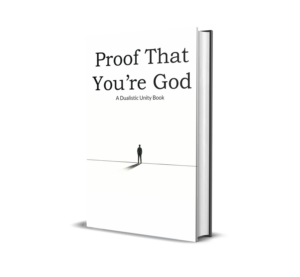
If these questions stirred something deeper, Proof That You’re God continues the exploration. Rather than telling you who you are or how you should live, the book examines how identity, belief, awareness, culture, and perception shape the experience of being human. It invites you to question what has been inherited, discover what truly resonates with you, and participate more consciously in the only life you will ever directly experience.