
There may come a moment—quiet, confusing, and easy to dismiss—where something starts to feel off about the way you’ve been living inside your own head.
Not in a dramatic way.
Not as a breakdown.
More like a subtle dissonance.
The things that used to feel urgent feel… less solid.
The identity you’ve been defending starts to feel heavy.
The need to be right, impressive, or “on track” loosens just a bit.
You might not even have words for it yet.
But if you’re starting to wonder whether you are really the voice narrating your life—this piece is for you.
The Phase Before the Shift
For most of your life so far, identity has been doing a lot of work.
It tells you:
- Who you are
- Who you’re becoming
- What matters
- What success looks like
- What failure means about you
This isn’t a mistake. It’s developmental.
Psychologists like Jane Loevinger mapped how human perspective evolves through stages, many of which are dominated by identity, self-image, and external validation.
At those stages:
- Everything feels high-stakes
- Social feedback feels personal
- Being wrong feels dangerous
- Uncertainty feels like falling behind
From the inside, it can feel exhausting—but also necessary.
You can’t just opt out of it.
And most people don’t.
When the Armor Starts to Crack
But sometimes—especially in late teens or early adulthood—something shifts.
Not because you “figured it out.”
Not because you became more disciplined or spiritual.
Often because the identity project starts to wear thin.
You may notice:
- You’re tired of pretending
- You’re less interested in proving yourself
- You can see your own defensiveness while it’s happening
- You care less about winning arguments
- You feel moments of quiet clarity that don’t come from thinking
This can feel unsettling.
If identity has been your compass, what happens when it stops feeling reliable?
Why This Moment Is Rare—and Easy to Waste
Here’s the uncomfortable truth:
Most people feel this opening at least once—and then rush to close it.
They:
- Replace one identity with a “better” one
- Turn insight into another performance
- Adopt new labels, beliefs, or aesthetics
- Use growth as a way to stay in control
That doesn’t make them bad or shallow.
It makes them human.
Identity is familiar. Letting go of it—even slightly—can feel like stepping into fog without a map.
So the mind grabs onto something.
But if you’re reading this and recognizing the experience, you may be standing at a threshold that doesn’t come around often.
This Isn’t About Becoming Someone Better
If you’re in the early phase of this shift, the temptation will be to use it to upgrade yourself.
To be:
- More enlightened
- More evolved
- More detached
- More “aware” than others
That impulse is identity doing what it’s always done.
The shift isn’t about becoming superior.
It’s about becoming less defended.
Less certain that the story in your head is who you are.
Less reactive when it’s challenged.
Less invested in maintaining a version of yourself.
And paradoxically, that’s what makes you more human—not less.
Why You Might Feel More Empathy (and More Confusion)
As identity loosens, strange things can happen.
You may find yourself:
- Understanding people you used to judge
- Feeling compassion where you used to feel irritation
- Seeing insecurity beneath confidence—including your own
- Losing interest in simple narratives of right and wrong
This can feel disorienting.
If the world used to make sense because you knew who you were in it, what happens when that certainty fades?
Nothing is wrong.
You’re not regressing.
You’re not losing motivation.
You’re not “wasting your potential.”
You’re encountering a wider context.
You Don’t Have to Rush This
Here’s the part almost no one tells you:
You don’t have to do anything with this.
You don’t need to make decisions.
You don’t need to announce anything.
You don’t need to explain yourself.
This isn’t a call to drop out, give up, or transcend life.
It’s an invitation to notice.
To see thoughts as thoughts.
To feel emotions without immediately turning them into identity.
To recognize how often your reactions come from self-protection.
That noticing alone changes things.
How This Connects to Relationships
As identity loosens, relationships often change first.
You may:
- Argue less intensely
- Listen more than you respond
- Feel less need to be understood
- Notice how often conflict is about self-image
This can be confusing, especially if people around you are still deeply identified with who they are and where they’re going.
Understanding this dynamic can help you navigate relationships without feeling superior or isolated. We explore these patterns more deeply in our hub article on why relationships so often feel hard.
You’re Not Late—and You’re Not Early
One of the sneakiest ways identity reasserts itself is through comparison.
Am I ahead?
Behind?
Missing out?
Wasting time?
This shift doesn’t follow a schedule.
Some people encounter it early.
Some later.
Some circle it many times before it settles.
There’s no prize for arriving sooner.
And there’s no failure in staying where you are.
Don’t Turn This Into Another Standard
If there’s one thing to be cautious of, it’s this:
Don’t turn awareness into another thing you’re supposed to live up to.
That just recreates the same pressure in subtler clothing.
The shift isn’t about achieving clarity.
It’s about relaxing the need for it.
A Quiet Invitation
If what you’re experiencing feels familiar, you don’t need to chase it.
Just don’t ignore it.
Let it be incomplete.
Let it be wordless.
Let it be something you notice rather than something you use.
That alone keeps the door open.
Closing Reflection
If you’re beginning to sense that you are not the idea of yourself you’ve been protecting, you’re not broken—and you’re not finished.
You’re becoming available to something deeper than identity.
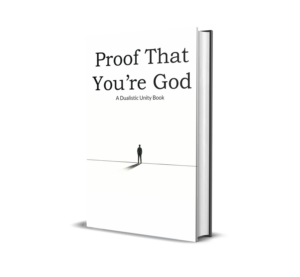
That exploration is at the heart of Proof That You’re God, which looks at how identity forms, loosens, and reveals what was already present underneath—not as a belief system, but as a lived recognition.