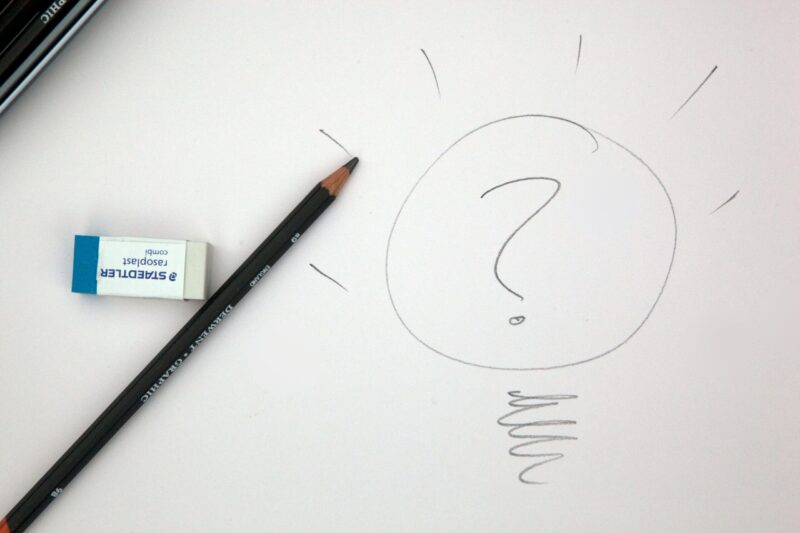
At some point, the question shows up:
What is my purpose in life?
It might come quietly, as a thought that keeps returning in the background. Or it might feel more urgent, especially during moments of uncertainty, transition, or dissatisfaction. Either way, it tends to carry weight.
There’s often an assumption built into the question that purpose is something specific. Something you discover, define, and eventually live out with clarity. A path, a role, a direction that makes everything make sense. And until you find it, something feels incomplete.
That’s what makes the search feel so important. Purpose isn’t just about what you do. It becomes tied to how you understand your life. Without it, things can feel uncertain or disconnected. With it, everything is supposed to feel aligned. So the search becomes serious, and underneath all the practical questions—what should I do, what am I good at, what matters most—there’s often a quieter concern: am I living my life correctly?
Most people approach purpose as if it exists somewhere ahead of them, something to figure out and eventually get right. But that assumption creates pressure. Every decision starts to feel like it carries more weight. Doubt feels like delay. Uncertainty feels like being off track. The search for purpose becomes another way of trying to secure certainty about your life.
There’s another way to look at it that shifts this entirely. Not as something hidden or waiting to be found, but as something that’s already present in a way that’s easy to overlook.
You are your purpose.
Not as a slogan or something to believe, but in a very direct sense. Your life isn’t separate from your purpose. It is the expression of it.
Part of the desire for purpose comes from wanting your life to matter, to have impact, to contribute something meaningful. But there’s a contradiction in how that’s often approached. We try to imagine our impact from the outside, measuring it by what we accomplish or how many people we affect. The reality is that your impact is far too complex to fully see. Every interaction, every decision, every moment of attention or absence ripples outward in ways that can’t be tracked.
To truly know your impact, you would have to step outside your life and observe it completely. But in doing that, you wouldn’t be living it anymore. So the attempt to define your purpose through impact creates distance. You’re no longer immersed in your life. You’re evaluating it.
When that happens, life can start to feel like something you’re trying to get right. Even ordinary moments begin to feel uncertain when they’re measured against an imagined purpose. This is often where the search quietly takes you further away from what you’re looking for, because instead of being in your life, you’re trying to interpret it from the outside.
The reality is simple, even if it’s easy to overlook. You don’t experience your life as a whole. You experience it moment by moment. You don’t feel your purpose as an abstract concept. You feel what you’re doing, what you’re paying attention to, how you’re relating to what’s happening.
So if purpose is always somewhere else—something bigger, something future-oriented—it never actually shows up in your experience.
This is why it can feel so out of reach. Not because it’s missing, but because it’s being defined in a way that can’t be directly experienced. This connects closely to what’s explored here:
When meaning or purpose is treated as something conceptual, something to solve, it naturally feels just beyond where you are.
When the search softens, something shifts. You’re no longer trying to define your life from a distance. You’re simply in it. That doesn’t mean everything becomes clear or certain. It means the pressure to interpret every moment as part of a larger purpose begins to fade.
What’s left is simpler than expected. This conversation. This decision. This moment of attention. Not as pieces of a larger puzzle, just as your life, happening.
If purpose isn’t something fixed or predefined, it doesn’t mean your life lacks meaning. It means it isn’t limited to a single interpretation. Your purpose isn’t something you discover once and carry forever. It isn’t a role you finally step into. It’s the ongoing expression of your life itself.
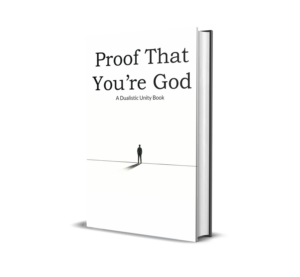
As explored in Proof That You’re God, the idea of a fixed identity often leads us to believe we need to become something specific. But if identity isn’t fixed, then purpose doesn’t need to be either.
A lot of the tension around purpose comes from the sense that there’s a correct answer, a right path your life is supposed to follow. Letting go of that doesn’t make your life directionless. It simply loosens the pressure to get it right. Without that pressure, decisions become simpler. Not because you suddenly have certainty, but because you’re no longer trying to solve your entire life at once.
Finding your purpose in life is often framed as a journey toward clarity. But sometimes, the search itself is what creates the distance. You don’t need to step outside your life to understand it. You don’t need to define your impact to have one. You don’t need a final answer to begin.
Your life isn’t waiting for purpose. It is the expression of it.
And the more you try to fully define that from the outside, the more it pulls you away from the only place it actually exists—right here, as it’s happening.
If this resonates, the deeper exploration of identity, meaning, and experience is expanded in Proof That You’re God.