
There’s a particular kind of grief that doesn’t arrive with conflict.
No argument.
No betrayal.
No dramatic rupture.
Just a quiet noticing that something once reliable no longer feels the same.
You still talk. You still show up for holidays. You might even say “I love you” and mean it. And yet, something essential has shifted — not enough to name easily, but enough to feel everywhere. The closeness that once oriented you isn’t gone in a clean way. It has simply thinned.
This is one of the most disorienting changes in adult family relationships: when nothing went wrong, yet nothing feels quite right anymore.
Many people assume distance only makes sense if there’s blame. If closeness fades, someone must have failed. Someone must be avoiding, withholding, or doing harm. But that assumption misses a deeper pattern — one that shows up again and again in families, relationships, and identity itself.
This experience sits within the same territory explored more broadly in our reflection on why relationships so often feel hard — not because people are broken, but because roles and expectations quietly outlive their usefulness. What feels personal is often structural.
When Parents Stop Feeling Like a Place to Land
For many of us, our parents weren’t just people. They were orientation.
A place to land emotionally.
A reference point for safety, certainty, or reassurance.
As children, that orientation isn’t optional. We depend on it. Even when parents were imperfect — distracted, overwhelmed, or inconsistent — the role still existed. Someone was supposed to hold things together.
But adulthood introduces a strange reversal.
Over time, you may begin to see your parents less as stabilizing forces and more as humans navigating their own fears, limitations, and unfinished lives. Not because they changed suddenly, but because you did.
Awareness does this. Maturity does this. It dissolves the illusion of permanence.
And when that happens, something subtle breaks — not the relationship, but the role it was built around.
Wanting a Parent Before They Become Just a Person
There’s an unspoken longing many adults carry that feels almost unfair to admit:
I just wanted you to be a healthy parent — before you stopped being a parent.
Not perfect.
Not idealized.
Just present enough to lean on.
But for many families, something else happens instead. Parents reach a stage of life where they are finally confronting themselves — their own wounds, identities, and limitations. Sometimes they become softer. Sometimes more rigid. Sometimes more authentic. Sometimes more defensive.
Either way, the role of “parent as emotional anchor” quietly dissolves.
And that can feel like abandonment — even when no one left.
The pain here isn’t that they became people.
It’s that they became people before we felt finished needing parents.
The Grief of Asynchronous Growth
One of the hardest truths to accept in adult family relationships is this:
Growth of family members doesn’t happen on a shared timeline.
You might be unpacking your childhood just as your parents are trying to put theirs down. You might be learning how much safety you never had at the exact moment they are learning how little capacity they had to give it.
No one planned this mismatch.
But it hurts anyway.
This is why the grief feels so confusing. You’re not grieving a loss caused by wrongdoing. You’re grieving a loss caused by timing.
And timing doesn’t apologize.
Love Without Reliance
What often remains after this shift is something quieter and harder to describe.
Love, without reliance.
Connection, without safety.
Care, without orientation.
You may still want the best for your parents. You may still feel tenderness toward them. But the unconscious reaching — the sense that they have you — is gone.
This isn’t estrangement.
It’s reconfiguration.
And it asks a difficult question:
Who are you when the people who shaped you can no longer hold you?
When Nothing Is Broken — But Something Is Over
We’re rarely taught how to recognize endings that don’t announce themselves.
There’s no ceremony for the moment you realize:
You can’t lean the same way on your parents anymore
Parental advice no longer lands like it used to
Being understood by your parent isn’t available
The relationship with your parent(s) has shifted from formative to adjacent
And because there’s no language for this, many people turn the grief inward. They assume they’re ungrateful. Cold. Broken. Demanding.
But what’s actually happening is simpler — and harder:
A role completed its function.
The pain isn’t that it ended.
The pain is that it ended quietly
What Remains
When family closeness changes without anyone doing anything wrong, something essential is being asked of you — not to fix the relationship, but to release the expectation it can return to what it was.
That doesn’t mean severing love.
It means letting go of orientation.
And in that letting go, something else becomes possible.
Relating not through roles, but through presence.
Not as parent and child, but as people meeting where they actually are — even if that meeting feels thinner than you hoped.
This isn’t resolution.
It’s honesty.
And honesty, while quieter than closeness, has a way of holding you differently.
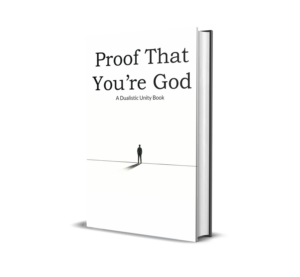
If this reflection resonates, Proof That You’re God explores these moments of identity shift, role collapse, and quiet grief in much greater depth — not as problems to solve, but as invitations to recognize what remains when the structures we depended on fall away.
A Reflection
If you pause for a moment, you might notice how easy it is to keep reaching for what no longer exists.
Not because you’re stuck.
Not because you’re unwilling to grow.
But because something in you learned how to survive by leaning — and no one can prepare you for what it feels like when that leaning no longer works. We’re told we’ll grow up, but no one can hand us the felt experience of realizing the weight of our life is now ours to carry..
This reflection isn’t asking you to forgive anyone.
It isn’t asking you to confront, repair, or redefine your family.
It’s only inviting you to notice where you’re still hoping for orientation from a place that can no longer provide it.
And to sit gently with the grief of that.
Because there’s nothing wrong with wanting a place to land.
There’s nothing weak about missing it.
And there’s nothing broken about the moment you realize you’re standing on your own.
Sometimes the most honest thing we can do isn’t to fix the relationship —
but to let it be what it is,
while discovering who we are without the roles that once held us.